
How to Make Apple Cider Vinegar from Scraps: The Complete Beginner’s Guide
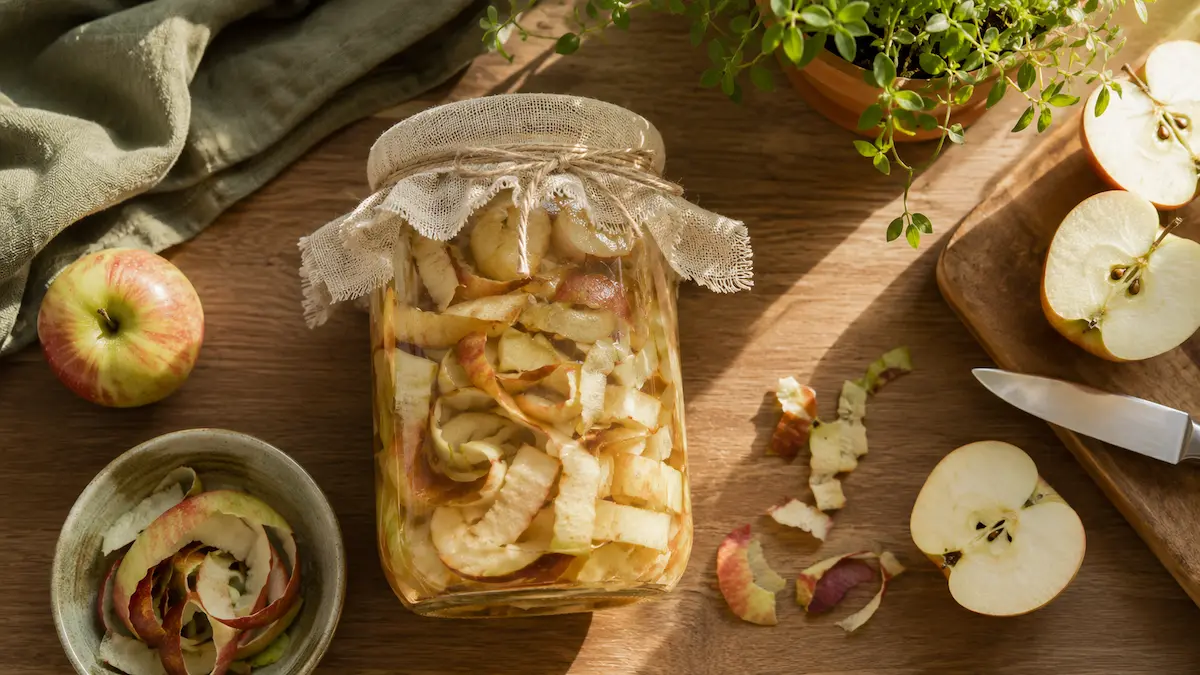
Every time you peel an apple or core one for a crumble you are throwing away something valuable.
Apple peels and cores contain wild yeast and natural sugars — exactly what you need to make raw, living apple cider vinegar at home. The kind that costs several pounds a bottle in health food shops. The kind with the mother. The kind that takes nothing more than apple scraps, water, sugar, and four to eight weeks of patience.
I started making my own apple cider vinegar after realising I was throwing away apple scraps every single week while simultaneously buying expensive bottles from the supermarket. The maths made no sense once I understood how simple the process actually is.
This guide will show you exactly how to make apple cider vinegar from scraps at home — no special equipment, no experience required, and almost zero cost.
In this guide you will learn:
What Is Apple Cider Vinegar and How Does It Form?
Apple cider vinegar is made through a two-stage fermentation process.
In the first stage wild yeasts — present naturally on apple skins and in the air around you — consume the sugars in the apple scraps and liquid, converting them into alcohol. This produces a rough, slightly fizzy apple wine.
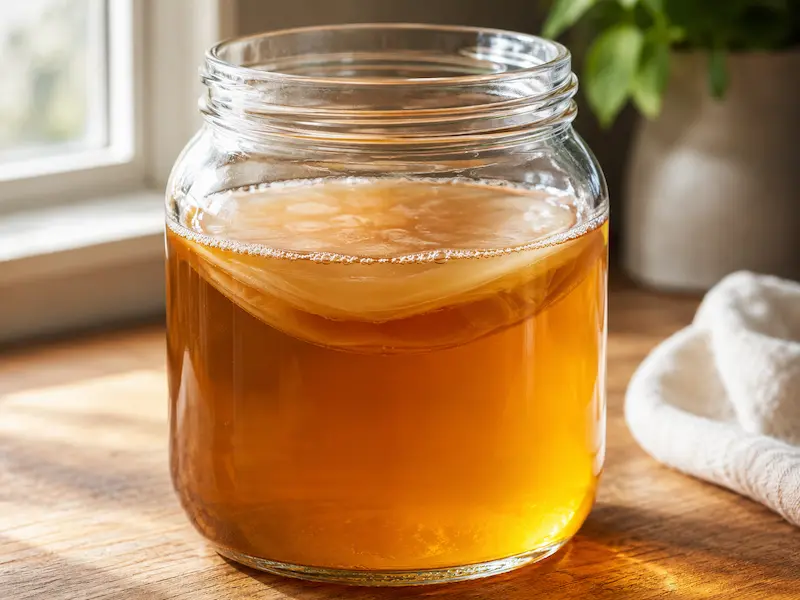
In the second stage a group of bacteria called acetobacter convert that alcohol into acetic acid — the compound that gives vinegar its distinctive sharp flavour and preserving properties. This second stage requires oxygen, which is why apple cider vinegar is made in open containers rather than sealed ones.
The cloudy substance that forms on the surface during the second stage is called the mother — a colony of beneficial bacteria and cellulose that signals your vinegar is alive and actively fermenting. Raw apple cider vinegar with the mother is considered far more beneficial than pasteurised commercial versions because it retains all the live cultures.
Making vinegar from scraps rather than whole apples works because the peels and cores contain the highest concentration of wild yeast and pectin of any part of the apple. You are not using a lesser ingredient — you are using the most fermentation-friendly part.
What Scraps You Can Use
What Scraps to Avoid
A note on organic versus conventional apples: organic apple scraps are preferable because they carry more wild yeast on the skin and have not been treated with fungicides that can inhibit fermentation. However conventional apple scraps work perfectly well in practice — simply rinse them well before using.
What You Need
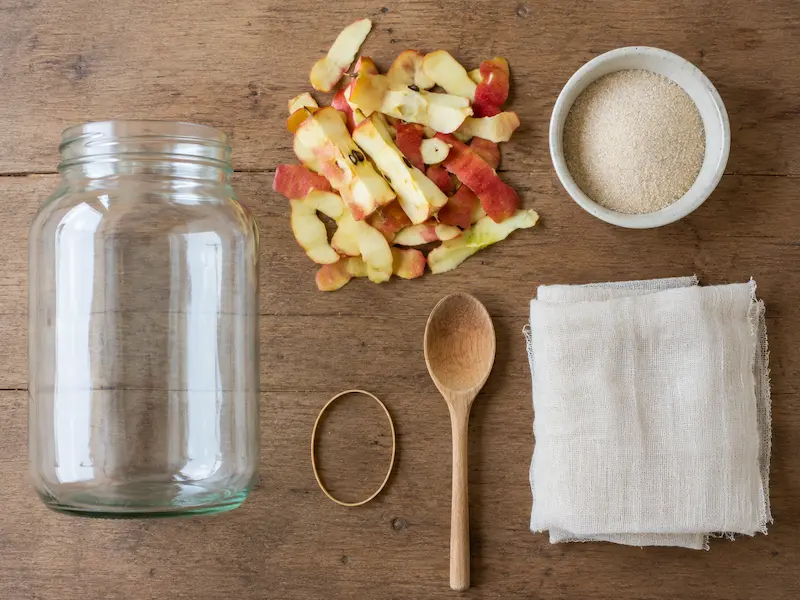
The equipment list for making apple cider vinegar from scraps is genuinely minimal.
A large wide mouth glass jar — at least one litre capacity. Wide mouth jars are preferable because they allow more oxygen exposure during the second fermentation stage. A clean recycled jar works perfectly — you do not need to buy anything special.
Muslin cloth or a clean tea towel — used to cover the jar. This allows airflow while keeping dust and insects out. Never use a lid with a tight seal during fermentation as the gases produced need to escape.
A rubber band or string — to secure the cloth cover over the jar.
A wooden spoon or clean stick — for stirring.
A kitchen scale — for measuring sugar accurately.
A fine mesh strainer — for straining the finished vinegar.
A dark glass bottle — for storing the finished vinegar. Amber or dark glass protects the live cultures from light damage.
That is everything. No specialist equipment, no starter culture, nothing to buy that you do not already have in a typical kitchen.
The Apple Cider Vinegar from Scraps Recipe
Step by Step Instructions
How to Know When Your Vinegar Is Ready
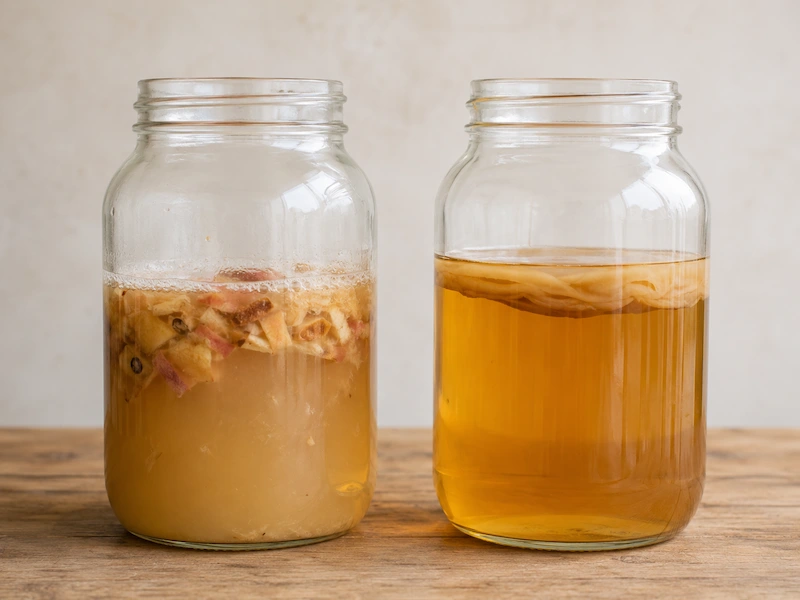
TypThe taste test is the most reliable indicator. Your vinegar is ready when:
If it still tastes more like alcohol than vinegar leave it for another two weeks and taste again. Patience is the most important ingredient in this recipe.
The total time from scraps to finished vinegar is typically six to ten weeks depending on your kitchen temperature, the sugar content of your apple scraps, and how active the wild yeasts in your environment are.
How to Use Your Homemade Apple Cider Vinegar
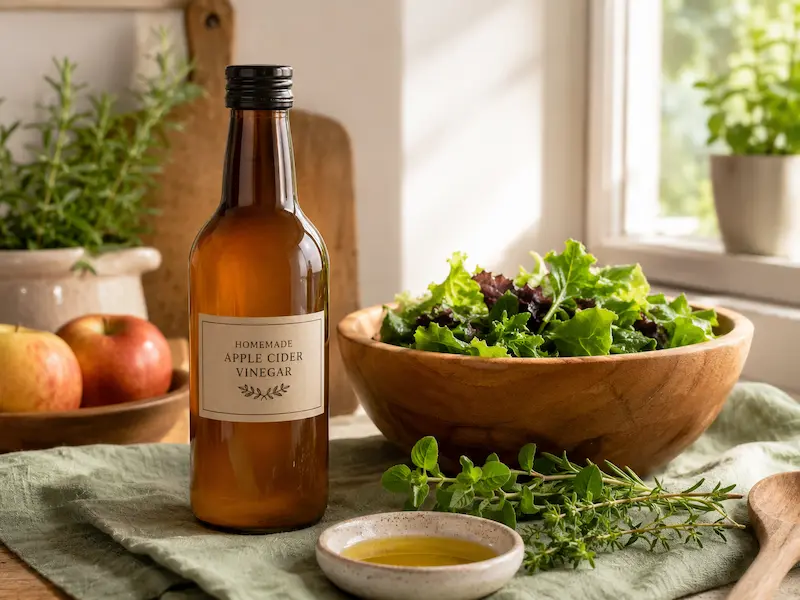
Your homemade apple cider vinegar can be used exactly like shop-bought raw apple cider vinegar in any recipe or application.
In cooking:
Around the home:
What to Do With the Mother
The mother that forms in your apple cider vinegar is one of the most valuable parts of the batch. It is a living colony of acetobacter bacteria that you can use to:
Store the mother in a small jar covered with a little vinegar if you are not using it immediately. It will keep for months.