Windowsill Herb Garden: The Complete Beginner’s Guide for Apartments
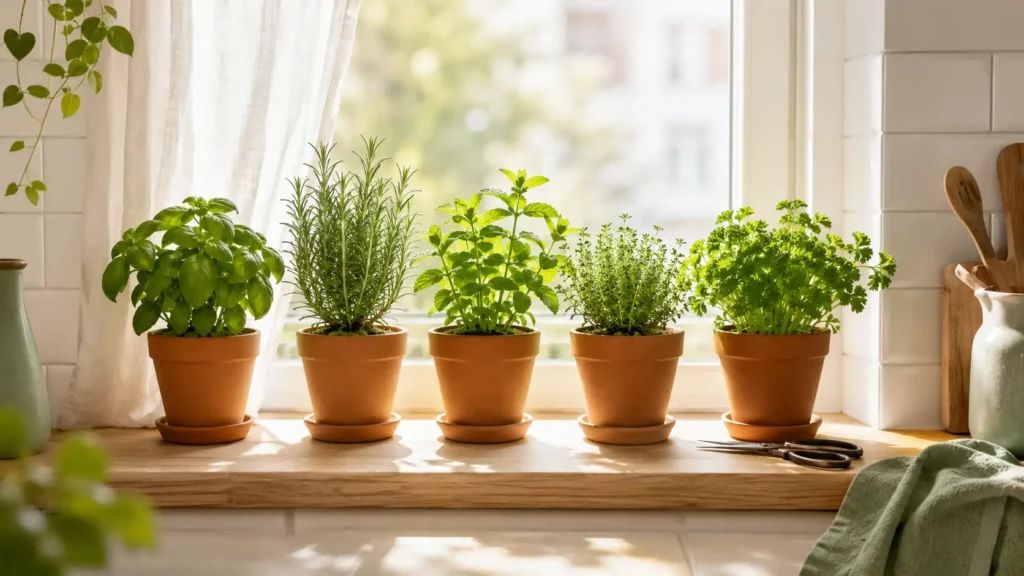
There is something genuinely satisfying about snipping fresh basil straight from a pot on your windowsill and dropping it into whatever you are cooking.
No supermarket trip. No plastic packaging. No wilted herbs sitting forgotten in the back of the fridge.
A windowsill herb garden is one of the most rewarding things you can grow as an apartment dweller — and one of the easiest to get started with.
You do not need a garden, a balcony, or any previous growing experience. All you need is a sunny window, a few small pots, and a little patience.
In this guide you will learn:
Why a Windowsill Herb Garden Is Perfect for Apartments
Growing herbs indoors is one of the most beginner-friendly ways to start apartment homesteading. Here is why it works so well:
Low cost to start. A few small pots, a bag of compost, and a handful of seed packets cost less than a single bunch of supermarket herbs. Within weeks you are harvesting more than you can use.
No outdoor space needed. A single sunny windowsill is genuinely enough. South- or west-facing windows work best in the northern hemisphere.
Immediate results. Fast-growing herbs like basil and chives show new growth within days of planting. Nothing motivates a new gardener like visible progress.
Practical every single day. Unlike ornamental plants, herbs earn their space. Every time you cook, you use them.
Connects to everything else you grow. If you are already doing apartment worm composting, your worm castings make the best possible fertiliser for herb containers. The two projects feed each other perfectly.
The Best Herbs for a Windowsill Garden
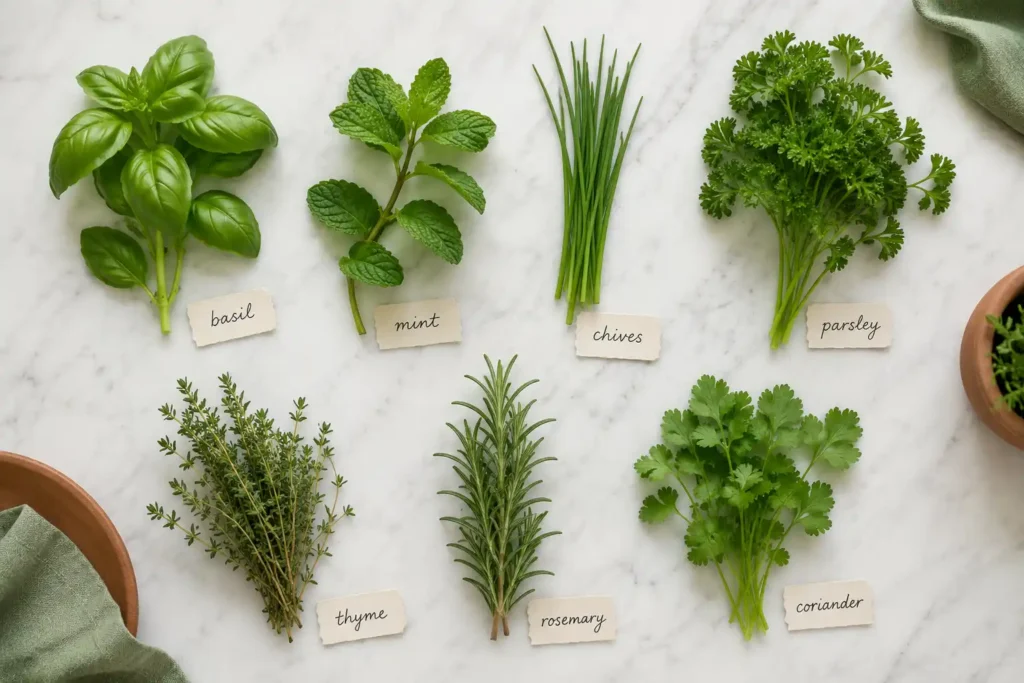
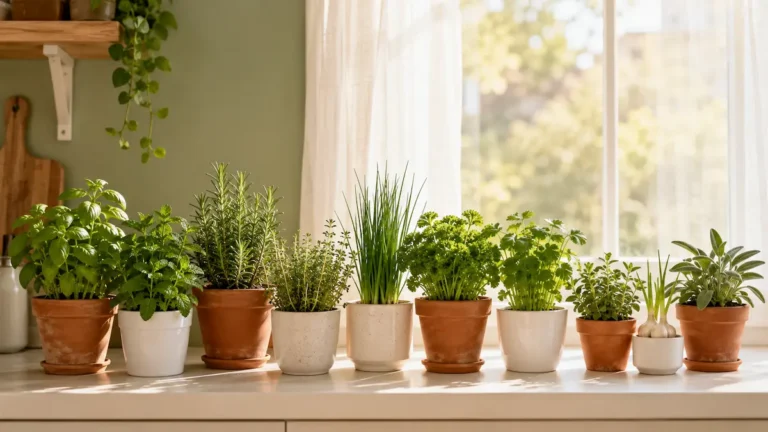
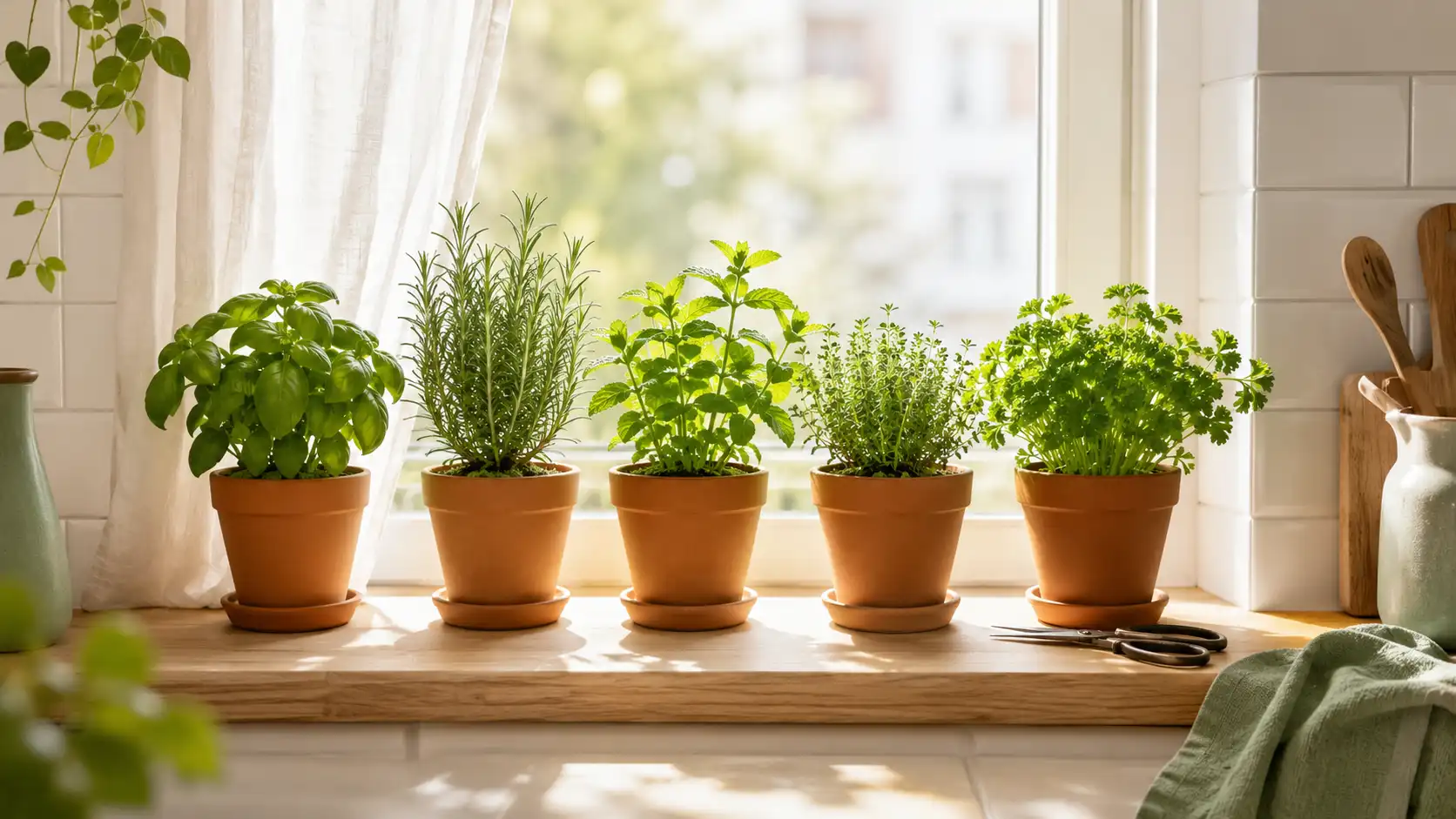
Not all herbs thrive indoors. These seven are the most reliable for windowsill growing in an apartment.
Basil
The most popular windowsill herb for good reason. Basil grows fast, smells incredible, and is endlessly useful in the kitchen. It needs the most light of any herb on this list — at least 6 hours of direct sun per day. Keep it away from cold draughts and never let it sit in waterlogged soil.
Best for:
Mint
Mint is almost impossible to kill and grows aggressively. Always grow it in its own pot — it will take over any container it shares. It tolerates lower light than most herbs, making it ideal for north-facing windows. Spearmint and peppermint are both excellent choices.
Best for:
Chives
One of the easiest herbs to grow from seed. Chives tolerate cooler temperatures and lower light levels well. Cut them regularly — the more you harvest, the more they produce. They also produce beautiful purple flowers that are edible.
Best for:
Parsley
Parsley is slow to germinate from seed — allow three to four weeks — but once established it is very productive. Flat-leaf parsley has a stronger flavour than curly and is worth growing if you cook regularly. It needs moderate light, around 4 to 6 hours per day.
Best for:
Thyme
Thyme is a Mediterranean herb that loves warmth and sun. It is drought-tolerant — if anything, overwatering is the bigger risk. Once established it needs very little attention and produces consistently for months. Let the soil dry out completely between waterings.
Best for:
Rosemary
Rosemary is slower growing than other herbs but incredibly rewarding. It needs the sunniest spot you have and very well-draining soil. Never let it sit in wet compost. Given the right conditions it will grow into a substantial plant that produces fresh sprigs year-round.
Best for:
Coriander
Coriander is the trickiest herb on this list because it bolts quickly in heat. Keep it in a cooler spot away from direct afternoon sun. Sow seeds every three to four weeks for a continuous supply rather than relying on a single pot.
Best for:
Choosing the Right Containers
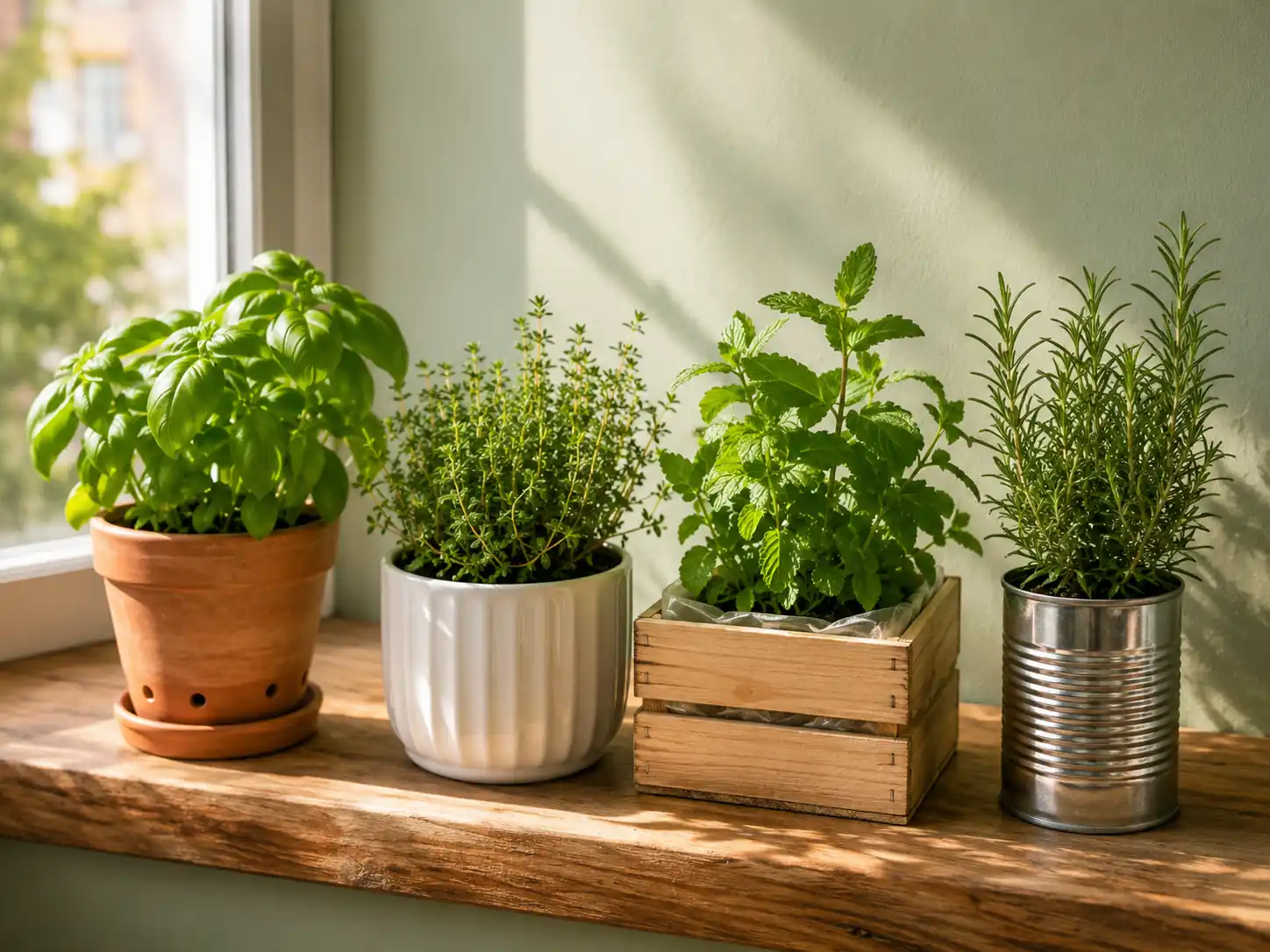
Container choice matters more than most beginners realise. Here is what to look for.
Drainage Is Everything
The single most important feature of any herb container is drainage holes at the bottom. Herbs sitting in waterlogged soil will develop root rot and die quickly. Every pot you use must have drainage holes.
If you fall in love with a pot that has no drainage holes, use it as a decorative outer sleeve and place a smaller pot with drainage holes inside it.
Best Container Materials
Terracotta — the best choice for most herbs. Terracotta is porous, which means it breathes and dries out between waterings. This prevents the overwatering that kills most windowsill herbs. The only downside is that it dries out faster in summer, so you will need to water more frequently.
Ceramic
looks beautiful and retains moisture longer than terracotta. Good for herbs that prefer consistently moist soil, like basil and parsley. Less forgiving for drought-tolerant herbs like rosemary and thyme.
Plastic
lightweight and retains moisture well. Less attractive than terracotta or ceramic but perfectly functional. A good option for beginners who tend to underwater.
Wooden boxes
excellent for growing multiple herbs together. Line with plastic sheeting, leaving drainage gaps at the bottom, before filling with soil.
Ideal Pot Size
The Right Soil for Windowsill Herbs
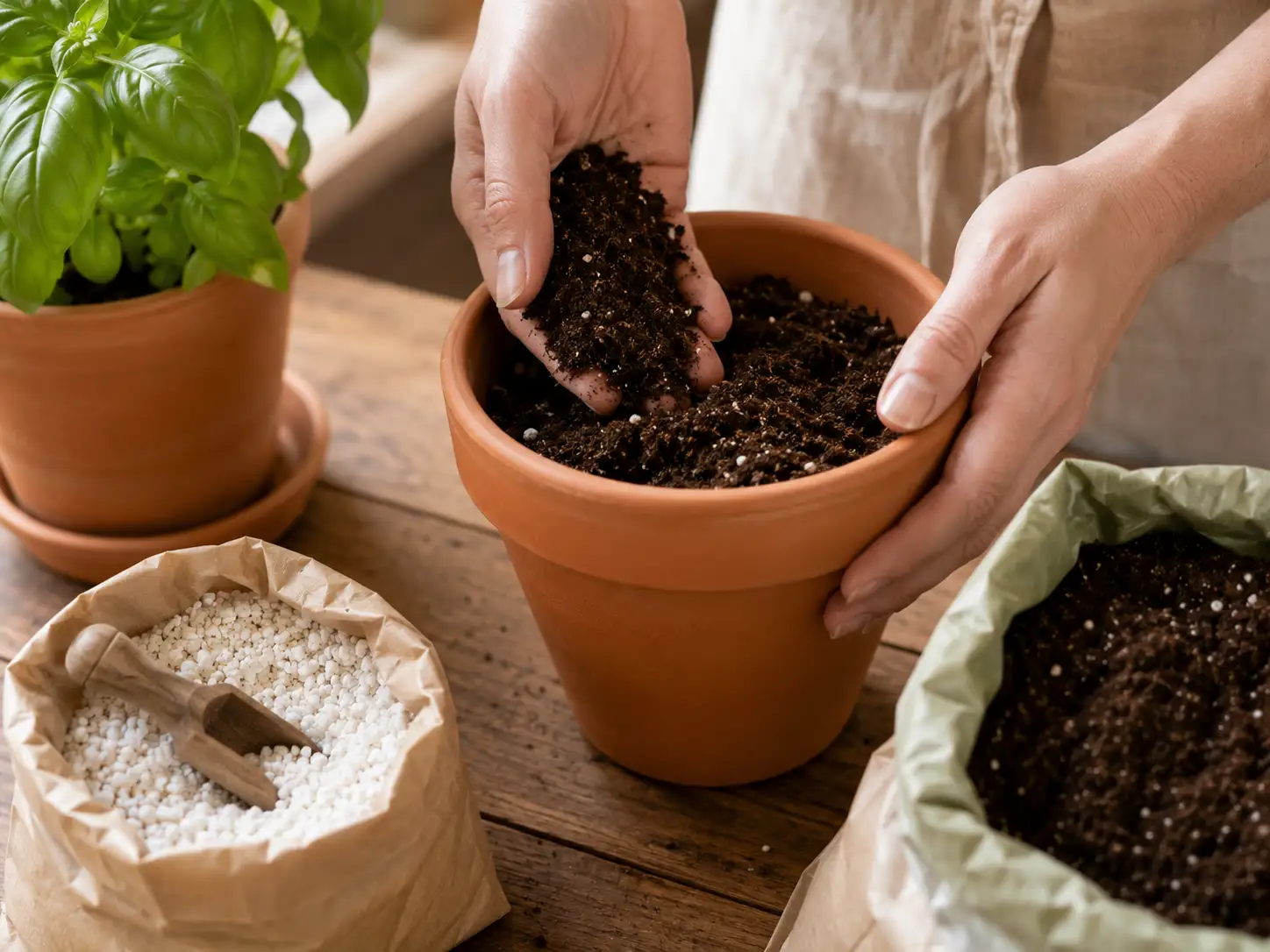
Regular garden soil is too dense for containers. It compacts, drains poorly, and suffocates roots. Use these alternatives instead.
Best Soil Mix for Most Herbs
The perlite or grit improves drainage dramatically and prevents compaction. This mix works well for basil, parsley, chives, mint, and coriander.
For Mediterranean Herbs
Rosemary and thyme need even sharper drainage. Use:
Adding Worm Castings
If you have a worm composting bin, mix a small amount of worm castings into your potting mix before planting — around one part castings to four parts compost is enough. Worm castings introduce beneficial microbes and slow-release nutrients that support strong, healthy herb growth from the very start.
Light Requirements for Indoor Herbs
Understanding light is the key to a successful windowsill herb garden. Most beginners either overestimate or underestimate how much light their window actually provides.
How Much Light Do Herbs Need?
What If You Do Not Have Enough Light?
If your windows face north or receive limited sun, you have two options:
Grow shade-tolerant herbs only. Mint, chives, and coriander manage well in lower light. Avoid basil and rosemary completely if your light is poor.
Use a grow light. A simple LED grow light placed 15 to 20 cm above your herbs for 12 to 14 hours per day completely compensates for low natural light. Full-spectrum LED grow lights are inexpensive, energy-efficient, and make year-round herb growing possible in any apartment.
How to Water Windowsill Herbs Correctly
Overwatering is the number one reason windowsill herb gardens fail. Most herbs prefer to dry out slightly between waterings rather than sitting in constantly moist soil.
The Right Watering Method
Check the soil first. Push your finger about 2 centimetres into the compost. If it still feels moist, do not water. If it feels dry at that depth, water thoroughly.
Water at the base. Pour water directly onto the soil rather than over the leaves. Wet leaves encourage fungal disease.
Water until it drains. Water thoroughly until water runs out of the drainage holes. This ensures the entire root system is hydrated. Then stop and allow it to drain completely before returning the pot to its saucer.
Empty the saucer. Never let pots sit in standing water in a saucer. This is the most common cause of root rot on windowsill herbs.
How Often to Water
This varies by herb, season, and container material. As a rough guide:
How to Harvest Herbs to Keep Them Producing
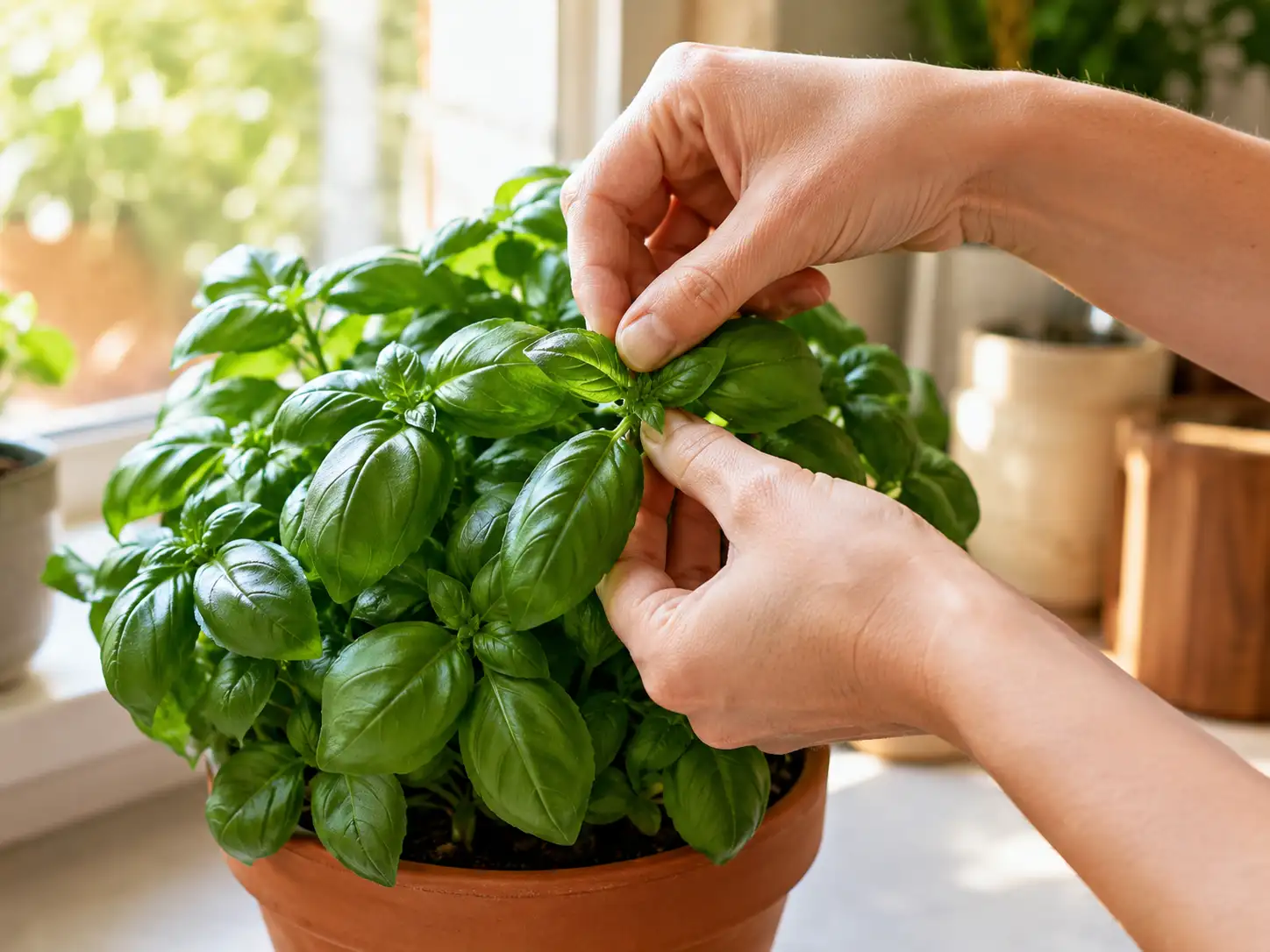
Most beginners harvest herbs incorrectly and end up with scraggly, unproductive plants.
Here is how to do it right.
The Golden Rule
Never remove more than one third of the plant in a single harvest. Taking too much at once stresses the plant and slows regrowth.
How to Harvest Each Herb
Basil — pinch off the top two sets of leaves using your fingers. Always harvest from the top, not the sides. Remove any flower buds the moment they appear — once basil flowers it stops producing new leaves and the flavour deteriorates.
Mint — cut whole stems back to just above a leaf node. New growth will sprout from just below the cut. Harvest regularly to prevent it becoming leggy.
Chives — cut the leaves down to about 3 to 4 centimetres from the base using scissors. New growth appears from the base within days.
Parsley — harvest the outer stems first, cutting close to the base. Leave the inner stems and new growth untouched to keep the plant productive.
Thyme and rosemary — snip young stem tips with scissors. Avoid cutting into old woody growth, as these sections do not regrow well. Take small amounts regularly rather than large amounts infrequently.
Coriander — harvest outer leaves regularly. Once it starts to bolt and produce tall flower stalks, harvest everything quickly before the flavour changes.