10 Vegetables You Can Actually Grow on a Balcony (No Garden Needed)
10 Vegetables You Can Actually Grow on a Balcony
I will be honest with you — I do not have a balcony.
I have a windowsill, a tiny kitchen counter, and an unreasonable amount of enthusiasm for growing things in small spaces. But I have spent a lot of time researching, testing, and talking to people who do grow on balconies — and what I have learned is this: most of the advice out there massively underestimates what a small outdoor space can actually produce.
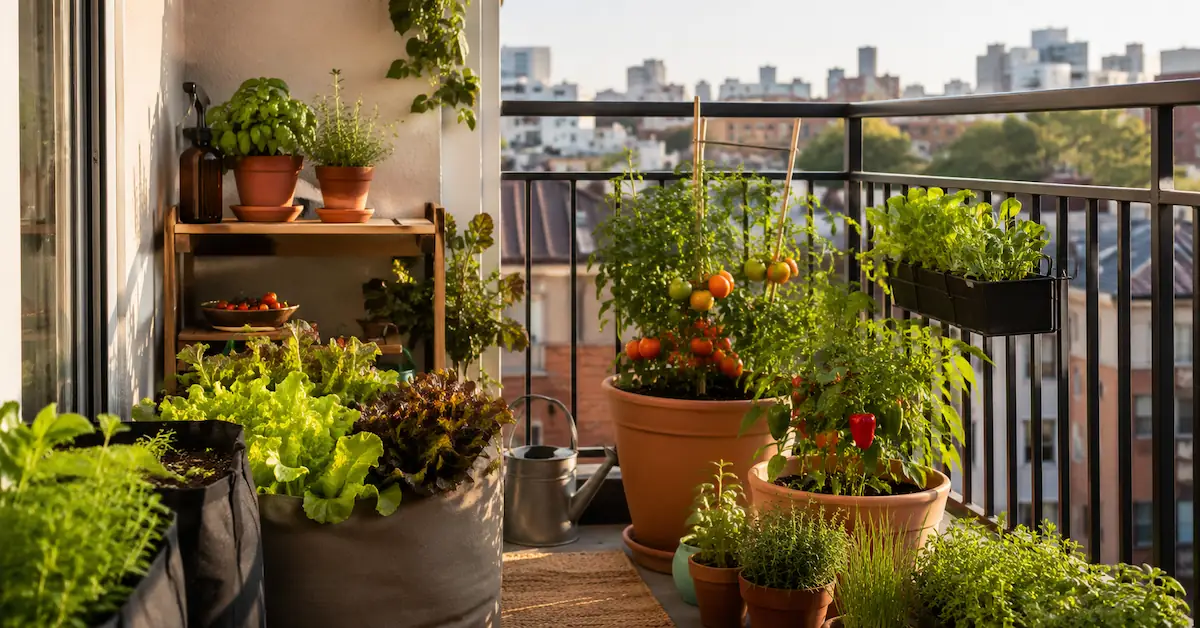
You do not need a garden. You do not need raised beds or a greenhouse or a sprawling backyard. A balcony — even a small one — can grow a surprising amount of food if you choose the right vegetables and set things up correctly from the start.
These are the ten vegetables that actually work. Not the ones that technically can grow on a balcony in perfect conditions. The ones that genuinely produce enough to eat, consistently, without driving you mad in the process.
Before We Start — What Your Balcony Actually Needs
Before you buy a single seed or pot, spend one week observing your balcony. This sounds boring but it is genuinely the most important thing you can do.
Stand on it at different times of day and note:
Most vegetables need a minimum of 4 to 6 hours of direct sun per day. If your balcony gets less than that, focus on leafy greens and herbs which tolerate shade far better than fruiting vegetables like tomatoes and peppers.
One more thing — check your building's weight limits if you are on an upper floor. Containers filled with wet compost are heavy. Fabric grow bags are a great solution here because they are lightweight, flexible, and drain well.
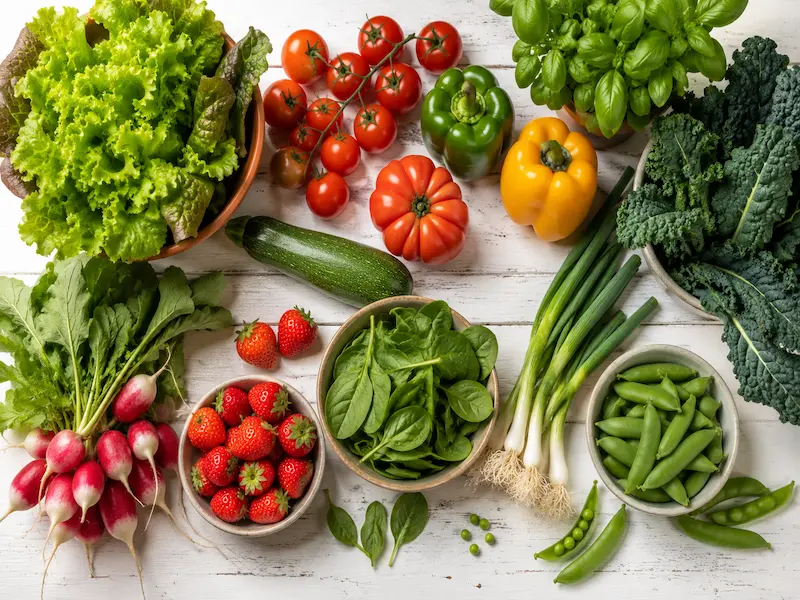
The 10 Best Vegetables to Grow on a Balcony
1. Lettuce
If I had to pick one vegetable for a beginner balcony gardener it would be lettuce. It grows fast — you can be harvesting leaves within 3 to 4 weeks of sowing. It tolerates partial shade better than almost any other vegetable. It does not need deep containers. And it is genuinely one of those crops where the homegrown version tastes dramatically better than the supermarket equivalent.
Grow loose-leaf varieties rather than hearting types — they produce for much longer because you harvest individual leaves rather than the whole head. Try varieties like Oak Leaf, Lollo Rossa, or Butterhead.
Best for: US zones 3–9, all European climates Container depth: 15cm minimum Sun needed: 3–5 hours
Best for: Salads, sandwiches, wraps, smoothies
Tomatoes
Tomatoes are the balcony vegetable that most people want to grow — and they absolutely can work, but they need the sunniest spot you have. At least 6 hours of direct sun is non-negotiable for fruiting.
Choose compact varieties bred for containers. Cherry tomatoes are more forgiving than beefsteak types and produce prolifically in smaller pots. My top recommendations for balcony growing are Tumbling Tom, Balcony Star, or Sweet Million — all developed specifically for container and balcony growing.
In the US, start seeds indoors 6 to 8 weeks before your last frost date. In Europe, start indoors in March and move outside after mid-May once frost risk has passed.
Best for: US zones 5–11, Southern and Central Europe Container depth: 30cm minimum — bigger is always better
Sun needed: 6+ hours
3. Radishes
Radishes are the most satisfying vegetable you can grow because they are ready to harvest in 3 to 4 weeks from sowing. If you have ever started a garden and lost patience waiting for things to happen, grow radishes. They give you an almost instant win while everything else is still getting established.
They are also genuinely tiny — you can fit a lot of them into a shallow container — and they work in partial shade which makes them ideal for balconies that do not get full sun all day.
Best for: All US and European climates — they actually prefer cooler weather Container depth: 15cm minimum
Sun needed: 3–5 hours
4. Spring Onions / Scallions
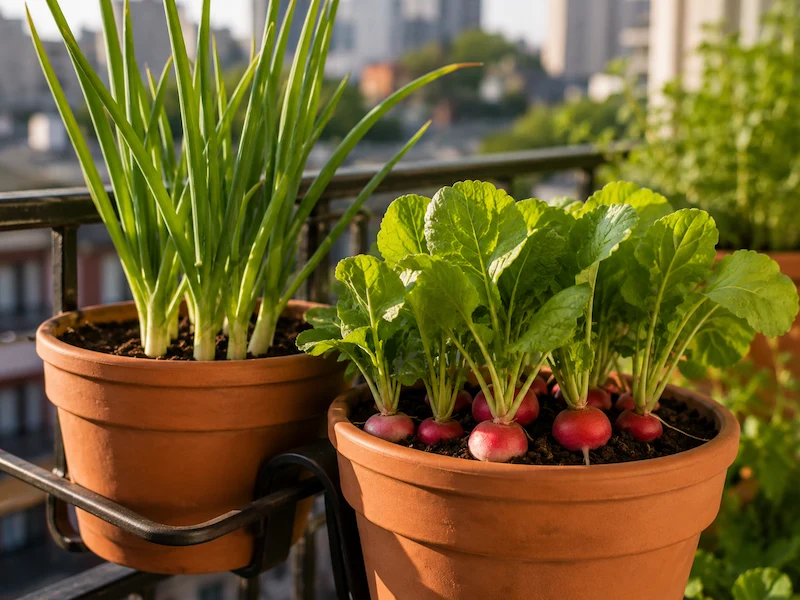
Spring onions — called scallions in the US — are one of the most practical balcony crops because they take up almost no space, grow quickly, and get used constantly in cooking. You can be harvesting within 8 weeks of sowing and they keep producing if you cut above the roots rather than pulling the whole plant.
They are also remarkably cold-tolerant which makes them one of the few crops that can extend your balcony growing season into autumn and even early winter in milder climates.
Best for: All US and European climates Container depth: 15cm minimum
Sun needed: 4–6 hours
5. Peppers
Peppers are one of those balcony crops that feels ambitious but is more achievable than most people expect — as long as you give them heat and sun. They love warm conditions and genuinely thrive on a south or west-facing balcony in summer.
Both sweet peppers and chilli peppers work well in containers. Chilli peppers are particularly productive in small pots and one plant can produce more than you can use. In cooler northern European climates or US zones below 6, grow them in a sheltered corner or bring the pots inside on cold nights.
Best for: US zones 6–11, Southern Europe and sheltered spots in Northern Europe Container depth: 25–30cm
Sun needed: 6+ hours
6. Kale
Kale is arguably the most nutritious crop you can grow on a balcony and it is remarkably easy. It tolerates partial shade, handles cold weather better than almost any other vegetable, and can be harvested continuously for months by taking outer leaves and leaving the centre to keep growing.
Dwarf varieties like Dwarf Green Curled or Red Russian are best for containers. In the US kale grows well in most zones as a spring and autumn crop. In Europe it is a brilliant autumn through winter producer that keeps going in temperatures that would finish off most other vegetables.
Best for: All US and European climates — better in cool weather Container depth: 25cm minimum
Sun needed: 4–6 hours
7. Spinach
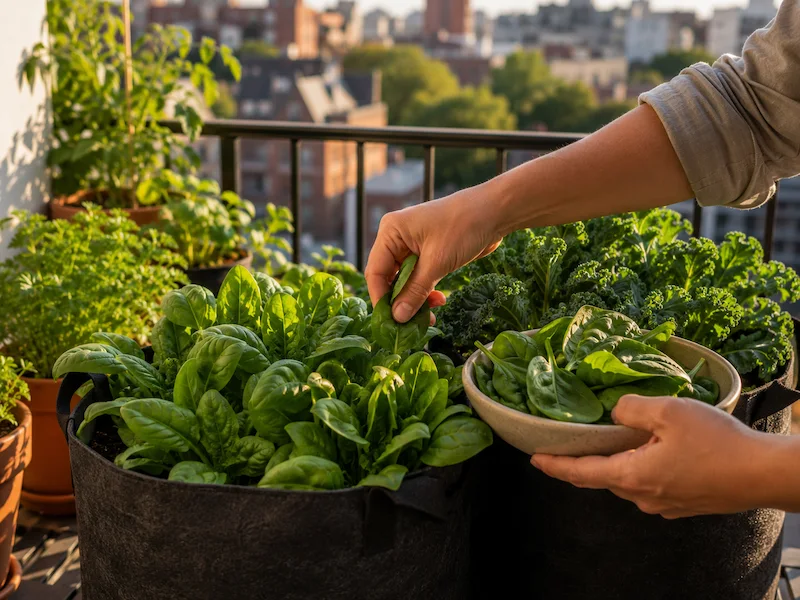
Spinach is one of the fastest crops from seed to harvest and one of the most shade-tolerant leafy greens you can grow. It prefers cooler weather — it will bolt and go bitter quickly in the height of summer — which actually makes it perfect for spring and autumn balcony growing when you would otherwise have little else to harvest.
Grow it in a window box or wide shallow container and treat it as a cut-and-come-again crop just like lettuce.
Best for: All US and European climates — sow in spring and autumn, not midsummer Container depth: 15–20cm Sun needed: 3–5 hours
8. Courgette / Zucchini
I want to be upfront with you — courgettes are big plants. They take up more space than everything else on this list and they will sprawl if you let them. But they also produce prolifically and there is something genuinely exciting about harvesting a courgette you grew yourself on a balcony.
Choose compact or bush varieties specifically bred for containers — Patio Star and Bush Baby are both excellent. One plant in a large container (at least 40cm diameter) will produce more courgettes than most people can eat through summer.
Best for: US zones 4–11, Central and Southern Europe Container depth: 40cm minimum — this is not the crop for tiny balconies
Sun needed: 6+ hours
9. Peas
Growing peas on a balcony is one of those experiences that will ruin supermarket peas for you forever. Fresh peas eaten straight from the pod are so sweet and tender that they bear almost no resemblance to anything you have bought in a bag.
Peas are a cool-season crop which means they work best in spring before the heat of summer arrives. Grow dwarf varieties like Tom Thumb or Patio Snappy which stay compact and do not need tall supports. A simple bamboo frame or trellis against the balcony railing is all they need.
Best for: All US and European climates — sow in early spring Container depth: 20–25cm
Sun needed: 5–6 hours
10. Strawberries
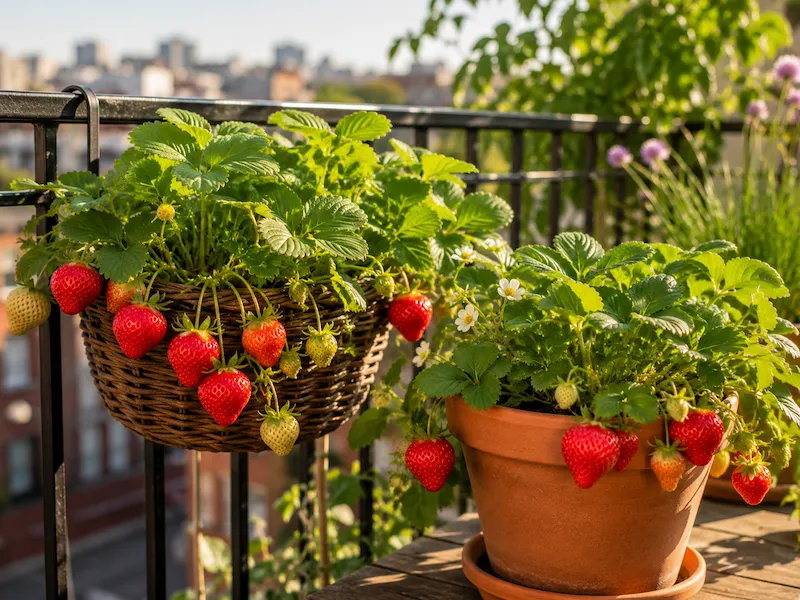
Strawberries are not technically a vegetable — but they deserve a place on this list because they are one of the most rewarding crops you can grow in a container and nothing beats eating a sun-warmed strawberry you grew yourself.
They work brilliantly in hanging baskets, window boxes, or terracotta strawberry planters. Everbearing varieties like Albion or Seascape in the US, or Mara des Bois in Europe, produce fruit across a long season rather than all at once which makes them more practical for a small balcony setup.
Best for: All US and European climates Container depth: 20cm minimum — hanging baskets work brilliantly
Sun needed: 6 hours
Setting Up Your Balcony Container Garden
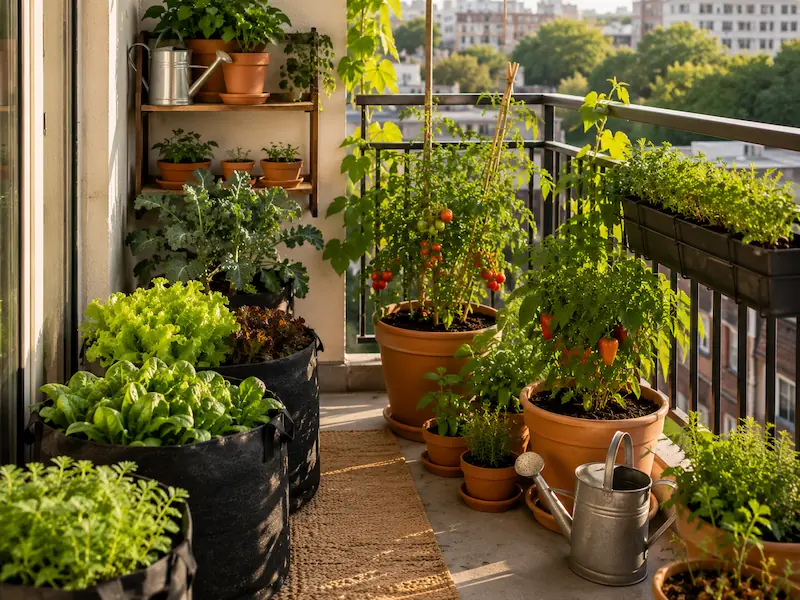
Now that you know what to grow, here is how to set it up properly.
Containers
Soil
Never use garden soil in containers. It compacts, drains poorly, and suffocates roots. Use a quality multipurpose compost mixed with perlite for drainage. For tomatoes, peppers, and courgettes use a specific vegetable and tomato compost — it is formulated for heavy feeders and makes a noticeable difference to yields.
Watering
Balcony containers dry out fast — faster than you expect, especially in summer and especially in terracotta pots. Check your plants every day in warm weather and water whenever the top 2cm of compost feels dry. A watering can with a long neck makes it much easier to water containers without soaking the leaves.
Common Balcony Growing Mistakes
Choosing the wrong varieties
This is the biggest mistake beginners make. Always look for varieties described as compact, dwarf, patio, or container-grown. Standard varieties of tomatoes, peppers, and courgettes are bred for open ground and will struggle in pots.
Pots that are too small
Small containers dry out too quickly, restrict root growth, and require constant watering. When in doubt go one size bigger than you think you need.
Not feeding
Unlike garden soil, container compost runs out of nutrients quickly. After the first 4 to 6 weeks start feeding with a liquid fertiliser every 1 to 2 weeks. For leafy greens use a balanced fertiliser. For tomatoes, peppers, and courgettes switch to a high potassium tomato feed once flowers appear.
Giving up too early
Balcony growing has a learning curve. Your first season will teach you more than any guide ever could. Some things will not work. Some things will surprise you completely. Keep going — by your second season you will know exactly what works on your specific balcony and your yields will be dramatically better.