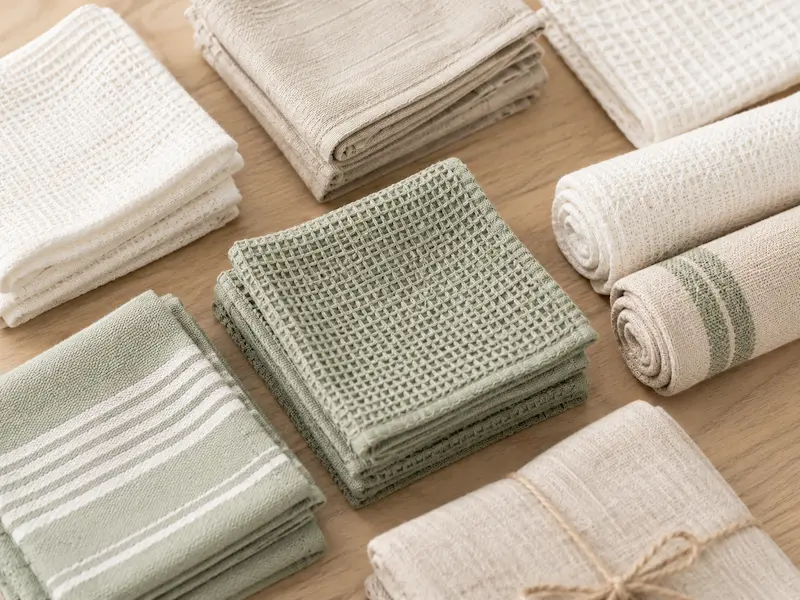
stack of folded reusable cloth paper towels in sage green and natural linen on kitchen counter next to wooden holder with herbs in background

Reusable Paper Towels DIY: How to Make Unpaper Towels in 30 Minutes
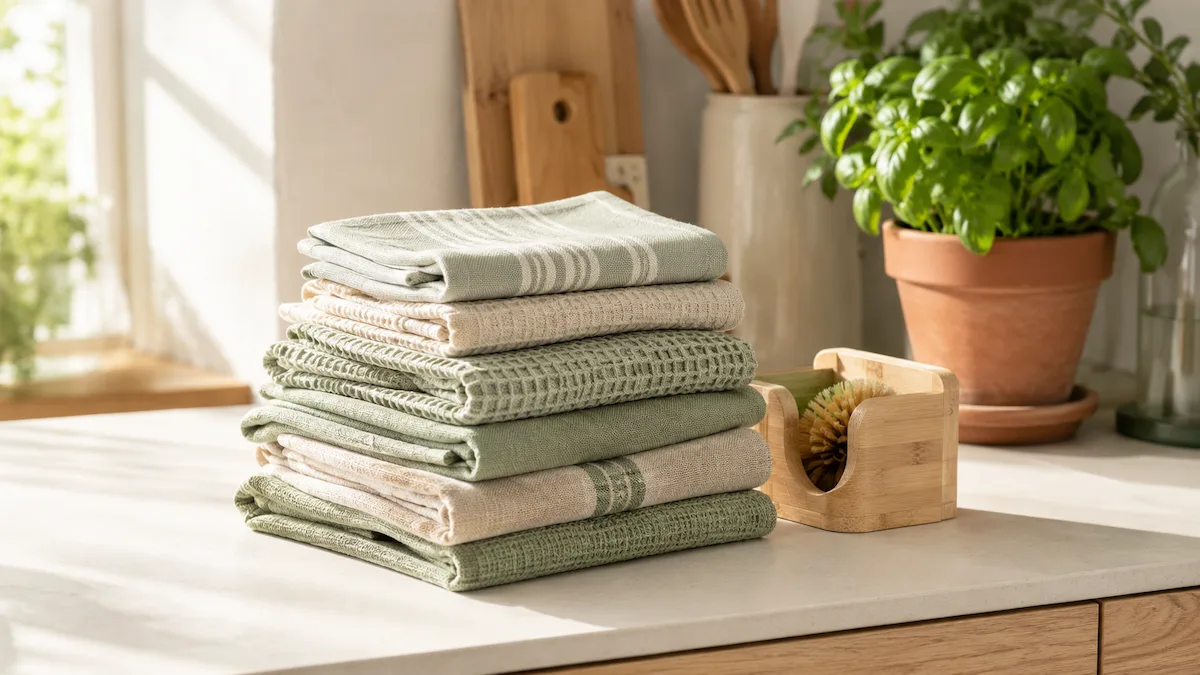
stack of folded reusable cloth paper towels in sage green and natural linen on kitchen counter next to wooden holder with herbs in background

I used to buy paper towels every two to three weeks without thinking twice about it.
Then I worked out what I was actually spending. A decent roll of paper towels costs around $2 to $3. At one roll every two weeks that is somewhere between $50 and $75 a year. On something I was literally throwing in the bin every single day.
Making your own reusable paper towels — often called unpaper towels — costs around $10 to $15 in fabric and takes about 30 minutes to make a set of 12. That set will last for years. The maths is not complicated
But the saving is only part of the reason to make the switch. Paper towels are one of the most wasteful items in any kitchen. In the US alone over 13 billion pounds of paper towels are thrown away every year. Every roll you replace with a reusable cloth alternative is a small but genuine reduction in that number.

In this guide you will learn:

  • What reusable paper towels are and why they work better than disposable
  • What fabrics work best and where to get them cheaply
  • Three methods to make them — sewing, no-sew, and zero cost
  • How to store and use them so they actually replace paper towels
  • How to wash and care for your unpaper towels
  • How much money you will save in year one and beyond
  • Let's make something.

What Are Reusable Paper Towels?

close-up flat lay of neatly folded reusable unpaper towels in natural linen sage green and white cotton fabrics on wooden surface

Reusable paper towels — also called unpaper towels or cloth paper towels — are small squares of absorbent fabric that replace disposable paper towels in your kitchen.
They do everything a paper towel does. They wipe surfaces, dry hands, absorb spills, clean counters, and polish glass. The only difference is that instead of throwing them away after one use you toss them in the washing machine and use them again.
A well-made set of unpaper towels lasts for years — some people have sets that are still going strong after five or six years of daily use. The cost per use drops to almost nothing within weeks of making them.
They work best as a direct replacement for the paper towels you reach for automatically — the quick wipe, the counter clean, the hand dry after washing up. For things you would genuinely rather throw away — raw meat juices, for example — you can keep a small stash of genuinely disposable cloths or a few paper towels for those specific uses.

What Fabrics Work Best

FabricAbsorbencyDurabilityBest ForCost
Terry cloth / TowellingExcellentExcellentSpills, cleaning, dryingLow — old towels
FlannelVery goodVery goodAll purpose, soft on surfacesLow — $3–5/yard
Cotton muslinGoodGoodLight cleaning, dustingVery low — $2–3/yard
Old t-shirtsGoodGoodAll purposeFree — zero cost
LinenModerateExcellentPolishing glass, dryingMedium — $5–8/yard
Bamboo fabricExcellentGoodAntibacterial, soft surfacesMedium — $6–9/yard
Terry Cloth / Towelling ⭐ Best
AbsorbencyExcellent
DurabilityExcellent
Best ForSpills, cleaning, drying
CostLow — old towels
Flannel
AbsorbencyVery Good
DurabilityVery Good
Best ForAll purpose, soft on surfaces
CostLow — $3–5/yard
Cotton Muslin
AbsorbencyGood
DurabilityGood
Best ForLight cleaning, dusting
CostVery Low — $2–3/yard
Old T-Shirts ⭐ Zero Cost
AbsorbencyGood
DurabilityGood
Best ForAll purpose
CostFree
Linen
AbsorbencyModerate
DurabilityExcellent
Best ForPolishing glass, drying
CostMedium — $5–8/yard
Bamboo Fabric
AbsorbencyExcellent
DurabilityGood
Best ForAntibacterial, soft surfaces
CostMedium — $6–9/yard

Best beginner choice: Old bath towels cut into squares. Zero cost, excellent absorbency, and they last for years. If you do not have old towels check charity shops — a large second-hand towel costs almost nothing and produces 12 to 15 unpaper towels.

Best looking option: Flannel on one side, terry cloth on the other — sewn together into double-sided towels. The flannel side looks beautiful and the terry side absorbs everything.

What You Need
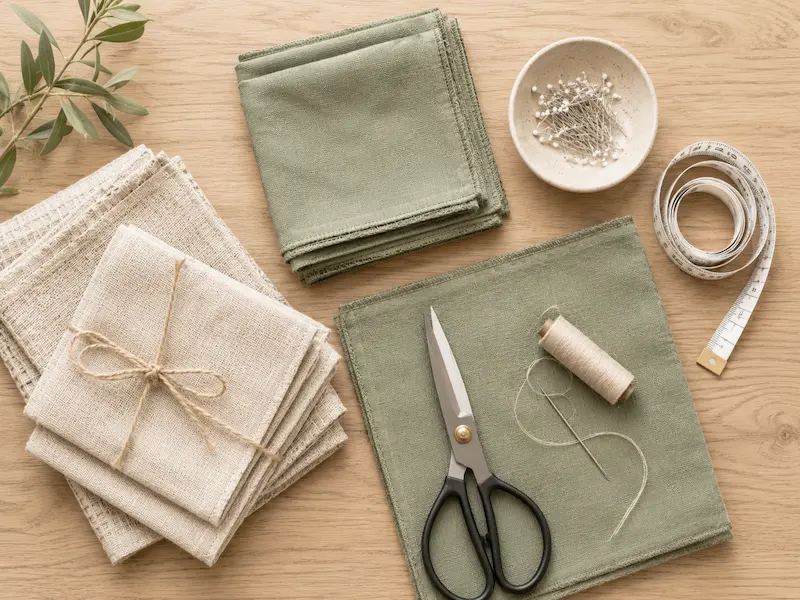
reusable paper towels diy supplies flat lay including fabric squares scissors pins measuring tape and needle and thread on wooden surface

For the Sewing Method

  • Fabric — old towels, flannel, or cotton from a fabric shop
  • Fabric scissors — sharper than regular scissors makes a big difference
  • Pins or clips to hold fabric in place
  • Sewing machine or needle and thread
  • Ruler or measuring tape
  • Fabric marker or chalk

For the No-Sew Method

  • Old t-shirts or cotton jersey fabric
  • Fabric scissors
  • Ruler
  • That is genuinely everything. The no-sew method requires nothing beyond scissors and an old t-shirt.

Method 1 — Sewn Double-Sided Unpaper Towels
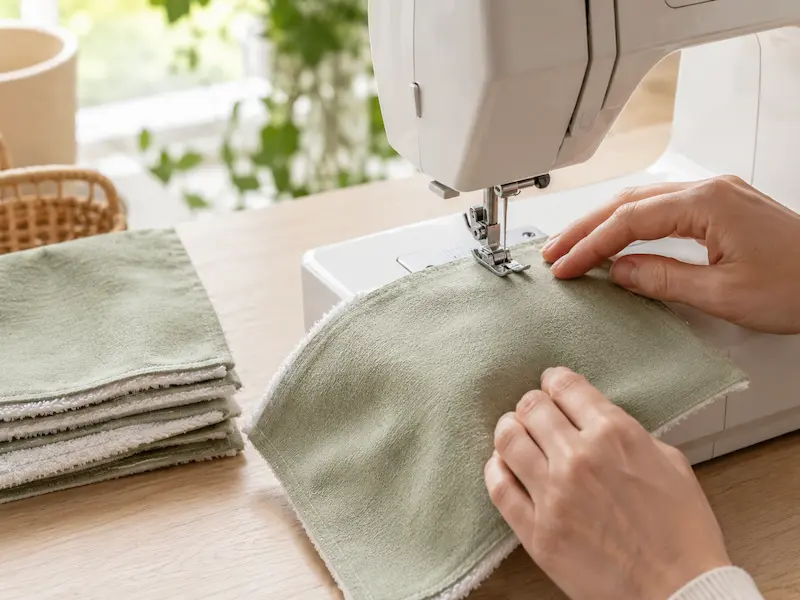
hands sewing sage green flannel and white terry cloth fabric together on home sewing machine to make reusable paper towels

This method produces the most durable and professional-looking unpaper towels. They are double-sided — soft fabric on one side, absorbent terry on the other — and have finished edges that will not fray.

What to Cut

Cut your fabric into squares roughly 25 to 30 centimetres — slightly larger than a standard paper towel sheet. Cut two squares per towel — one from your outer fabric and one from your absorbent terry cloth.

  1. Cut your fabric — Cut squares of 25 to 30cm from both your outer fabric and your terry cloth. Use a ruler and fabric marker for clean straight lines. Cut enough pairs for 12 towels.
  2. Pin the pieces together — Place one outer fabric square and one terry cloth square together with the right sides facing inward. Pin around all four edges to hold them in place while sewing.
  3. Sew around the edges — Sew around all four sides leaving a 1cm seam allowance. Leave a gap of about 5cm on one side — you need this to turn the towel right-side out.
  4. Clip the corners — Snip the fabric at each corner diagonally close to but not through the stitching. This reduces bulk and gives clean square corners when turned.
  5. Turn right-side out — Push the towel through the gap you left. Use a pencil or chopstick to push the corners out cleanly.
  6. Press flat and close the gap — Iron the towel flat. Tuck in the raw edges at the gap and either hand stitch it closed or sew a neat line of stitching around the whole perimeter to close it and give a professional finish.
  7. Wash before use — Wash your new unpaper towels once before using them. This pre-shrinks the fabric and removes any sizing that might reduce absorbency.
  8. Time: around 3 to 4 minutes per towel once you are in rhythm. A set of 12 takes 45 to 60 minutes total.

Method 2 — No-Sew Unpaper Towels from Old T-Shirts

This is the fastest and cheapest method. No sewing required. Ready in under 10 minutes.
Cotton jersey fabric — the kind most t-shirts are made from — has a natural rolled edge when cut. It does not fray. This makes it perfect for no-sew unpaper towels.

  1. Find old t-shirts — Any cotton or cotton-blend t-shirt works. Avoid polyester — it does not absorb as well. The larger the t-shirt the more towels you get from it.
  2. Cut off the hem and seams — Cut away the bottom hem and side seams so you have flat panels of fabric.
  3. Cut into squares — Cut the flat panels into squares of around 25 to 28cm. You do not need to be precise.
  4. That is it — The cut edges roll slightly and do not fray. Wash once before use. Your no-sew unpaper towels are ready.
  5. One large adult t-shirt produces 6 to 8 unpaper towels. Two or three old t-shirts give you a full set of 12 to 16 for completely free.

Method 3 — Zero Cost from Old Towels

The fastest method of all — and genuinely costs nothing if you have an old towel.

  1. Find an old bath towel or hand towel — A worn towel that is past its best for actual bath use is perfect. Charity shops sell these for almost nothing.
  2. Cut into squares — Cut the towel into squares of around 25 to 30cm. A standard bath towel produces 12 to 15 squares.
  3. Optional — serge or zigzag the edges — Terry cloth frays with washing. If you have a sewing machine run a quick zigzag stitch around the edges to prevent fraying. If you do not have a machine they will still work fine — they just become slightly more ragged over time.
  4. Wash before use — Wash once before using to remove any residue and pre-shrink the fabric.
  5. These are the most absorbent unpaper towels you can make. Old terry cloth towels hold more water than any other fabric on the list.

How to Store and Use Your Unpaper Towels
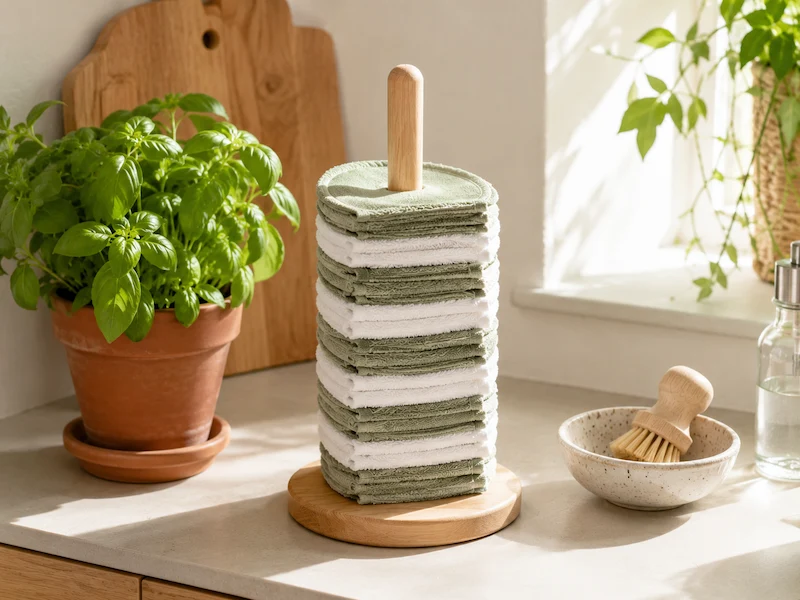
wooden paper towel holder on bright kitchen counter with rolled reusable cloth unpaper towels stacked on it in sage green and white

The key to actually replacing paper towels with cloth alternatives is making the cloth towels just as easy to reach for. If they are buried in a drawer you will keep grabbing paper towels out of habit.

Storage Options That Work

  • Paper towel holder — Roll your unpaper towels and stack them on your existing paper towel holder. They sit in exactly the same place your paper towels did. This is the most effective method for actually replacing paper towels because the habit does not change.
  • Small basket on the counter — Fold into squares and stack in a small basket. Looks neat and accessible.
  • Hook on a cabinet door — Hang a small hook inside a cabinet door with a few folded towels on it. Completely hidden but always accessible.
  • Wooden box or tray — A small wooden box on the counter holds a rolled stack neatly and looks beautiful.

Dirty Towel Collection

You need a place to put used towels before washing. Options:
  • A small hook near the sink for lightly used towels that can be reused once more
  • A small basket or bin for used towels ready to wash
  • A wet bag — waterproof fabric bag — if you want to contain any damp towels
  • Wash your unpaper towels with your regular laundry — they do not need special treatment. Add them to any normal wash load.

How to Wash and Care for Unpaper Towels

  • Wash in any normal laundry load — hot or warm water for kitchen towels
  • Tumble dry or line dry — both work well
  • No fabric softener — it reduces absorbency over time
  • No bleach on coloured fabrics — use white vinegar as a natural brightener instead
  • Wash with similar colours to prevent dye transfer in the first few washes
  • Iron if you want them to look neat — not necessary but they stack better when pressed

The Real Saving — Year One and Beyond

Paper TowelsUnpaper TowelsSaving
Year one cost$50–75$10–15 (materials)$40–65
Year two cost$50–75$0 (already made)$50–75
Five year cost$250–375$10–15 (one-time)$240–360
Paper towels thrown away2,600+ per yearZero2,600 per year
Year One Cost
Paper Towels$50–75
Unpaper Towels$10–15
Saving$40–65
Year Two Cost
Paper Towels$50–75
Unpaper Towels$0
Saving$50–75
Five Year Cost
Paper Towels$250–375
Unpaper Towels$10–15
Saving$240–360
Waste Eliminated
Paper Towels2,600+ per year
Unpaper TowelsZero
Eliminated2,600 per year

Frequently Asked Questions

Do reusable paper towels actually work as well as disposable?

Yes — and for most tasks they work better. Terry cloth and flannel absorb significantly more liquid than a paper towel and do not tear or disintegrate mid-wipe. The main exception is tasks where you genuinely want to throw the cloth away afterwards — like cleaning up raw meat. Keep a small stash of paper towels or genuinely disposable cloths for those specific situations.

Are they hygienic?

Yes — as long as you wash them regularly. Use a separate cloth for food surfaces and non-food surfaces if you want to be thorough. Washing in warm water with regular detergent kills the bacteria that cause odour and cross-contamination. Many people find cloth towels are more hygienic than paper in practice because they do not use the same piece across multiple surfaces the way you might accidentally do with a paper towel.

How many do I need?

Most households manage well with 12 to 16 unpaper towels. This gives you enough to rotate through between washes without running out. If you do laundry twice a week 12 is usually sufficient. If you wash once a week aim for 16 to 20.

Do they smell?

They can if left damp for too long before washing — exactly like a regular kitchen cloth or tea towel. The solution is the same — do not leave them in a wet pile. A small open basket for used towels allows airflow and prevents odour buildup between washes. Adding a tablespoon of white vinegar to your wash also neutralises any lingering smells naturally.

Can I make them without a sewing machine?

Absolutely. The no-sew t-shirt method requires nothing but scissors and takes 10 minutes. Alternatively fabric glue or iron-on hemming tape can finish the edges of cut fabric without any sewing at all. The old towel method also requires no sewing — just cutting.

What do I do with them when they wear out?

Demote them. A worn unpaper towel that is no longer good enough for kitchen use becomes a cleaning cloth for bathrooms, windows, or shoes. When it is truly beyond use it goes in the compost if it is 100 percent natural fibre — cotton, linen, or bamboo — or the textile recycling bin if it is a blend.

Final Thoughts

Reusable paper towels are one of the easiest zero waste swaps you can make in an apartment kitchen. They cost almost nothing to make, take 30 minutes, and then they just sit there on your counter doing the same job as paper towels — indefinitely.

The saving is real. The waste reduction is real. And unlike some zero waste projects that require you to change your habits significantly, unpaper towels slot straight into exactly the same habit you already have — reaching for a towel to wipe something.

Make a set this weekend. Within two weeks you will not miss paper towels at all.

📌

Found this helpful? Save it to your Apartment Homesteading Pinterest board so you can come back to it when you are ready to make your first set.

🪱

Want to compost the scraps? Read our guide on Apartment Worm Composting and turn your fabric trimmings and kitchen scraps into free plant food.

🏡

Building your apartment homestead? Read our complete guide to Homesteading in an Apartment for everything you can make, grow, and ferment in a small rented space.

Similar Posts

Leave a Reply

Your email address will not be published. Required fields are marked *