How to Cut Your Grocery Bill Growing These 10 Herbs
How to Cut Your Grocery Bill Growing These 10 Herbs
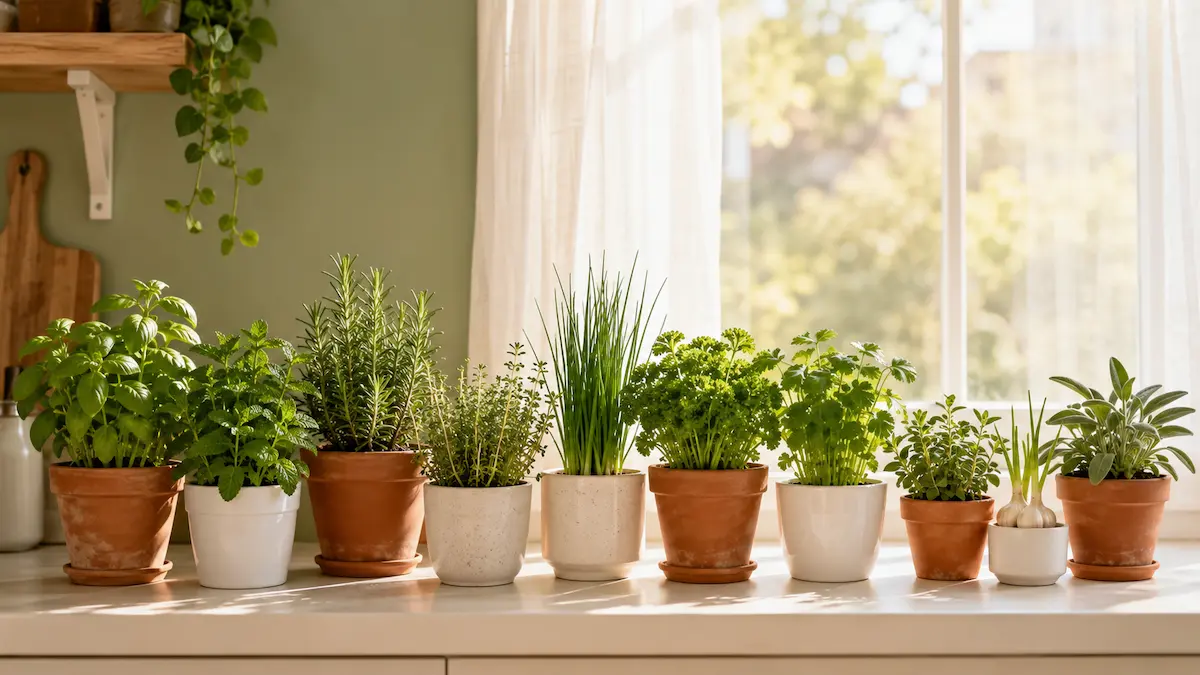
I want to show you something that genuinely surprised me when I first worked it out.
A 0.5 oz clamshell of fresh basil at Walmart costs $1.78 right now. That is $3.56 per ounce. A basil plant from a garden centre costs around $2 to $3 and produces fresh leaves every single week for an entire growing season — sometimes longer.
If you use fresh basil just twice a week and buy it from the supermarket, you are spending somewhere between $150 and $200 a year on one herb. One. A $3 plant replaces all of that.
That is not a marginal saving. That is the kind of number that makes you stop and reconsider every fresh herb you have ever thrown wilted into the bin.
This article is about the real math behind growing your own herbs — which ones save the most money, what they actually cost at the supermarket right now, and exactly how quickly each one pays for itself on your windowsill.
Why Supermarket Herbs Are So Expensive
Before we get into the numbers it helps to understand why packaged herbs cost what they do.
Every time you buy a clamshell of fresh basil from Walmart or a plastic-wrapped bunch of parsley from Kroger you are paying for:
The Real Numbers — What Herbs Actually Cost at the Supermarket
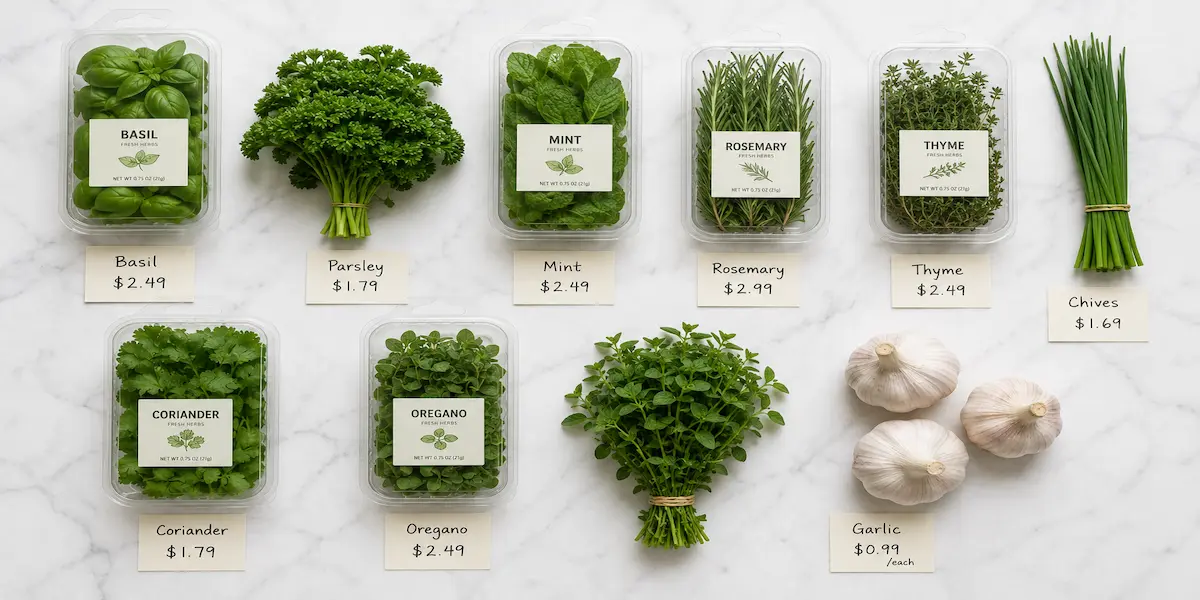
Here is what you are actually paying at major US supermarkets right now based on current pricing from Walmart and Kroger:
These are not premium organic prices from a fancy deli. These are the everyday prices at Walmart and Kroger in June 2026. The numbers are real.
Now look at what it costs to grow the same herbs yourself.
What It Actually Costs to Grow Your Own
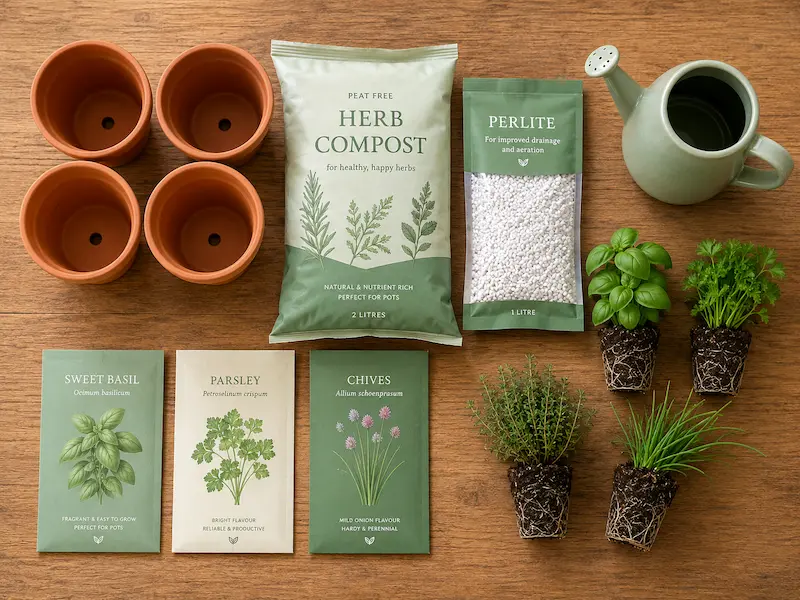
Here is a realistic cost breakdown for growing ten herbs on your windowsill for one full year:
That is your entire herb garden — ten herbs — for less than $85 in year one and around $30 in every subsequent year. Compare that to buying even half of those herbs from a supermarket weekly and the saving becomes very clear very quickly.
According to research from Garden City Harvest, home gardeners working plots as small as 15 by 15 feet save an average of $400 per year on groceries. A quarter of those gardeners trim $20 to $25 off their grocery bill every single week just from herbs and greens. A windowsill setup is smaller but herbs alone account for the biggest savings per square inch of any crop you can grow.
The 10 Herbs That Save the Most Money
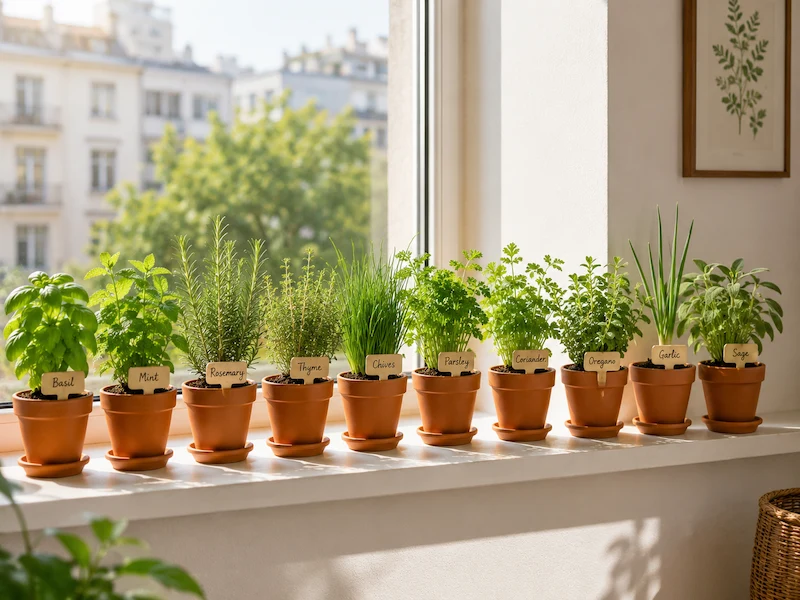
1. Basil — saves up to $200/year
Basil is the single best herb to grow for savings. At $1.78 for a tiny 0.5 oz clamshell that wilts within three days, it is almost painful to buy at a supermarket. A $3 basil plant on your windowsill produces continuous harvests for an entire growing season.
If you use basil twice a week — on pasta, pizza, salads, and in pesto — you could easily spend $150 to $200 a year buying it from the supermarket. Your homegrown plant costs $3 plus a share of your compost. The maths speaks for itself.
Growing tip: Pinch the top leaves regularly and remove flower buds the moment they appear. This keeps the plant producing rather than going to seed.
2. Chives — saves $80–$120/year
Chives cost $2.49 for a tiny 0.5 oz pack at Kroger. A chive plant costs around $2 to $3 at a garden centre and regrows every time you cut it. More importantly chives are a perennial — the same plant comes back year after year, meaning your one-time investment keeps paying dividends indefinitely.
If you use chives on eggs, baked potatoes, soups, and cream cheese two or three times a week, the saving over a year is significant — and accelerates over time as the perennial plant gets larger and more productive.
Growing tip: Cut the whole plant down to 3cm from the base and it regrows within a week. The more aggressively you harvest chives the more vigorously they produce.
3. Mint — saves $100–$150/year
Mint at $2.49 for a tiny supermarket pack is one of the most overpriced herbs by weight. A single mint plant costs $2 to $3 and grows so aggressively you will have more than you can use within weeks.
Mint is used constantly — in tea, cocktails, salads, yoghurt dressings, and Middle Eastern cooking. If you make mint tea even a few times a week, a supermarket habit adds up fast. One mint plant grown in its own pot (always grow mint alone — it takes over) replaces all of that and keeps producing for years.
Growing tip: Always grow mint in its own container. It spreads aggressively and will crowd out any herb it shares a pot with.
4. Rosemary — saves $60–$100/year
At $2.49 for a 0.5 oz pack at Kroger, rosemary is expensive per ounce and used in relatively small quantities — which makes the supermarket version particularly wasteful. You buy a pack, use two sprigs, and watch the rest dry out on the counter.
A rosemary plant bought once at $3 to $5 will grow into a substantial shrub that produces fresh sprigs year-round for years. It is one of the longest-lasting herb investments you can make and one of the easiest Mediterranean herbs to maintain once established.
Growing tip: Rosemary needs the sunniest spot you have and very sharp drainage. Let the soil dry completely between waterings — overwatering is the only real way to kill it.
5. Thyme — saves $60–$100/year
Thyme follows the same pattern as rosemary. Expensive per ounce at the supermarket, used in small quantities in cooking, and almost impossible to use up a supermarket pack before it deteriorates. A thyme plant grown in a terracotta pot pays for itself after two or three harvests and keeps producing for years.
Like rosemary, thyme is a Mediterranean perennial that gets better with age. A well-established thyme plant after two or three years is a genuinely impressive producer.
Growing tip: Let the soil dry completely between waterings. Thyme is drought-tolerant and will rot quickly in waterlogged compost.
6. Parsley — saves $50–$80/year
Parsley is one of the cheaper herbs at the supermarket — $0.97 a bunch at Walmart — but it is also one of the most used. If you cook regularly and use parsley in salads, tabbouleh, soups, and garnishes several times a week, those bunches add up over a year.
Flat-leaf parsley has better flavour than curly and is worth growing if you cook Mediterranean or Middle Eastern food regularly. It takes three to four weeks to germinate from seed but once established it produces reliably for months.
Growing tip: Always harvest the outer stems first and leave the inner growth untouched. This keeps the plant producing for months rather than weeks.
7. Garlic — saves $30–$60/year
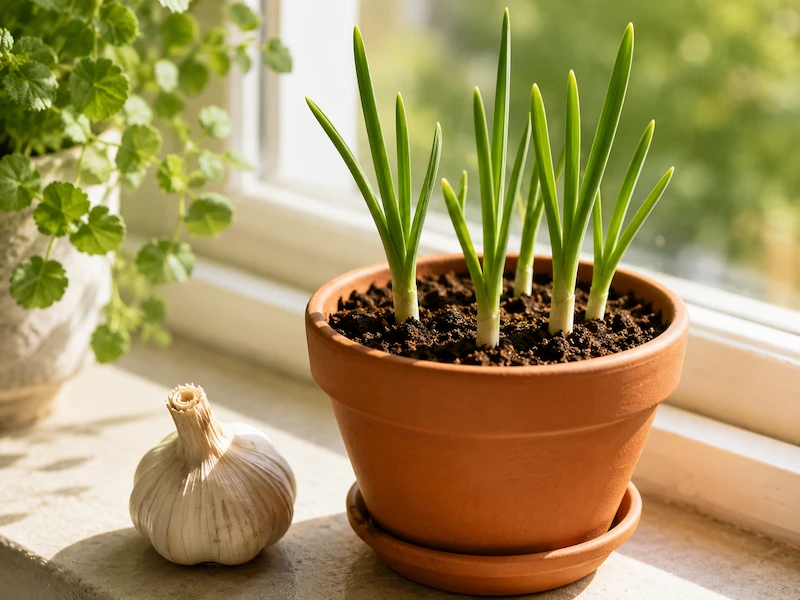
This is one that surprises people. Garlic grows beautifully in a pot — and the process could not be simpler. Push individual cloves into compost, pointy end up, in autumn. Green shoots appear within weeks. Harvest whole bulbs the following summer.
At $0.68 to $1.20 per bulb at the supermarket, garlic is not the most expensive item on this list. But it is used constantly in cooking — multiple times a week for most households — and growing your own gives you fresh green garlic shoots in spring, which are something you cannot buy at any price in a regular supermarket.
Each clove you plant produces a whole bulb. If you plant ten cloves in a large pot in autumn you harvest ten bulbs the following summer. The maths is straightforward.
Growing tip: Choose a pot at least 20cm deep. Plant cloves 10cm apart, pointy end up, just below the soil surface. Water in and leave them to do their thing.
8. Oregano — saves $50–$80/year
Oregano at $2.49 for a tiny 0.5 oz pack at Kroger is particularly poor value because dried oregano is used in such large quantities in Italian and Greek cooking. Fresh oregano has a more complex, less bitter flavour than dried and a single plant produces far more than most households can use.
Like thyme and rosemary, oregano is a Mediterranean perennial that gets more productive with each passing year. One plant bought once is a very long-term investment.
Growing tip: Oregano flowers prolifically in summer. Let it flower — the flowers are edible and attractive — but cut it back hard afterwards to encourage a fresh flush of tender new growth.
9. Coriander / Cilantro — saves $40–$70/year
Cilantro at $0.83 a bunch at Walmart seems cheap until you factor in how fast it wilts and how quickly a recipe can use up an entire bunch. If you cook Asian, Mexican, or Indian food regularly you will go through cilantro fast.
Growing coriander is slightly more demanding than other herbs because it bolts quickly in heat — but succession sowing every three weeks throughout the growing season gives you a continuous supply all summer.
Growing tip: Keep coriander in a cooler spot away from direct afternoon sun. Sow a new pot every three weeks rather than relying on one large plant.
10. Sage — saves $50–$80/year
Sage rounds out the list as another supermarket overpriced Mediterranean herb that grows effortlessly in a sunny pot. At $2.49 for 0.5 oz at Kroger it is expensive per ounce, used in small quantities, and wilts within days of purchase.
A sage plant bought once for $2 to $3 produces gorgeous silver-green aromatic leaves for years. It also produces beautiful purple flowers in summer that are edible and stunning in a salad.
Growing tip: Sage needs good drainage and full sun. Prune back by one third in early spring to keep it bushy and prevent it becoming woody and unproductive.
Your Annual Herb Saving — The Full Picture
Let us put all of this together. Here is a conservative estimate of what a household that cooks regularly saves by growing these ten herbs rather than buying them:
These are conservative numbers based on moderate cooking frequency. If you cook every day and use fresh herbs consistently the saving is higher. If you only cook occasionally it is lower. But even at the low end the case for growing your own herbs is overwhelming.
The homegrown cost of $0.12 to $0.38 per cup of fresh herbs versus $1.49 to $4.29 per cup at retail — as calculated by recent research on home herb growing costs — means the break-even point for most herb gardens arrives within three to six months of planting.
How to Start Saving Money This Week
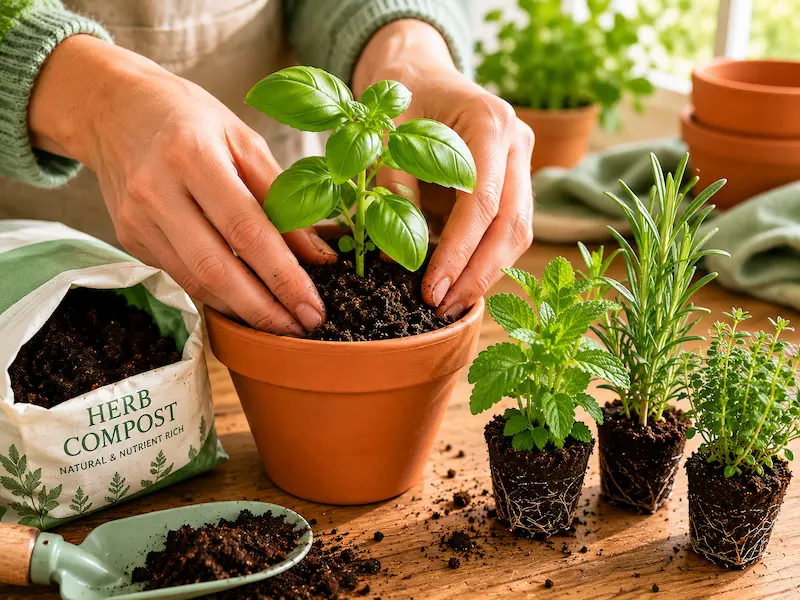
You do not need to set up all ten herbs at once. Start with the three that will save you the most money based on what you actually cook.
If you cook Italian food regularly — start with basil, oregano, and parsley. If you make tea or cocktails — start with mint. If you cook every night with garlic — plant a pot of cloves this autumn.
Here is the minimum you need to get started:
Within four to six weeks you will be harvesting. Within three months the plants will have paid for themselves. After that everything they produce is pure saving — week after week, month after month.