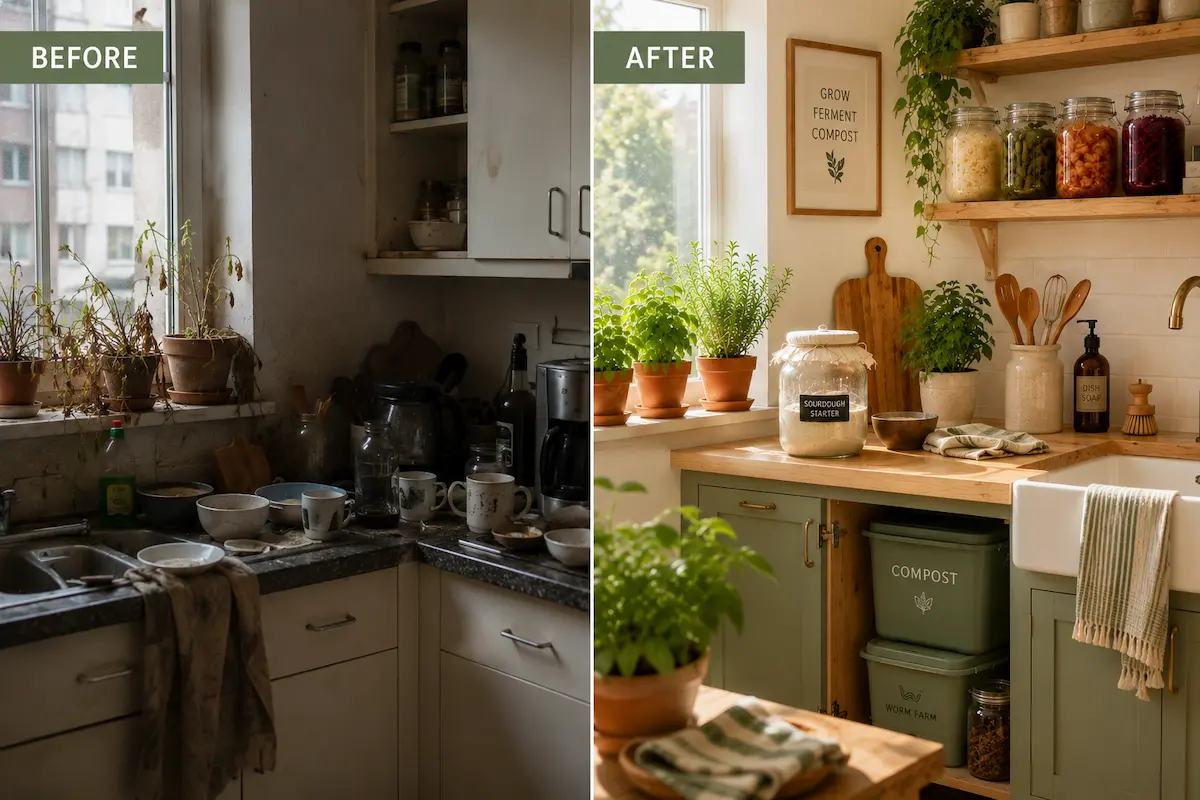
Apartment homestead kitchen with sage-green cabinets, herb pots, sourdough starter jar, fermentation jars, worm farm, and a freshly baked sourdough loaf.

Homesteading in an Apartment: The Complete Beginner’s Guide for Renters

Homesteading in an Apartment: The Complete Beginner's Guide for Renters
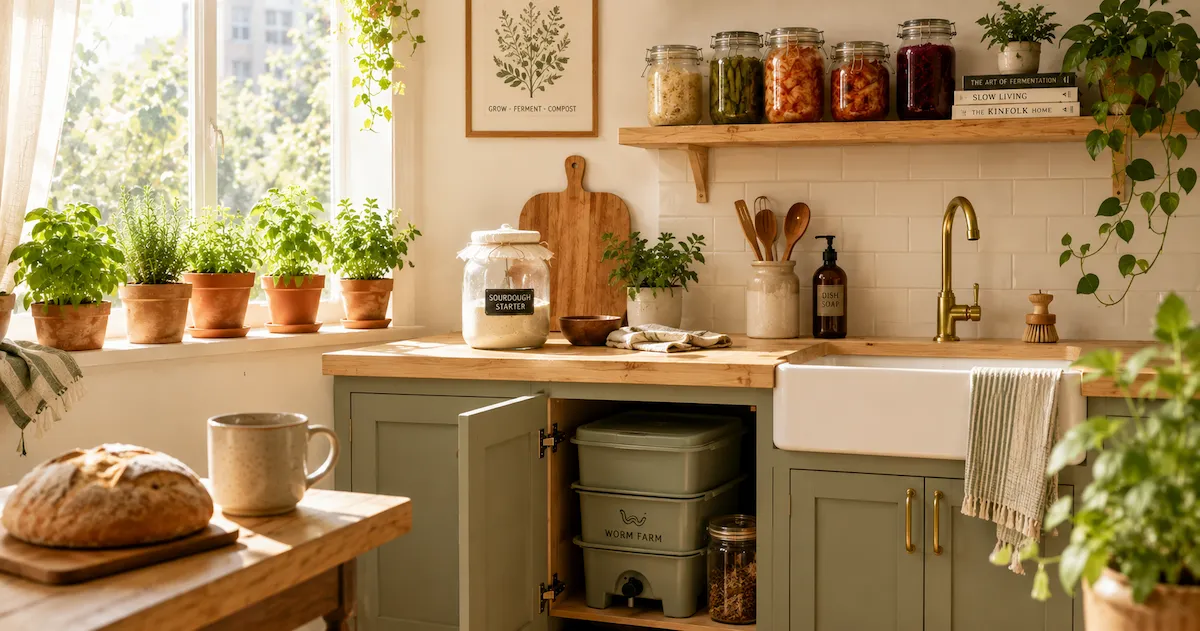
Apartment homestead kitchen with sage-green cabinets, herb pots, sourdough starter jar, fermentation jars, worm farm, and a freshly baked sourdough loaf.

Most people hear the word homesteading and picture acres of land, chickens in a yard, and a farmhouse with a vegetable garden stretching to the horizon.

That is not what this is.

Homesteading in an apartment is about something much simpler — taking back a little control over what you eat, reducing what you throw away, and building small daily habits that make your life more self-sufficient regardless of where you live or whether you own your home.

You do not need land. You do not need to own your home. You do not even need a balcony.
What you need is a windowsill, a kitchen counter, and the willingness to start small.

In this guide you will learn:

  • What homesteading in an apartment actually means
  • Why renters can homestead just as effectively as landowners
  • The six best projects to start with right now
  • How to build your apartment homestead one step at a time
  • The most common mistakes beginners make and how to avoid them


  • Let's get into it.

What Does Homesteading in an Apartment Actually Mean?
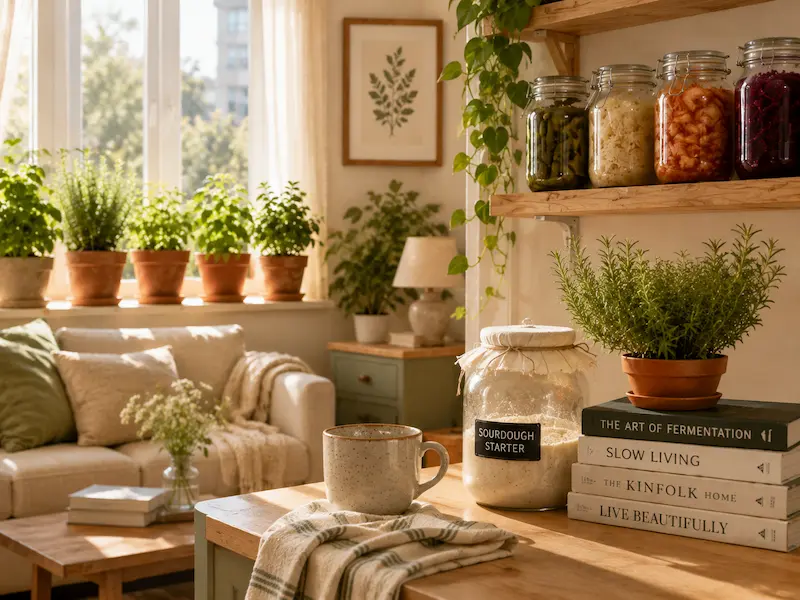
Cozy apartment with herb plants on a sunny windowsill, a sourdough starter jar, homesteading books, and fermentation jars on a wooden shelf.

Traditional homesteading meant becoming as self-sufficient as possible — growing your own food, raising animals, preserving harvests, and reducing dependence on outside systems.

Apartment homesteading applies the same core philosophy to a small rented space.

It means:

  • Growing some of your own food indoors
  • Making things from scratch rather than buying them
  • Reducing food waste through composting and fermentation
  • Building practical skills that reduce your dependence on supermarkets
  • Living more intentionally and consuming less

You will not become completely self-sufficient in a studio flat. That is not the goal. The goal is to move in that direction — one herb pot, one sourdough loaf, one jar of sauerkraut at a time.

Every small step counts. And the accumulation of small steps adds up to something genuinely meaningful over time.

Why Renters Can Homestead Just as Effectively as Landowners

This is the most important thing to understand before you start.

The core skills of homesteading — growing food, fermenting, preserving, baking, reducing waste — do not require land. They require knowledge and practice.

A windowsill herb garden produces fresh herbs just as nutritious as those grown in a large garden. A small worm bin converts kitchen scraps into rich compost just as effectively whether it sits under your sink or in a barn. Sourdough baked in a small apartment oven tastes exactly the same as sourdough baked in a farmhouse kitchen.

The only real difference between a rural homesteader and an apartment homesteader is scale — not quality, not skill, not the satisfaction of making something yourself.
In some ways apartment homesteading is actually easier to start. You do not need to clear land, build raised beds, or invest in expensive infrastructure. You start with what you have, where you are, right now.

The Six Best Projects to Start With
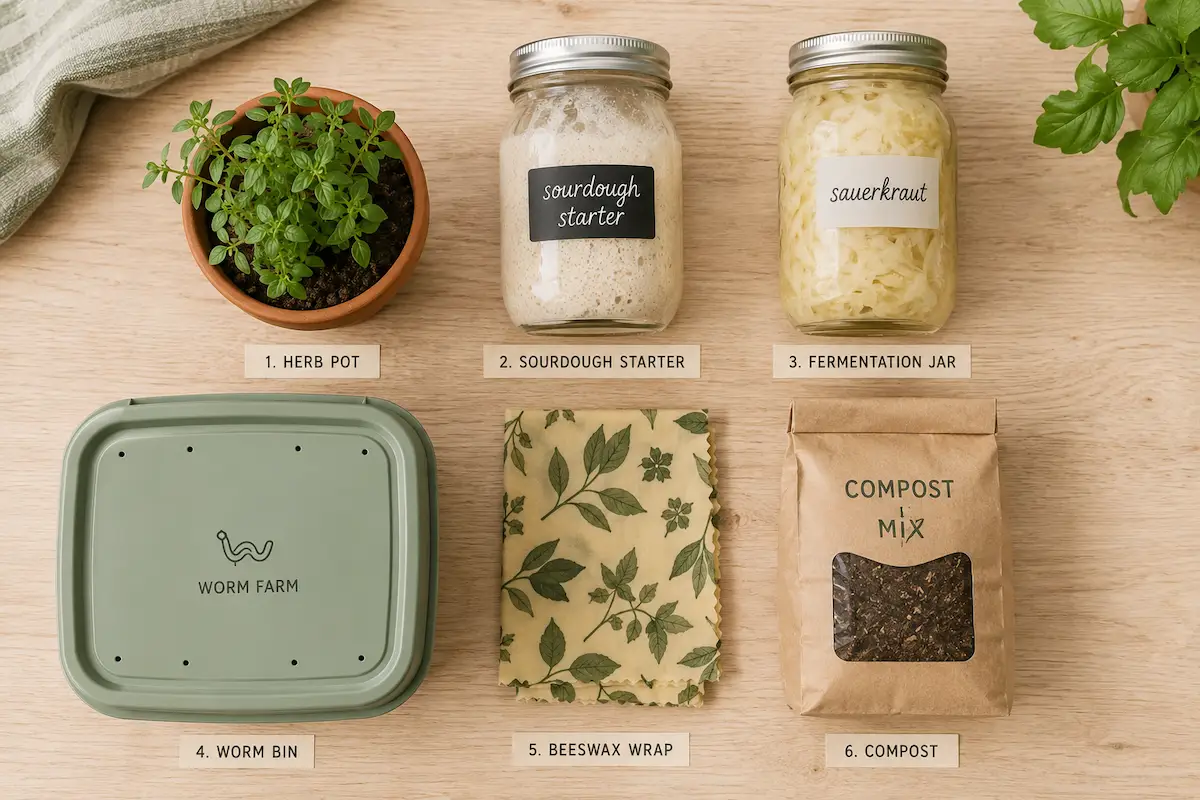
Six apartment homesteading starter items: herb pot, sourdough starter, sauerkraut jar, worm bin, beeswax wrap, and compost mix.

These six projects form the foundation of apartment homesteading. Each one builds on the others over time, creating a system that becomes more productive and more rewarding the longer you keep it going.

1. A Windowsill Herb Garden

This is where almost every apartment homesteader starts — and for good reason.

A few small pots of herbs on a sunny windowsill give you an instant, tangible connection to growing your own food. Within weeks of planting you are harvesting fresh basil, mint, rosemary, and chives directly from your windowsill and using them every time you cook.
The benefits go beyond convenience. Growing your own herbs saves money, eliminates plastic packaging, and gives you flavours dramatically better than anything you buy in a supermarket.

The easiest herbs to start with:

  • Chives — the most forgiving, tolerates low light, grows fast
  • Mint — almost impossible to kill, ideal for north-facing windows
  • Parsley — productive once established, moderate light needed
  • Basil — needs the most sun but grows fast and smells incredible
  • We have a complete guide to setting up your first windowsill herb garden covering everything from container choice to harvesting techniques.

2. Indoor Composting

Every apartment homesteader produces food waste. Composting turns that waste into something genuinely useful — free fertilizer for your plants — instead of sending it to landfill.

There are three practical composting methods for apartment dwellers:

  • A countertop compost bin — collects food scraps for collection by a local service. Simple and low maintenance but you do not get the finished compost yourself.
  • A Bokashi system — ferments food waste including meat and dairy in a sealed bucket. Very low odour and works in the smallest spaces.
  • A worm composting bin — uses red wiggler worms to convert food scraps into nutrient-rich castings that work as one of the best natural fertilizers available. Our personal recommendation because it produces something genuinely valuable for your indoor plants.
  • We have a detailed beginner's guide to apartment worm composting and a complete guide to composting in an apartment without smell if you want to explore your options.

3. Sourdough Baking

Making your own bread from scratch is one of the most satisfying homesteading skills you can develop in a small space. Sourdough in particular connects you to one of the oldest food traditions in human history — a living culture of wild yeast and bacteria that you feed, maintain, and bake with.

A sourdough starter requires nothing more than flour and water. Once established it lives in your fridge and produces enough culture for regular baking indefinitely. The bread itself requires no equipment beyond a bowl, a surface to fold on, and an oven.

Start with a simple no-knead sourdough loaf. Once you are comfortable with the basic process you can expand to pizza dough, flatbreads, crackers, and everything in between..

4. Fermentation

Fermentation is the process of preserving food using beneficial bacteria and wild yeasts. It is one of the oldest food preservation techniques in human history and one of the easiest to practice in a small apartment.

Starting projects for beginners:

  • Sauerkraut — requires nothing more than cabbage, salt, and a mason jar. Takes about five minutes to prepare and produces tangy, probiotic-rich fermented cabbage in one to four weeks.
  • Water kefir — a lightly fizzy fermented drink made using kefir grains, sugar, and water. Dairy-free, inexpensive, and incredibly easy once you have the grains.
  • Apple cider vinegar — made from apple scraps such as cores and peels that would otherwise go in the bin. Produces real, raw apple cider vinegar in four to eight weeks for almost zero cost.

5. Zero Waste Kitchen Habits

Reducing what you throw away is one of the fastest ways to make your apartment feel more like a homestead. Small changes add up quickly:

  • Beeswax wraps — replace cling film and last for years. DIY versions cost almost nothing to make and work better than the commercial alternatives.
  • Reusable paper towels — replace disposable kitchen roll. A set of cloth alternatives lasts indefinitely and eliminates a significant amount of plastic packaging and waste.
  • Bone broth on the stovetop — uses bones and vegetable scraps that would otherwise go in the bin, producing a deeply nutritious stock that forms the base of dozens of meals.

6. Growing Food Beyond Herbs

Once your herb garden is established, expanding to other edible plants is a natural next step.

  • Microgreens — grow on your kitchen counter in as little as seven days, producing nutrient-dense shoots of sunflower, radish, pea, and broccoli with almost no space or equipment required.
  • Garlic — grows beautifully in a pot on a windowsill or balcony. Plant individual cloves in autumn and harvest whole bulbs the following summer.
  • Lettuce — cut-and-come-again loose leaf varieties produce continuously from a single container. Harvest the outer leaves as needed and the plant keeps growing.

How to Build Your Apartment Homestead Step by Step
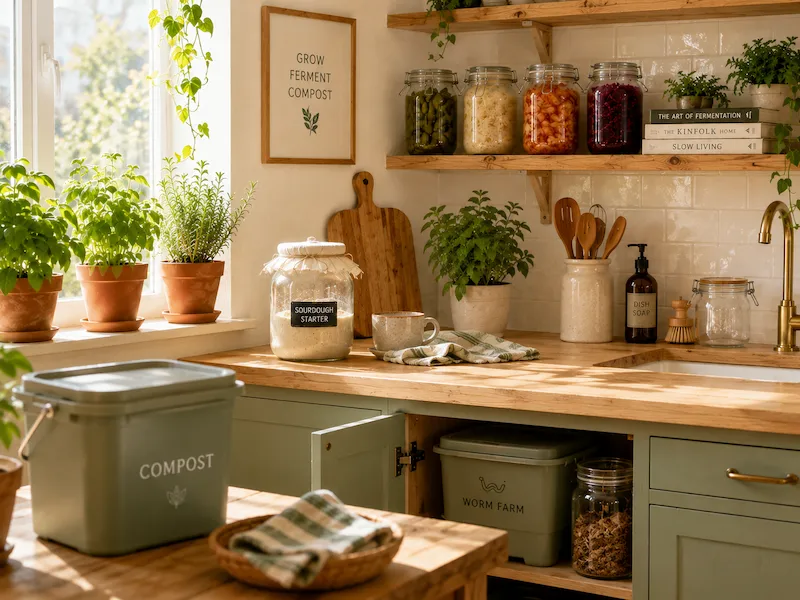
Apartment homestead kitchen with herb pots on the windowsill, sourdough starter jar, fermentation jars on open shelving, and a worm farm in sage-green cabinets.

The most common mistake new apartment homesteaders make is trying to start everything at once. They buy a worm bin, start a sourdough starter, plant six different herbs, and attempt their first batch of sauerkraut all in the same week — and then feel overwhelmed and give up.

The better approach is sequential. Start one project, get comfortable with it, and add the next one only when the first feels routine.


Here is a proven sequence that works well for most beginners:

  • Weeks 1 to 2 — Start your herb garden. Buy three or four small pots, some herb compost, and your first plants. Get into the rhythm of watering and harvesting.
  • Weeks 3 to 4 — Set up composting. Once you are generating herb trimmings and kitchen scraps regularly, start collecting them properly. Set up a worm bin or countertop collection system.
  • Month 2 — Start your sourdough starter. Feed it daily for two weeks until it is active and ready to bake with. Make your first loaf.
  • Month 3 — Try your first fermentation. Start with sauerkraut. It is the simplest, most forgiving ferment and produces reliable results even for complete beginners.
  • Month 4 and beyond — Expand gradually. Add more plants, try new ferments, develop your baking, explore zero waste swaps one at a time.

  • By month six you will have a genuinely functioning apartment homestead that produces food, reduces waste, and saves money — built one manageable step at a time.

What You Need to Get Started

    The good news is that apartment homesteading requires very little to begin.
    Here is what to buy for your first month:

  • For the herb garden — three to four small terracotta pots, a bag of herb compost mixed with perlite, and three or four herb plants from a garden centre or supermarket.
  • For composting — either a small countertop collection bin or a starter worm composting kit with red wiggler worms and a bin. Both are inexpensive and pay for themselves quickly.
  • For sourdough — strong white bread flour, water, and a glass jar with a loose lid. Nothing else.
  • For fermentation — a head of cabbage, non-iodised salt, and a mason jar. Sauerkraut costs less than two pounds to make and keeps for months in the fridge.

  • Total cost to start all four projects is typically between thirty and sixty pounds or dollars depending on what you already have in your kitchen.

Common Mistakes Beginners Make

Before and after: a cluttered apartment kitchen transformed into an organized homestead kitchen with herbs, sourdough starter, fermentation jars, compost bin, and worm farm.
  • Starting too many projects at once. The excitement of beginning apartment homesteading often leads to overcommitting. Pick one project and master it before adding another.
  • Buying too much equipment upfront. You do not need expensive grow lights, specialist fermentation equipment, or a professional banneton basket to start. Begin with the minimum and invest in better equipment only when you know what you actually need.
  • Giving up after one failure. Your first sourdough loaf will probably be dense. Your first sauerkraut might be too salty. Your first herb plant will possibly die. This is completely normal. Every experienced homesteader has a long list of failures behind them. The skill comes from continuing anyway.
  • Treating it as all or nothing. You do not need to do everything to be an apartment homesteader. Growing one pot of basil consistently is more meaningful than attempting an ambitious system that collapses after two weeks. Start small, stay consistent, and build from there.
  • Ignoring the small wins. The first time you snip herbs directly from your windowsill into dinner, the first loaf of bread that actually rises properly, the first jar of sauerkraut that tastes genuinely good — these moments matter. Notice them. They are the reason you are doing this.

The Real Benefits of Homesteading in an Apartment

Beyond the practical outputs — fresh herbs, free compost, homemade bread — apartment homesteading produces something harder to measure but equally valuable.

It changes your relationship with food. When you grow, ferment, and bake even a fraction of what you eat you start paying more attention to ingredients, waste, and where things come from. Shopping trips get simpler. Food waste decreases noticeably. Cooking becomes more satisfying.


It builds genuine skills. The ability to grow food, preserve it, and make things from scratch is knowledge that stays with you permanently regardless of where you live in the future.

It reduces costs over time. Herbs, fermented foods, and homemade bread all cost significantly less to produce yourself than to buy. A thriving windowsill herb garden saves the cost of packaged herbs every single week.

It creates daily moments of connection. In a life dominated by screens and schedules, tending a herb garden, feeding a sourdough starter, and checking on a ferment provides a quiet, grounding routine that many people find genuinely restorative.

Frequently Asked Questions

Can I really homestead in a rented apartment?

Yes. Everything in this guide is renter-friendly and requires no permanent modifications to your home. A worm bin, herb pots, a sourdough starter, and fermentation jars leave no trace when you move out.

How much time does apartment homesteading take?

Less than most people expect. A herb garden needs watering every day or two — around two minutes. A sourdough starter needs feeding every few days once it is established — around five minutes. A worm bin needs checking and feeding once or twice a week — around ten minutes. Fermentation is almost entirely hands-off. You can maintain a fully functioning apartment homestead in under thirty minutes per week.

Do I need a lot of natural light?

Not as much as you might think. Mint, chives, and coriander manage well in lower light. Fermentation, composting, and baking require no natural light at all. Even with limited windows you can do most of what is described in this guide.

Is apartment homesteading expensive to start?

No. Most projects cost between ten and thirty pounds or dollars to start and pay for themselves within weeks. Herb plants, a bag of compost, flour, cabbage, and salt are all inexpensive. The worm bin is the largest single investment at around fifty to eighty dollars but produces free fertilizer indefinitely.

Where do I start if I have never grown anything before?

Start with chives. They are the most forgiving herb on any windowsill, tolerate low light, recover quickly from over or under watering, and produce results within days of planting. Once your chives are thriving add a second herb. Build from there.

Final Thoughts

Homesteading in an apartment is not a compromise version of the real thing. It is its own practice — one that fits the reality of how most people actually live today.

You do not need land to grow food. You do not need a farmhouse to bake bread. You do not need a garden to compost your kitchen scraps or ferment your own vegetables.

You need a small space, a few simple supplies, and the decision to start.

Start with one thing. Do it consistently. Add another when the first feels natural. Within a few months you will have built something that feels genuinely different from how you lived before — more connected, more skilled, more intentional.

That is apartment homesteading. And it starts today.

📌

Found this guide helpful? Save it to your Apartment Homesteading Pinterest board so you can come back to it.

🌿

Already started? Read our guide on setting up a Windowsill Herb Garden for your first growing project.

🪱

Turn your kitchen scraps into free plant food. Learn how to start Apartment Worm Composting with our complete beginner's guide.

Leave a Reply

Your email address will not be published. Required fields are marked *