
Homesteading in an Apartment: The Complete Beginner’s Guide for Renters
Homesteading in an Apartment: The Complete Beginner's Guide for Renters
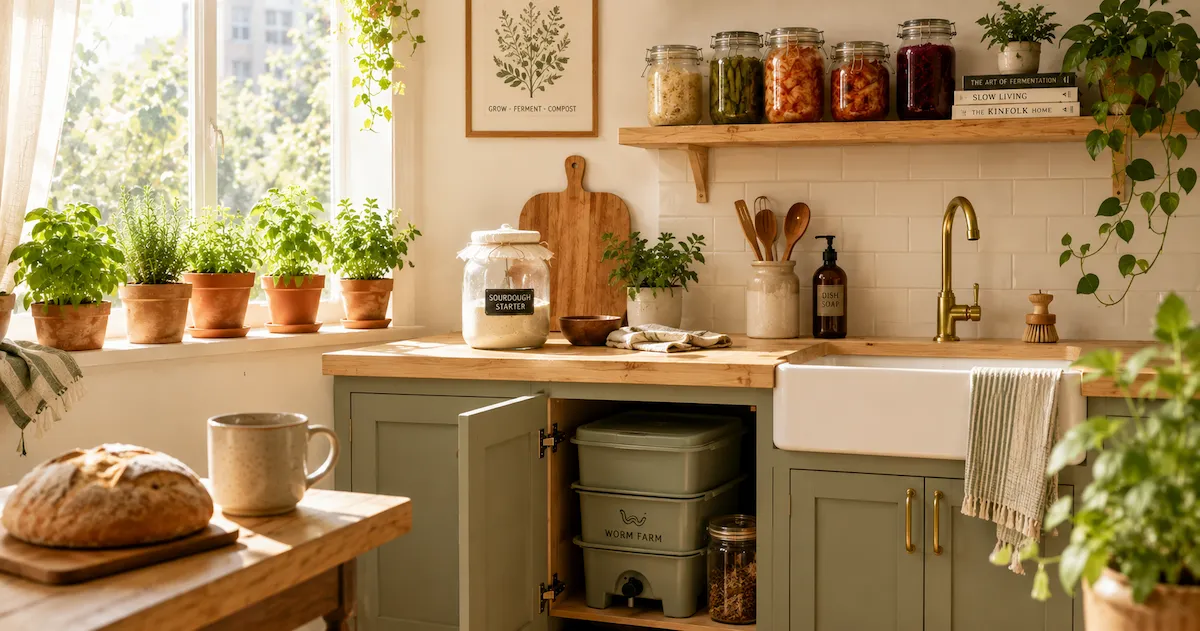
Most people hear the word homesteading and picture acres of land, chickens in a yard, and a farmhouse with a vegetable garden stretching to the horizon.
That is not what this is.
Homesteading in an apartment is about something much simpler — taking back a little control over what you eat, reducing what you throw away, and building small daily habits that make your life more self-sufficient regardless of where you live or whether you own your home.
You do not need land. You do not need to own your home. You do not even need a balcony.
What you need is a windowsill, a kitchen counter, and the willingness to start small.
In this guide you will learn:
What Does Homesteading in an Apartment Actually Mean?
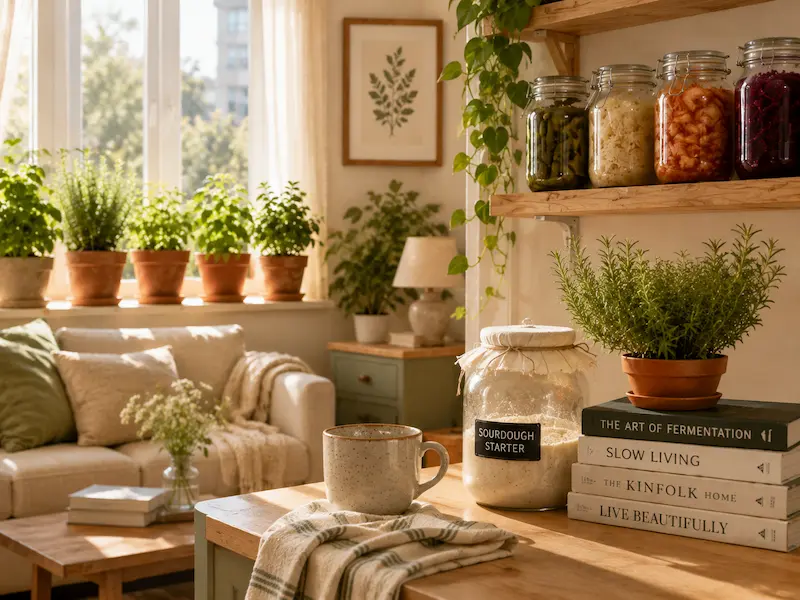
Traditional homesteading meant becoming as self-sufficient as possible — growing your own food, raising animals, preserving harvests, and reducing dependence on outside systems.
Apartment homesteading applies the same core philosophy to a small rented space.
It means:
You will not become completely self-sufficient in a studio flat. That is not the goal. The goal is to move in that direction — one herb pot, one sourdough loaf, one jar of sauerkraut at a time.
Every small step counts. And the accumulation of small steps adds up to something genuinely meaningful over time.
Why Renters Can Homestead Just as Effectively as Landowners
This is the most important thing to understand before you start.
The core skills of homesteading — growing food, fermenting, preserving, baking, reducing waste — do not require land. They require knowledge and practice.
A windowsill herb garden produces fresh herbs just as nutritious as those grown in a large garden. A small worm bin converts kitchen scraps into rich compost just as effectively whether it sits under your sink or in a barn. Sourdough baked in a small apartment oven tastes exactly the same as sourdough baked in a farmhouse kitchen.
The only real difference between a rural homesteader and an apartment homesteader is scale — not quality, not skill, not the satisfaction of making something yourself.
In some ways apartment homesteading is actually easier to start. You do not need to clear land, build raised beds, or invest in expensive infrastructure. You start with what you have, where you are, right now.
The Six Best Projects to Start With
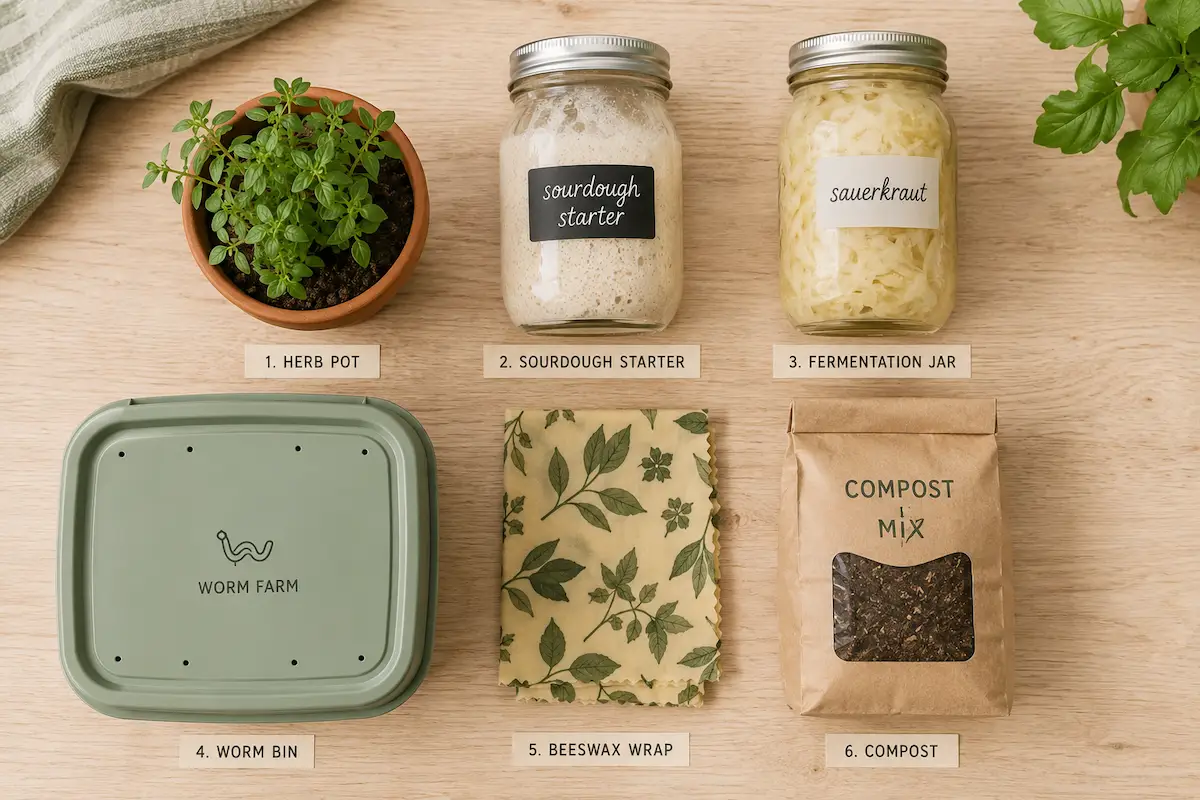
These six projects form the foundation of apartment homesteading. Each one builds on the others over time, creating a system that becomes more productive and more rewarding the longer you keep it going.
1. A Windowsill Herb Garden
This is where almost every apartment homesteader starts — and for good reason.
A few small pots of herbs on a sunny windowsill give you an instant, tangible connection to growing your own food. Within weeks of planting you are harvesting fresh basil, mint, rosemary, and chives directly from your windowsill and using them every time you cook.
The benefits go beyond convenience. Growing your own herbs saves money, eliminates plastic packaging, and gives you flavours dramatically better than anything you buy in a supermarket.
The easiest herbs to start with:
2. Indoor Composting
Every apartment homesteader produces food waste. Composting turns that waste into something genuinely useful — free fertilizer for your plants — instead of sending it to landfill.
There are three practical composting methods for apartment dwellers:
3. Sourdough Baking
Making your own bread from scratch is one of the most satisfying homesteading skills you can develop in a small space. Sourdough in particular connects you to one of the oldest food traditions in human history — a living culture of wild yeast and bacteria that you feed, maintain, and bake with.
A sourdough starter requires nothing more than flour and water. Once established it lives in your fridge and produces enough culture for regular baking indefinitely. The bread itself requires no equipment beyond a bowl, a surface to fold on, and an oven.
Start with a simple no-knead sourdough loaf. Once you are comfortable with the basic process you can expand to pizza dough, flatbreads, crackers, and everything in between..
4. Fermentation
Fermentation is the process of preserving food using beneficial bacteria and wild yeasts. It is one of the oldest food preservation techniques in human history and one of the easiest to practice in a small apartment.
Starting projects for beginners:
5. Zero Waste Kitchen Habits
Reducing what you throw away is one of the fastest ways to make your apartment feel more like a homestead. Small changes add up quickly:
6. Growing Food Beyond Herbs
Once your herb garden is established, expanding to other edible plants is a natural next step.
How to Build Your Apartment Homestead Step by Step
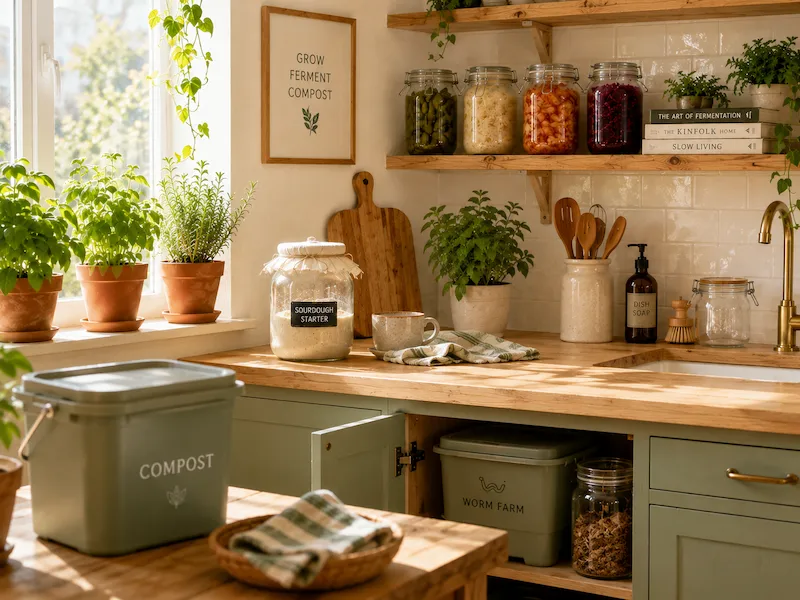
The most common mistake new apartment homesteaders make is trying to start everything at once. They buy a worm bin, start a sourdough starter, plant six different herbs, and attempt their first batch of sauerkraut all in the same week — and then feel overwhelmed and give up.
The better approach is sequential. Start one project, get comfortable with it, and add the next one only when the first feels routine.
Here is a proven sequence that works well for most beginners:
What You Need to Get Started
Common Mistakes Beginners Make
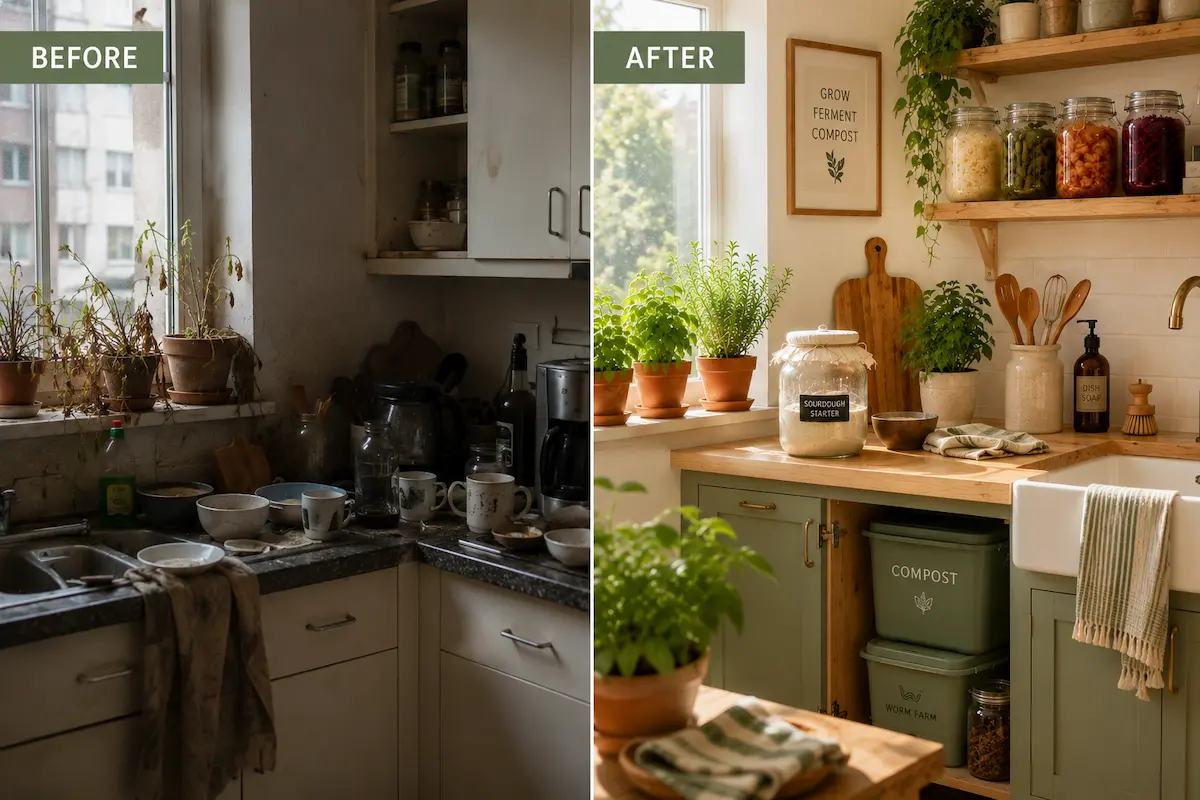
The Real Benefits of Homesteading in an Apartment
Beyond the practical outputs — fresh herbs, free compost, homemade bread — apartment homesteading produces something harder to measure but equally valuable.
It changes your relationship with food. When you grow, ferment, and bake even a fraction of what you eat you start paying more attention to ingredients, waste, and where things come from. Shopping trips get simpler. Food waste decreases noticeably. Cooking becomes more satisfying.
It builds genuine skills. The ability to grow food, preserve it, and make things from scratch is knowledge that stays with you permanently regardless of where you live in the future.
It reduces costs over time. Herbs, fermented foods, and homemade bread all cost significantly less to produce yourself than to buy. A thriving windowsill herb garden saves the cost of packaged herbs every single week.
It creates daily moments of connection. In a life dominated by screens and schedules, tending a herb garden, feeding a sourdough starter, and checking on a ferment provides a quiet, grounding routine that many people find genuinely restorative.