rustic sourdough loaf with golden scored crust on wooden board next to cast iron skillet on apartment kitchen counter

Sourdough Bread Without an Oven: The Complete Beginner’s Guide
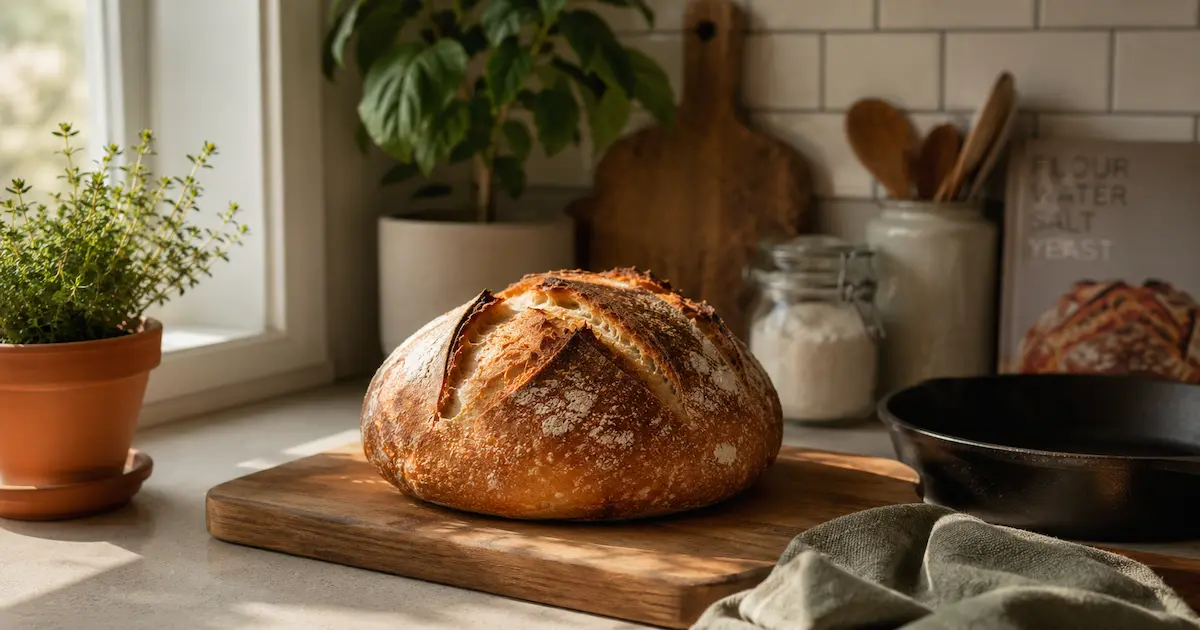
rustic sourdough loaf with golden scored crust on wooden board next to cast iron skillet on apartment kitchen counter

I assumed for a long time that baking sourdough bread required a proper oven.
A Dutch oven inside a conventional oven, a specific temperature, a specific bake time — that was the only way I thought it worked.
Then my oven broke for three weeks and I discovered I was completely wrong.
The truth is that for millions of people around the world — particularly in South Asia, Africa, and parts of the Middle East — cooking without an oven is not a workaround. It is simply how cooking works. Bread, flatbreads, and baked goods have been made on stovetops, open fires, and clay griddles for thousands of years. The Western assumption that bread requires an oven is a relatively recent and fairly privileged one.
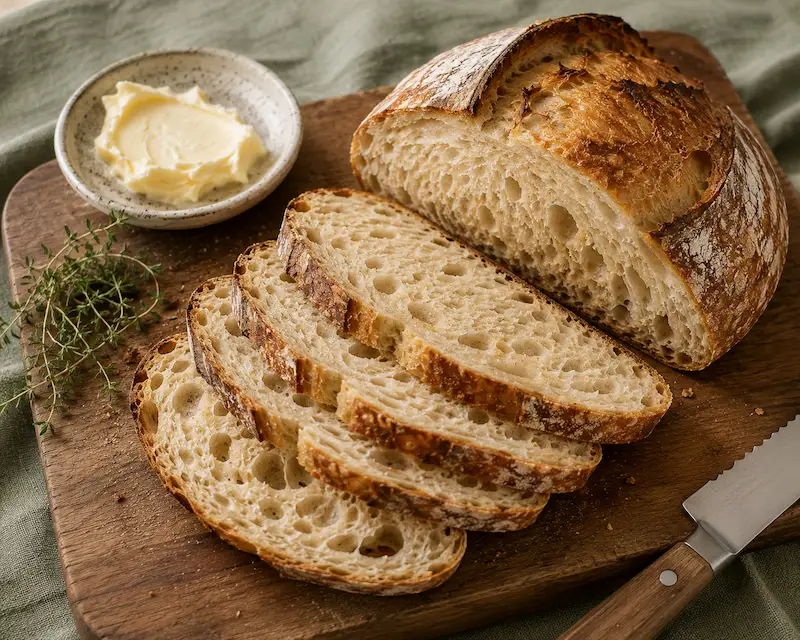
Sourdough bread without an oven is not only possible — it produces results that genuinely surprised me. A thick golden crust, an open chewy crumb, and that distinctive sourdough tang, all from nothing more than a cast iron skillet on a gas hob.
If you live in an apartment without an oven, are in a country where ovens are not a standard kitchen appliance, are trying to reduce your energy bills, or simply want to experiment with a different baking method — this guide is for you.

In this guide you will learn:

  • Why sourdough works without an oven
  • What equipment you actually need
  • How to make a basic sourdough starter from scratch
  • Three stovetop methods that produce excellent results
  • How to troubleshoot common problems
  • Tips for getting the best crust and crumb without conventional baking

  • Let's bake something.


Can You Really Make Sourdough Without an Oven?
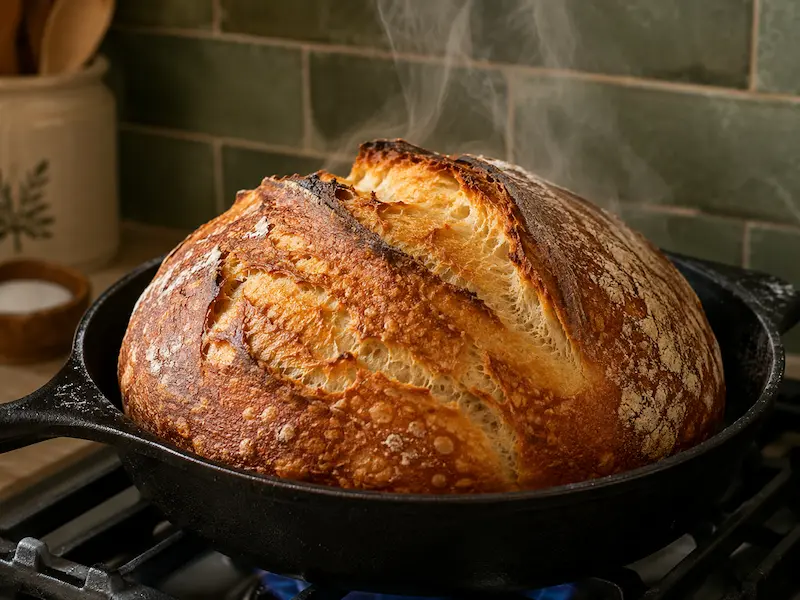
sourdough bread baking in cast iron skillet on gas stovetop with steam rising under the lid

Yes — and the history of bread baking supports this completely.
For most of human history bread was not baked in electric or gas ovens. It was baked over open fires, on hot stones, in clay pots, and on griddles. The sourdough fermentation process that creates the flavour and rise of a sourdough loaf happens entirely before baking. The baking itself is simply the application of heat — and heat can come from many sources.
In countries across South Asia, Africa, the Middle East, and Latin America, stovetop cooking is the norm rather than the exception. Millions of home cooks produce extraordinary breads and baked goods every single day without ever turning on an oven. This guide draws on those traditions and adapts them for sourdough specifically.

What makes stovetop sourdough work is the combination of:

  • A heavy pan that retains and distributes heat evenly
  • A tight fitting lid that traps steam and mimics the environment of a Dutch oven
  • Low consistent heat that cooks the bread through without burning the base
  • A properly fermented dough that has developed enough structure to hold its shape

  • The result is different from oven-baked sourdough — typically a flatter loaf with a thicker crust and slightly denser crumb — but it is genuinely delicious and completely satisfying to make.

What You Need

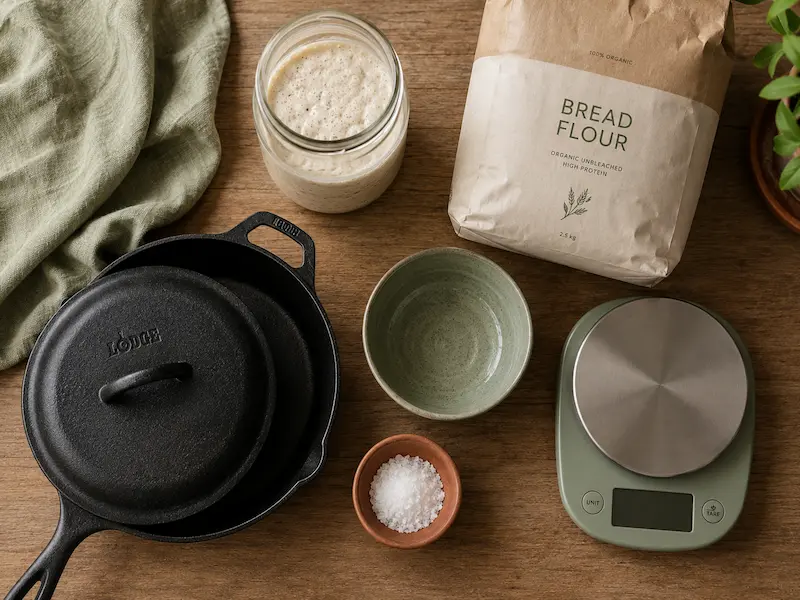
sourdough bread without oven equipment flat lay including cast iron skillet starter jar bread flour kitchen scale and salt

You do not need much to get started. Here is exactly what works best.
Cast iron skillet with a lid — this is the single most important piece of equipment. Cast iron holds heat exceptionally well and the lid traps the steam that creates a good crust. A 25 to 30 centimetre skillet is ideal for a standard sized loaf.
Kitchen scale — sourdough baking is precise. Measuring by weight rather than volume gives consistent results every time.
Large mixing bowl — for mixing and fermenting the dough.
Banneton or proving basket — optional but helpful for shaping. A bowl lined with a well-floured tea towel works just as well and costs nothing.
Dough scraper — makes handling wet dough much easier and costs almost nothing.
If you do not have a cast iron skillet a heavy based stainless steel pan with a lid works reasonably well. In South Asian kitchens a pressure cooker or heavy degchi works very well — the thick base and tight lid create excellent baking conditions. Avoid thin aluminium pans — they conduct heat unevenly and will burn the base of your loaf before the inside is cooked through.


Making Your Sourdough Starter

Before you can bake sourdough bread you need an active sourdough starter — a living culture of wild yeast and bacteria that provides the rise and flavour distinctive to sourdough.

If you already have an active starter skip ahead to the recipe. If you are starting from scratch this process takes seven to fourteen days but requires only five minutes of attention per day.

    What you need for the starter:

  • Strong white bread flour or chapati flour
  • Wholemeal or atta flour
  • Water at room temperature
  • A clean glass jar with a loose lid

    Day by day starter process:

  1. Day 1 — Mix 50 grams of strong white flour, 10 grams of wholemeal or atta flour, and 60 grams of room temperature water in a clean jar. Stir well, cover loosely, and leave at room temperature.
  2. Days 2 and 3 — You may see small bubbles beginning to form. Discard half the starter and feed with 50 grams white flour, 10 grams wholemeal flour, and 60 grams water. Stir well and cover.
  3. Days 4 to 7 — Feed once daily using the same amounts. The starter should become increasingly active — bubbling more vigorously and roughly doubling in size after each feeding.
  4. Day 7 onwards — Your starter is ready to use when it consistently doubles in size within four to eight hours of feeding and smells pleasantly sour and yeasty rather than unpleasant or alcoholic.

  5. The float test tells you if your starter is ready — drop a small spoonful into a glass of water. If it floats it is active and ready to use. If it sinks it needs more time or more regular feeding.
    In warmer climates — common across South Asia, Africa, and the Middle East — starters ferment significantly faster than in cooler northern climates. If your kitchen is warm your starter may be ready in as little as five days. If it becomes very active very quickly reduce feeding intervals to twice daily to keep it balanced.

The Basic Stovetop Sourdough Recipe

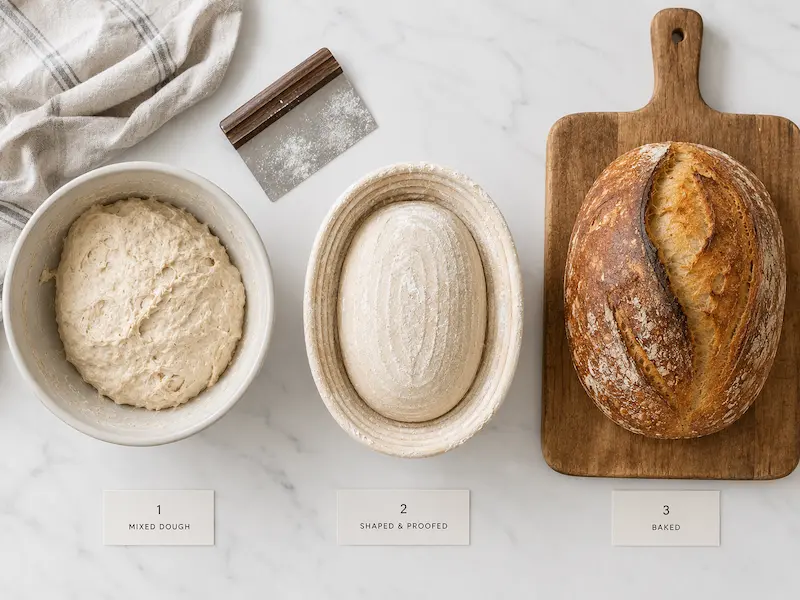
sourdough bread dough stages flat lay showing mixed dough in bowl shaped loaf in banneton and finished baked loaf on wooden board

This recipe produces one medium loaf — enough for four to six portions. The total time is around 24 hours but active work is less than 30 minutes.

    Ingredients:

  • 400 grams strong white bread flour
  • 300 grams water at room temperature
  • 80 grams active sourdough starter
  • 8 grams fine sea salt

    Step by step instructions:


  1. Mix the dough — In a large bowl combine the flour and 260 grams of the water. Mix until no dry flour remains. Cover and leave to rest for 30 to 60 minutes. This process is called autolyse and it develops the gluten structure without kneading. After the rest add the sourdough starter and salt. Add the remaining 40 grams of water gradually while mixing, incorporating it fully into the dough.
  2. Bulk fermentation — Cover the bowl and leave at room temperature for four to six hours. During the first two hours perform four sets of stretch and folds spaced 30 minutes apart. To stretch and fold: with wet hands grab one side of the dough, stretch it upward as far as it will go without tearing, then fold it over the top. Rotate the bowl 90 degrees and repeat. Do this four times per set. After the stretch and folds leave the dough undisturbed for the remainder of the bulk fermentation. The dough is ready when it has grown by 50 to 75 percent and feels airy and jiggly.
  3. Shape the dough — Turn the dough out onto a lightly floured surface. Shape it into a tight round by pulling the edges under and rotating it against the surface to create tension. For stovetop baking a tight round shape works best as it fits well in a skillet and holds together during the longer cooking time.
  4. Final proof — Place the shaped dough seam-side up into a well-floured banneton or a bowl lined with a generously floured tea towel. Cover and refrigerate overnight — eight to sixteen hours. The cold slow proof develops the sour flavour and makes the dough easier to handle and score.
  5. Bake on the stovetop — Remove the dough from the fridge. Place your cast iron skillet on the hob over the lowest heat possible and allow it to warm for five minutes. Carefully turn the cold dough out of the banneton directly into the warm skillet seam-side down. Score the top with a sharp knife or razor blade — a single slash down the centre works well for beginners. Place the lid on the skillet and cook on the lowest heat possible for 25 minutes. Do not lift the lid during this time. After 25 minutes remove the lid and check the base — it should be deep golden brown. Continue cooking with the lid off for a further 15 to 20 minutes until the top is golden and the internal temperature reads 93 to 96 degrees Celsius.
  6. Cool before cutting — Remove the loaf from the skillet and place it on a wire rack. Leave it to cool for at least one hour before cutting. Cutting hot sourdough collapses the crumb structure and makes the inside gummy. The bread continues to cook and set as it cools.

Three Stovetop Methods Compared

MethodBest ForResultDifficulty
Cast Iron SkilletMost apartment bakersClosest to oven bakedEasy
Tawa or Flat GriddleSouth Asian householdsFlatter with thick crustEasy
Cast Iron Skillet

Best For: Most apartment bakers

Result: Closest to oven baked

Difficulty: Easy

Tawa or Flat Griddle

Best For: South Asian households

Result: Flatter with thick crust

Difficulty: Easy

Dutch Oven on Hob ★ Recommended

Best For: Anyone with a heavy pot

Result: Excellent — best results

Difficulty: Moderate

Method 1 — Cast Iron Skillet with Lid

This is the method described in the recipe above. The cast iron retains heat beautifully and the lid traps steam effectively. Produces a loaf with a genuine crust and open crumb. The best all-round option for most apartment bakers anywhere in the world.

Method 2 — Tawa or Flat Griddle

In many South Asian, African and Middle Eastern households a tawa or flat griddle is the primary cooking surface. This method was developed for exactly that context and produces excellent results with equipment that millions of home cooks already own.
Place the shaped dough directly on a warm tawa over low heat. Cover with an inverted pot or large bowl to trap steam. Cook for 20 minutes covered then 10 minutes uncovered. The result is a flatter, wider loaf with sourdough flavour and texture — different from a conventional loaf but genuinely delicious.

Method 3 — Dutch Oven or Heavy Pot on Hob

Preheat a Dutch oven or heavy degchi on the hob for 10 minutes on medium heat. Carefully lower the shaped dough into the hot pot. Score, cover, and cook on low heat for 30 minutes. Remove the lid and cook for a further 15 to 20 minutes. This method produces the best results of the three because the thick walls and tight lid create the most consistent baking environment.


Troubleshooting Common Problems

Loaf is burnt on the bottom but raw in the middle

Your heat is too high. Reduce to the lowest possible setting and use a heat diffuser if available. A folded damp tea towel placed under the pan also helps reduce direct heat.

Loaf is not rising properly

Your starter may not be active enough. Perform the float test before baking. If it sinks feed your starter twice daily for two to three days before attempting to bake again.

Crust is soft and pale

Not enough steam was trapped during the first phase of baking. Make sure your lid fits as tightly as possible. You can also add a tablespoon of water to the pan when you put the lid on to create extra steam.

Bread is too dense

The most common causes:

  • Starter not active enough — make sure it reliably doubles within six hours of feeding
  • Bulk fermentation too short — extend by one to two hours
  • Dough shaped too loosely — create more tension when shaping
  • Heat too low during baking — increase slightly and extend cooking time

  • Loaf sticks to the pan

    Your pan needs more seasoning or the dough was not cold enough when it went in. Always bake from cold — straight from the fridge — and make sure your cast iron is well seasoned. A light brush of oil before adding the dough also helps.

Tips for the Best Stovetop Sourdough

sliced stovetop sourdough bread showing open golden crumb on wooden board with butter and fresh herbs
  • Use cold dough straight from the fridge. Cold dough holds its shape better during transfer to the pan, scores more cleanly, and develops better oven spring — the initial burst of rise at the start of baking.
  • Score confidently. A hesitant shallow score will not open properly. Use a sharp knife or razor blade and score at a 45 degree angle with one confident motion about one centimetre deep.
  • Never rush bulk fermentation. Underfermented dough produces dense gummy bread. Better to leave it an extra hour than to bake too early.
  • Keep your starter consistent. Feed it at the same time each day with the same flour and the same water temperature. Consistency produces predictable results.
  • Write down what you do. Your first few loaves will be experiments. Note the timing, temperatures, and results each time. The adjustment that makes a significant improvement often comes from comparing loaf three with loaf one.
  • In warm climates shorten your fermentation times. A kitchen at 30 degrees Celsius ferments dough significantly faster than one at 20 degrees. Watch the dough not the clock — it is ready when it has grown by 50 to 75 percent, not when the timer goes off.

How to Store Stovetop Sourdough

Sourdough keeps better than commercially yeasted bread because of its natural acidity.
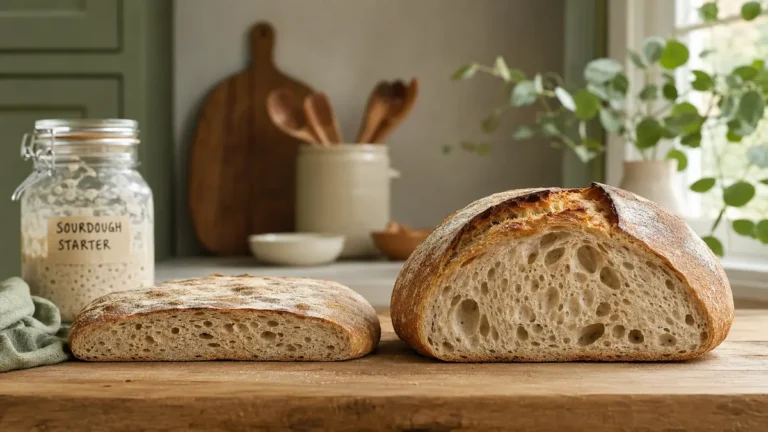
  • Store cut-side down on a wooden board at room temperature for up to three days
  • Do not refrigerate — the fridge makes sourdough go stale faster
  • For longer storage slice the loaf and freeze individual portions
  • Toast directly from frozen — takes about two minutes and tastes as good as fresh
  • In hot humid climates consume within two days or freeze immediately after cooling

Frequently Asked Questions

Do I need a sourdough starter to make this recipe?

Yes. Sourdough bread by definition uses a wild yeast starter rather than commercial yeast. You can make your own starter from scratch in seven to fourteen days using just flour and water as described above. In warm climates it may be ready in as little as five days.

Can I use commercial yeast instead of a sourdough starter?

You can make stovetop bread with commercial yeast using this same method but the result will not be sourdough. It will lack the distinctive sour flavour and the long shelf life that sourdough provides.

How long does the starter last?

Indefinitely if maintained properly. A starter stored in the fridge and fed once per week will stay active for years. Many bakers have starters that are decades old.

What flour can I use if bread flour is not available?

Plain all-purpose flour works reasonably well as a substitute for bread flour. Chapati flour or atta flour — widely available across South Asia — also works and produces a slightly more rustic loaf with good flavour. Avoid using only very finely milled cake flour as it has too little protein to develop proper gluten structure.

Can I make this recipe gluten free?

Gluten free sourdough is significantly more complex than regular sourdough and behaves very differently. The stovetop method can work with gluten free flour blends but the results are less predictable and require considerable experimentation.

My kitchen is very hot — will this affect the bread?

Yes — significantly. In kitchens above 28 degrees Celsius bulk fermentation happens much faster. Reduce your bulk fermentation time to two to three hours and watch the dough carefully. You can also use cooler water when mixing to slow things down slightly.

What does sourdough taste like compared to regular bread?

Sourdough has a distinctive tangy flavour from the lactic and acetic acids produced during fermentation. The longer the fermentation the more pronounced the sour flavour. It also has a chewier texture and more complex aroma than commercially yeasted bread.

Final Thoughts

Baking sourdough bread without an oven felt impossible to me until I tried it.

The process is slower and requires more attention than oven baking but the result — a genuine sourdough loaf baked entirely on a stovetop — is one of the most satisfying things you can make in a small apartment kitchen.

For the millions of home cooks around the world who have never had access to an oven this is not a workaround or a compromise. It is simply bread — made the way bread has always been made in most of the world, with whatever heat source you have available.

Start with an active starter, use the lowest heat your hob allows, be patient with the cooling time, and your first stovetop sourdough will be something you are genuinely proud of.

The bread you bake yourself, from a culture you have grown and maintained, using nothing more than flour, water, salt, and a pan on a hob — that is apartment homesteading at its most rewarding.

Found this guide helpful? Save it to your Apartment Homesteading Pinterest board so you can find it later.

Ready to build more homesteading skills? Read our complete guide to Homesteading in an Apartment for everything you can grow, ferment, and make in a small rented space.

Similar Posts

Leave a Reply

Your email address will not be published. Required fields are marked *