Pickled Red Onions Recipe (Quick Method + Traditional Method)
Pickled red onions are one of the few small-batch pantry projects that actually make sense in an apartment kitchen — one onion, a saucepan, and a single jar get you a condiment that keeps for weeks and improves nearly anything you put it on. This recipe covers both ways to make them: a 15-minute quick pickle for tonight’s tacos, and a traditional 24–48 hour refrigerator version with a stronger brine that holds up longer and tastes rounder. Both use the same basic ratio, so once you’ve made one, the other is just a matter of timing.
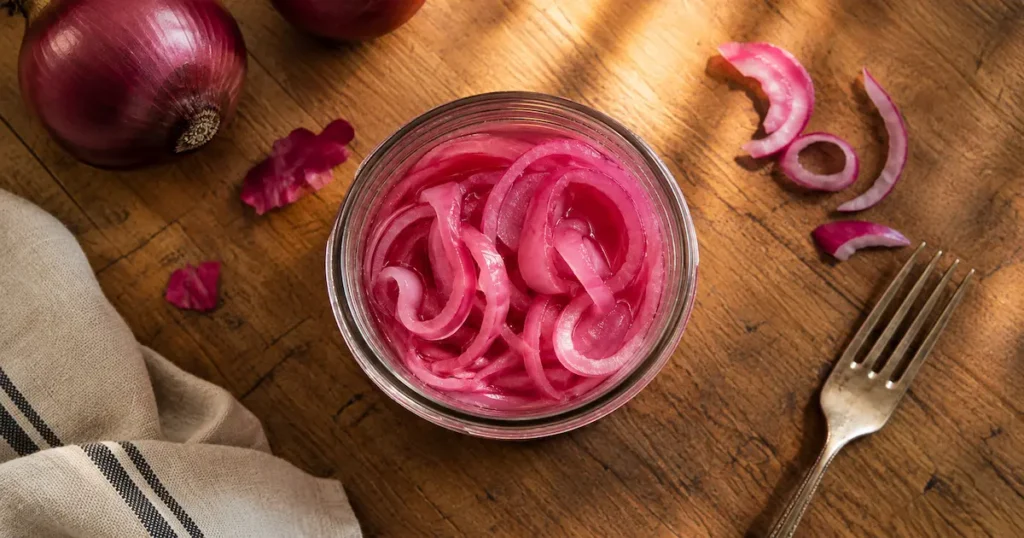
Why Red Onion Specifically
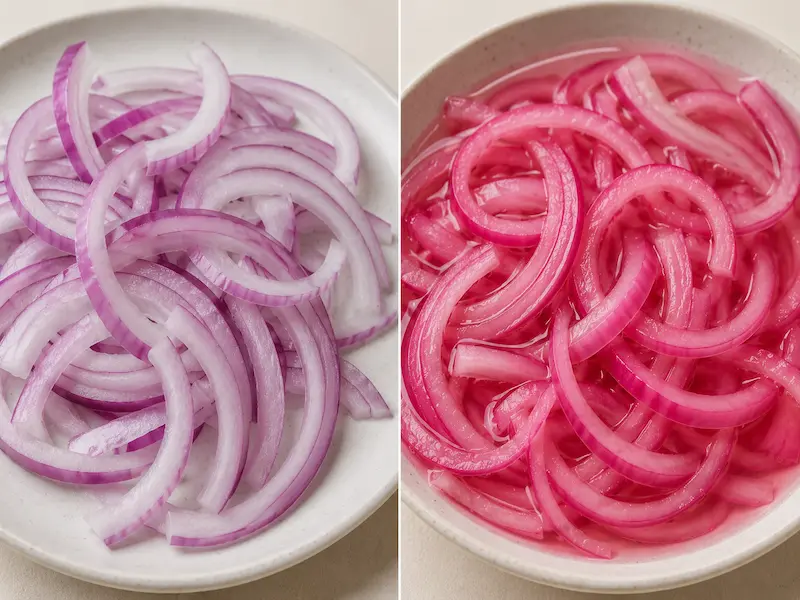
Red onion’s color comes from anthocyanins, water-soluble pigments that shift toward a brighter pink-red when exposed to acid — which is why the color of pickled red onions changes within minutes rather than hours. Yellow or white onions lack these pigments in meaningful amounts, so they’ll pickle just as effectively in terms of flavor but stay a dull tan-white instead. Anthocyanins are also mildly antioxidant, though the amount in a couple tablespoons of pickled onion is small enough that it’s not a meaningful health claim on its own.
This same pigment chemistry is why red cabbage turns blue-green with baking soda and pink with vinegar, and why hydrangea flowers change color based on soil pH — anthocyanins are essentially natural pH indicators, and onion skin happens to be an edible one.
A Little History: Where Pickled Red Onions Come From
Pickled onions show up across a surprising number of food cultures, but the specific bright-pink, thin-sliced style most people picture today traces largely back to Latin America. In Ecuador, cebollas encurtidas are made by macerating thin red onion slices in lime juice and salt rather than cooked vinegar brine — a simpler, more citrus-forward version of the same idea. In Mexico’s Yucatán peninsula, a closely related version (sometimes with a splash of bitter orange or habanero) has been served alongside slow-roasted cochinita pibil for generations, to the point where the two dishes are rarely served apart. Spanish colonial-era vinegar pickling techniques merged with existing indigenous preservation methods across the region, which is part of why so many Latin American households have their own household version of this same basic technique.
Similar ideas exist well outside Latin America, too — quick vinegar-pickled onions show up in South Asian cooking (often alongside kebabs), in Middle Eastern mezze spreads, and in classic American diner relishes. The through-line across all of them is the same one at the center of this recipe: acid plus thin-sliced onion, done in minutes rather than weeks.
What You’ll Need
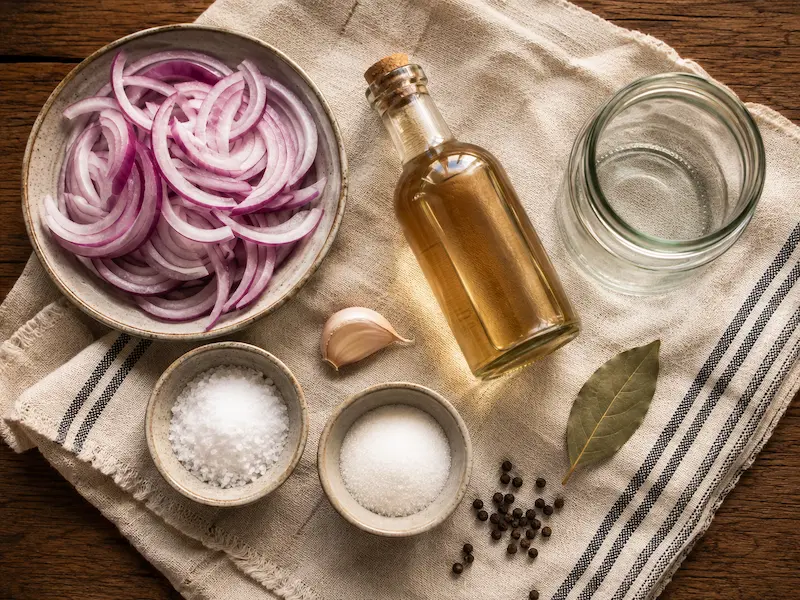
- 1 medium red onion (about 1½ cups thinly sliced, roughly 150g)
- 1 cup vinegar — apple cider vinegar (5% acidity) or plain white vinegar (5% acidity) both work; apple cider reads milder and slightly sweet, white vinegar is sharper and keeps the pink color a touch brighter. If you’ve made your own from scraps using our apple cider vinegar from scraps guide, just confirm its acidity is close to 5% before using it here — homemade batches can vary more than store-bought.
- ½ cup water
- 1 tablespoon granulated sugar (or honey)
- 1½ teaspoons kosher salt
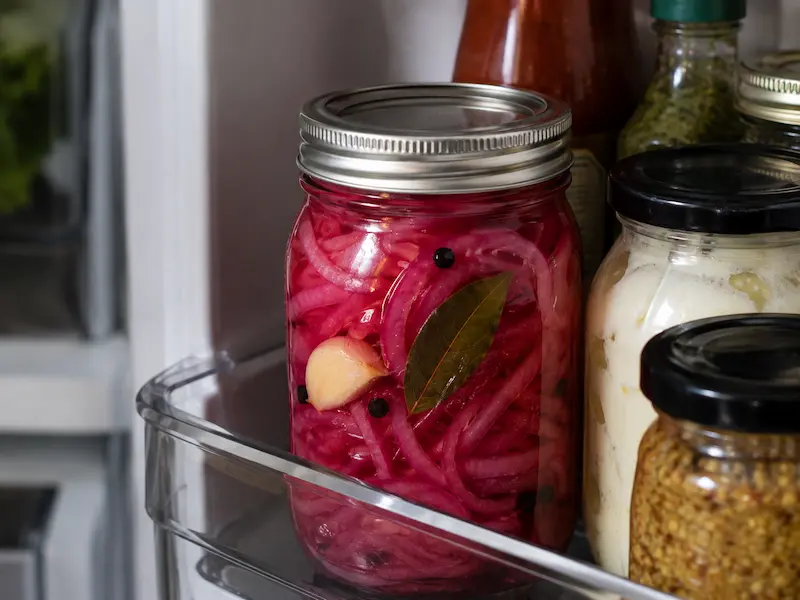
- Optional: 1 clove garlic, smashed; ½ teaspoon black peppercorns; 1 bay leaf
- A pint-size jar with a tight-fitting lid
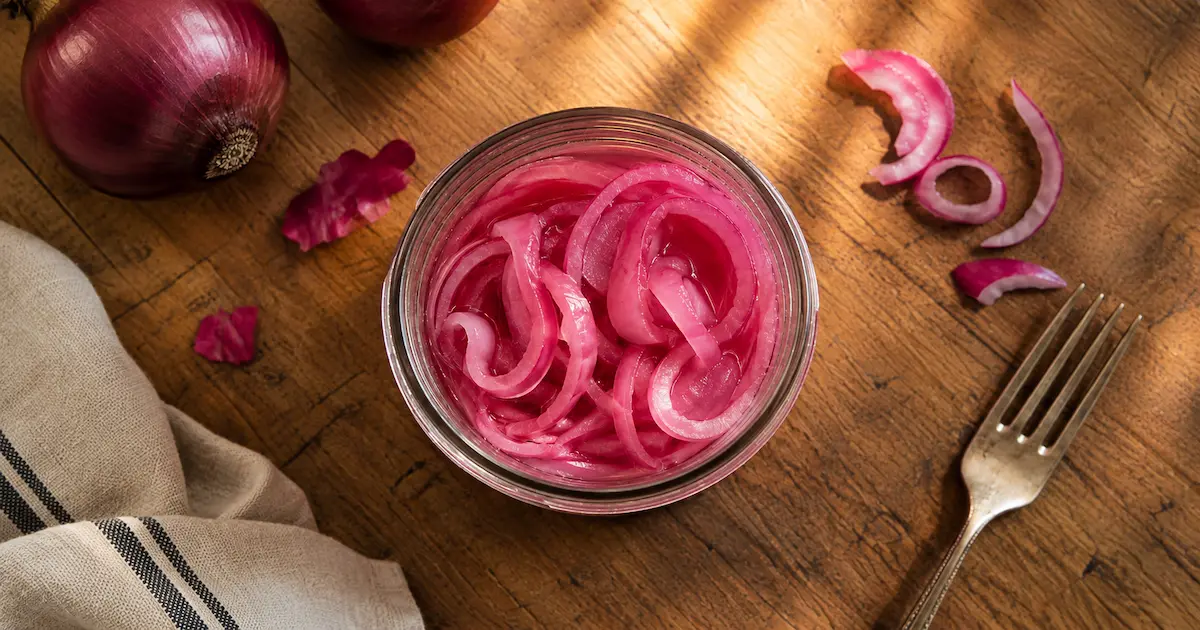
Slice the onion into rings or half-moons about ⅛ inch thick — thin enough to see light through a piece when you hold it up. This matters more than any other variable in the recipe: at ⅛ inch, the onion pickles through in 15 minutes; at ¼ inch, the center third of each slice can stay raw and sharp for hours even in a hot brine, which is the single most common reason people say a quick pickle “didn’t work.”
Quick Pickled Red Onions (Ready in 15 Minutes)
- Pack the sliced onion into your jar.
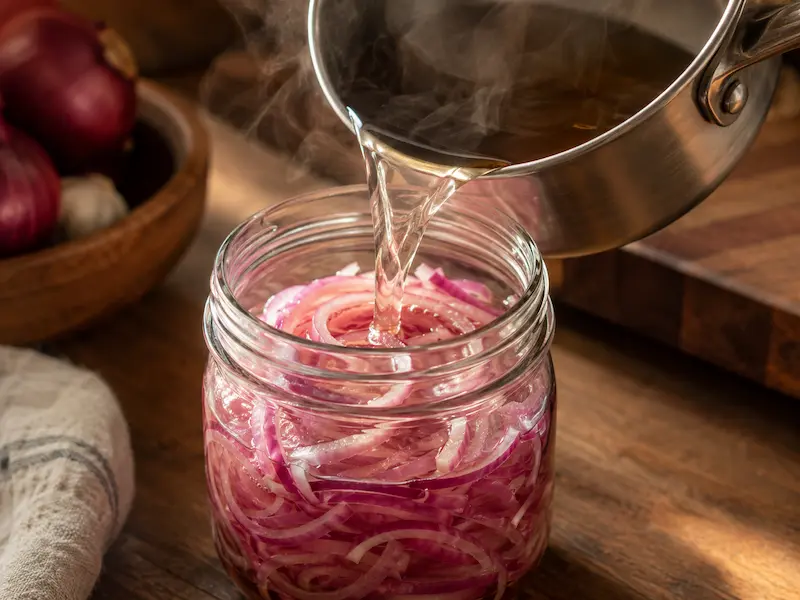
- In a small saucepan, combine the vinegar, water, sugar, and salt. Bring just to a simmer (about 180–190°F), stirring until the sugar and salt fully dissolve — this takes roughly 2 minutes over medium heat.
- Pour the hot brine over the onion, making sure it’s fully submerged. Press the slices down with a fork if any float above the liquid line.
- Let the jar sit at room temperature, uncovered, for 15 minutes. The onion will already have turned bright pink and softened at the edges.
- Cap the jar and refrigerate. They’re ready to eat immediately, though the flavor keeps rounding out over the next 2–3 hours as the brine fully penetrates the center of each slice.
The brine doesn’t need to reach a rolling boil for this method — a simmer is hot enough to dissolve the salt and sugar and to kickstart the acid-pigment reaction quickly. What matters more than temperature here is slice thickness and full submersion.
Traditional Refrigerator Pickled Red Onions
- Slice the onion the same way as above and pack it into a clean pint jar along with the garlic, peppercorns, and bay leaf if using.
- Combine 1½ cups vinegar with ½ cup water, the sugar, and the salt in a saucepan. Bring to a full boil, then remove from heat and let cool for 5 minutes.
- Pour the brine over the onion and seal the jar once it’s cooled to room temperature — sealing while the glass is still hot can warp the lid seal and let the jar dry out faster in the fridge.
- Refrigerate for at least 24 hours before eating, and ideally 48 hours. The extra time lets the salt and sugar balance the onion’s natural sulfur compounds instead of just diluting them, which is the difference between “sharp” and “rounded” in the final flavor.
At a roughly 3:1 vinegar-to-water ratio, this brine sits solidly under a pH of 4.6 — the threshold below which most spoilage bacteria can’t grow. Food preservation guidance from university extension programs is consistent on this point: quick or “fresh-pack” pickles like this one aren’t fermented at all, and their safety comes entirely from that acid level rather than from any bacterial process, which is part of why getting the vinegar ratio right (rather than eyeballing it) actually matters here, not just for taste.
Quick Method vs. Traditional Method
Reusing the Brine
Once you’ve eaten the onions, the leftover brine isn’t spent. It’s diluted slightly by moisture released from the onion, so it won’t pickle a second batch quite as fast — add 5 minutes to the quick method’s rest time if reusing brine once. After a single reuse, the salt and acid concentration drop enough that a fresh batch is worth the extra 2 minutes of stovetop work rather than risking underpickled onions.
If the brine is past the point of pickling a second batch well, it isn’t wasted — plain vinegar diluted with water is a legitimate base for a lot of natural cleaning, so a spent pickle brine can go straight into a spray bottle for counters instead of the drain. Our DIY all-purpose cleaner guide covers ratios if you want to put it to use rather than pour it out.
Troubleshooting Pickled Red Onions
The onions turned grey instead of pink. This almost always traces back to either brine temperature or slice thickness. A brine under about 160°F poured over slices thicker than ¼ inch can sit for an hour without much color change, since the acid hasn’t reached the anthocyanins in the onion’s inner layers yet. Reslice thinner and make sure the brine is at a full simmer before pouring.
They went limp and slightly slimy after about a week. This is a sign the onion sat in a too-strong brine for too long, which breaks down cell walls past the point of pleasant crunch. If you’re using the traditional method’s 3:1 ratio, plan to eat that batch within 2–3 weeks rather than stretching it to a month, even though the acidity would technically keep it safe longer.
The brine looks cloudy. Some cloudiness from onion sugars and pigment is normal, especially in the quick method where the onion hasn’t fully settled. If the jar has been refrigerated the whole time and doesn’t smell off, it’s fine to eat. Discard anything that develops a sour-beyond-vinegar, yeasty smell, or any surface mold — true fermentation cloudiness (like in a ginger bug) is different from this vinegar-based cloudiness and isn’t something to expect here.
They don’t taste pickled enough after 15 minutes. That usually means the vinegar-to-water ratio was too diluted, or the slices were cut too thick to fully absorb the brine in the time given. Stick close to the 1 cup vinegar : ½ cup water ratio rather than stretching it — a single-jar batch doesn’t leave room for the acidity to average out the way a bigger batch might. This is also the standard food-safety guidance for any quick-process pickle: don’t alter the vinegar, water, or food proportions from a tested ratio, since the acidity level is doing real preservation work, not just flavoring the jar.
The onion smells overpoweringly sulfurous even after pickling. Raw onion’s sulfur compounds fade with acid exposure, but a very fresh, very pungent onion (common with onions bought within a day or two of harvest at a farmers market) can still smell strong after 15 minutes. The traditional method’s longer rest handles this better than the quick method — if you’ve got an unusually strong onion, lean toward the 24–48 hour version.
Storage and Shelf Life
Keep pickled red onions refrigerated in a sealed jar at all times — this is a refrigerator pickle, not a shelf-stable one, since it isn’t processed in a water bath and the acidity alone isn’t calibrated for room-temperature storage. The quick method holds its best texture for about 2–3 weeks; the traditional method, with its higher acidity, tends to stay good for 3–4 weeks. In both cases, use a clean fork or spoon each time you serve them rather than fingers, which introduces bacteria that shortens shelf life regardless of how acidic the brine is.
Are Pickled Red Onions Healthy?
At roughly 10 calories per 2-tablespoon serving, pickled red onions are a low-calorie way to add acidity and crunch to a meal without much nutritional downside. Onions in general are a reasonable source of vitamin K and contain quercetin, a plant compound with mild antioxidant properties, though pickling doesn’t meaningfully boost either — you’re getting roughly what a fresh onion offers, in a more palatable, less pungent form.
It’s worth being clear-eyed about what this recipe isn’t: because it’s a vinegar pickle rather than a fermented one, it doesn’t contain the live probiotic cultures people associate with fermented foods like sauerkraut or kimchi. The flavor and preservation here come entirely from the vinegar’s acidity, not from bacterial fermentation. If probiotics are the goal, a fermented pickle — like the lacto-fermented cucumbers in our fermented pickles recipe — is the better choice. If bright acidity and a fast turnaround are the goal, the vinegar method here is the more practical one for a weeknight.
Ways to Use Pickled Red Onions
Their acidity makes them useful well beyond tacos:
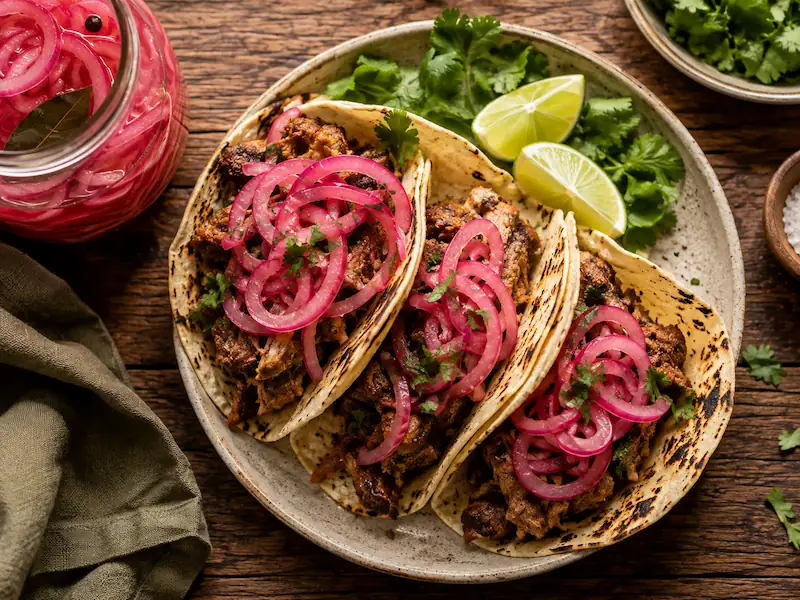
- Tacos, burritos, and grain bowls — the classic use, and where the quick method shines.
- Sandwiches and burgers — a few slices cut sharp fat and richness immediately.
- Salads — a spoonful of pickled onion plus a splash of its own brine can replace a separate vinaigrette.
- Soups and broths — a small pile on top of a bowl of pho-style broth adds brightness the same way fresh herbs would; if you make your own stock, our bone broth on the stovetop guide pairs well with a spoonful of these on top.
- Cheese boards and snack plates — the acidity cuts through fatty cheeses in a way that plain onion can’t.
Flavor Variations
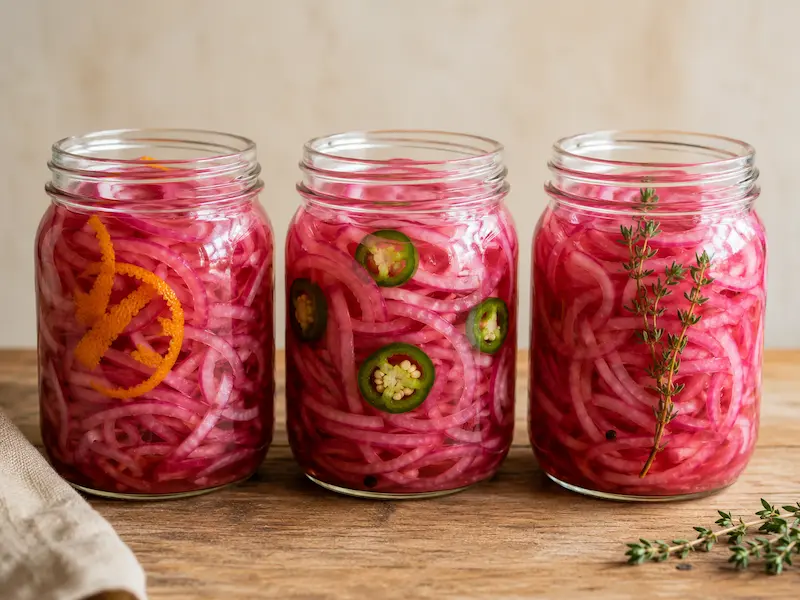
- Citrus: add a strip of orange or lime zest to the jar before pouring the brine — a nod to the lime-based Ecuadorian version.
- Spicy: add 2–3 thin jalapeño slices along with the onion.
- Herbed: drop in a sprig of fresh thyme or a bay leaf for a more savory jar. If you keep a small windowsill herb setup, our grow herbs to save money guide covers which herbs are easiest to keep on hand for exactly this kind of use.
- Sweeter: swap the sugar for honey and reduce it slightly, since honey reads sweeter than the same amount of granulated sugar.
If you’re building out a small-space pantry beyond this one jar, this same brine ratio is a good starting point for other quick pickles — it’s worth comparing against the fermented, longer-process approach in our sauerkraut recipe if you want to see how a fermented pickle differs from a vinegar-based one. If you’d rather grow your own alliums to pickle, our balcony vegetables guide covers growing scallions and other quick-turnaround crops in containers. And if you’re just getting started with apartment homesteading in general, our apartment homesteading guide is a good next stop for what else is realistic in a small kitchen.
Frequently Asked Questions;’
Do I need to boil the vinegar?
No — for the quick method a simmer around 185°F is enough to dissolve the sugar and salt and get the brine hot enough to react with the onion quickly. The traditional method calls for a full boil mainly because the higher vinegar ratio needs slightly more heat to dissolve the sugar evenly, not because a hotter brine pickles faster.
Can I use a different type of onion?
White or yellow onion will pickle just as well texturally, but you’ll lose the pink color and get a sharper, more oniony bite, since red onion is naturally milder to begin with. If color matters for what you’re serving them on, stick with red.
Can I freeze pickled red onions?
Freezing isn’t recommended — the onion’s texture, which depends on some retained crunch from the cell structure, breaks down further once frozen and thawed, leaving them mushy in a way that’s noticeably worse than just letting a jar run past its ideal fridge window.
Can I reuse the brine for a second batch?
Once, with a longer rest time added — see the brine reuse section above. Past a second use, the salt and acid concentration have dropped enough that results get inconsistent.
Can I can these to make them shelf-stable instead of refrigerating?
Not with this recipe as written — the ratios here are calibrated for refrigerator storage. Shelf-stable canning requires a tested water-bath recipe with specific processing times and jar headspace to be safe, which is a different process from what’s outlined above.
Where do pickled red onions originate?
The bright pink, thin-sliced style most people know today is closely associated with Latin America, particularly Ecuador’s lime-based cebollas encurtidas and the vinegar-based version served across Mexico’s Yucatán peninsula alongside dishes like cochinita pibil. Similar quick-pickled onion traditions exist independently in South Asian and Middle Eastern cooking as well.
What’s the most common mistake people make with this recipe?
Slicing the onion too thick. Every other variable in this recipe has some tolerance for error — a slightly cooler brine, a few extra minutes of rest — but a ¼-inch slice instead of ⅛-inch is the one mistake that can leave the center of each piece raw no matter how long it sits.