Pickled Garlic: A Safe, Simple Vinegar Recipe (Not Garlic-in-Oil)
Pickled garlic solves a problem that pickled everything else doesn’t: garlic isn’t the vegetable people usually think to pickle, but once you’ve made a jar, it becomes one of the more useful things in the fridge — mellow enough to eat by the clove, sharp enough to still register as garlic, and good in everything from a relish tray to a stir-fry finish. It’s also one of the few pickling projects where the safety conversation genuinely matters more than usual, for a reason most recipes don’t explain clearly.
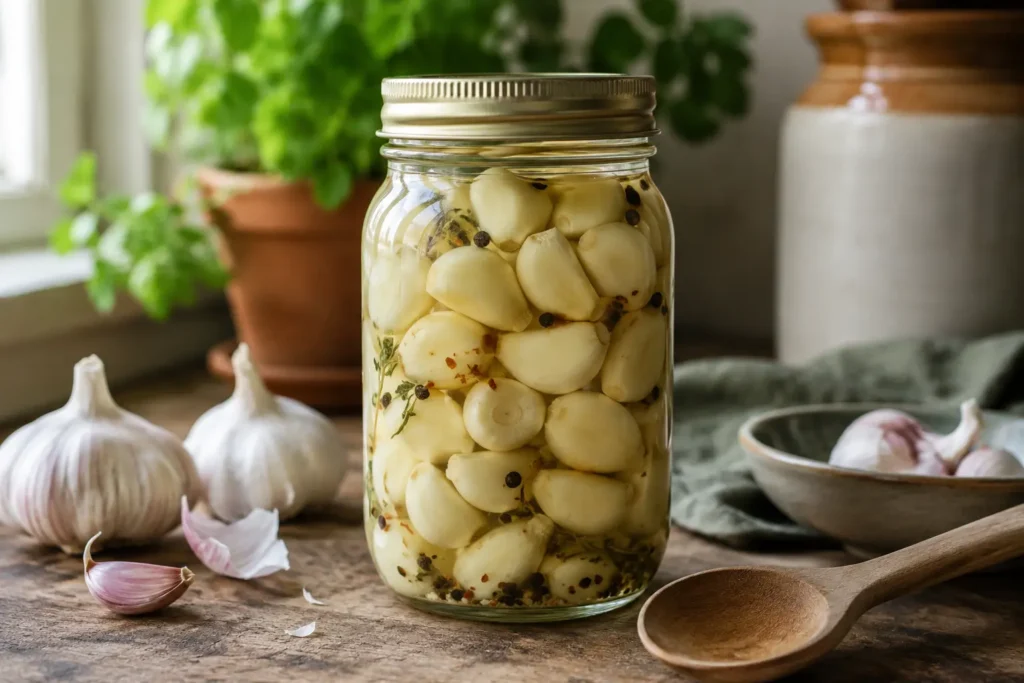
Vinegar or Oil: The One Distinction That Actually Matters
Before anything else, it’s worth being explicit about something a lot of “pickled garlic” content glosses over: garlic pickled in vinegar and garlic stored in oil are not the same food-safety category, even though both get called “preserved garlic” casually.
Garlic is a low-acid food. When it’s submerged in oil at room temperature, that combination — low acid plus an oxygen-free environment — is exactly the condition Clostridium botulinum needs to grow and produce toxin, which is why garlic-in-oil products require either acidification or continuous freezer storage to be safe. Vinegar works completely differently: a properly acidified vinegar brine (at least 50% vinegar standardized to 5% acidity, not diluted below that) actively inhibits that same bacterial growth rather than creating a hospitable environment for it. This recipe is a vinegar pickle, and that acid ratio is the actual safety mechanism — not refrigeration, not how fresh the garlic is, and not how the jar looks or smells.
The practical takeaway: never substitute part of the vinegar in this recipe with additional water or a lower-acid vinegar to “mellow” the flavor, and never store garlic cloves submerged in plain oil at room temperature as a shortcut — that’s a different, genuinely riskier method than what’s described here.
What You’ll Need
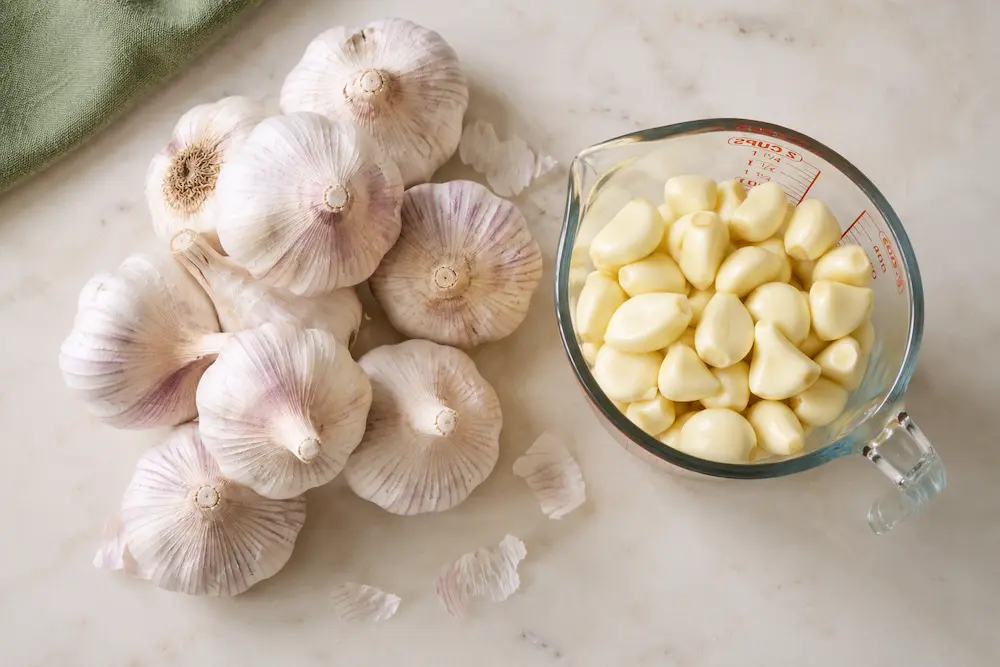
Garlic pickling has one logistical surprise that catches most people off guard the first time: it takes far more garlic than expected to fill even a single jar, since whole cloves pack loosely.
| Ingredient | Amount (per quart jar) | Notes |
|---|---|---|
| Garlic cloves, peeled | About 2 cups (roughly 10 oz peeled) | This works out to about ¾ lb of whole, unpeeled garlic — hardneck varieties have larger cloves and peel faster than softneck |
| White vinegar, 5% acidity | At least ½ cup | Must make up at least 50% of the total liquid — see the safety note above |
| Water | Up to ½ cup | Never exceeds the vinegar amount |
| Pickling salt | 1 tsp | Use pickling or canning salt, not iodized table salt, which can cloud the brine |
| Sugar | 1 tsp | Balances the sharpness; optional but common |
| Pickling spice or mustard seed | 1 tsp | Optional; adds flavor complexity without affecting safety |
Note: this fills a quart jar with room for the brine to fully cover the cloves. Halve everything for a pint jar.
For the underlying brine science — why the salt-vinegar-water ratio works the way it does, and how to scale it for other vegetables — our pickle brine guide covers that foundation in more depth than makes sense to repeat here.
Peeling Garlic Without Losing an Hour to It
Peeling enough garlic to fill even one jar is the actual bottleneck in this recipe, not the pickling itself. A few methods speed this up considerably:
- The shake method: separate cloves from the bulb, place them in a jar or metal bowl with a lid, and shake vigorously for 20-30 seconds. The friction loosens most of the skins at once.
- The smash method: lay the flat side of a knife over each clove and press down firmly with your palm — this cracks the skin open for a quick peel, though it can bruise the clove slightly, which is fine for pickling since you’re not aiming for a pristine whole clove the way you might for a garnish.
- Buy pre-peeled garlic if the time cost outweighs the modest quality trade-off — pre-peeled cloves pickle acceptably well, though some sources note they can be slightly less crisp than freshly peeled ones.
Building the Jar
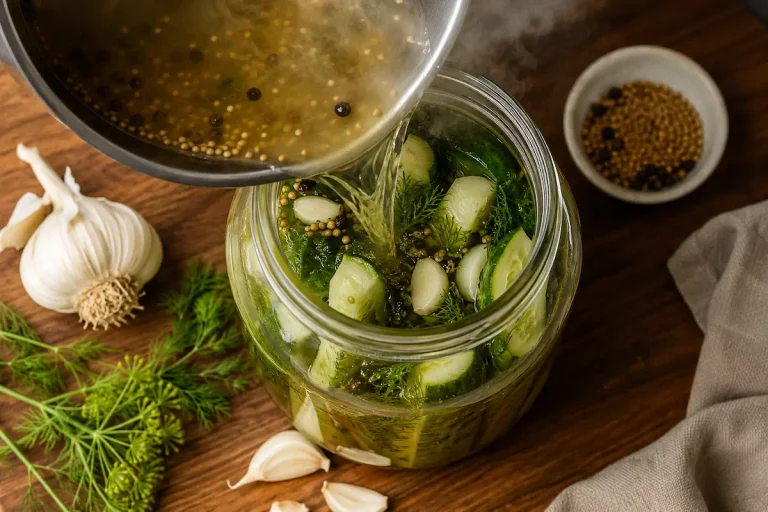
- Make the brine. Combine the vinegar, water, salt, and sugar in a small saucepan and bring to a simmer, stirring until the salt and sugar fully dissolve. Remove from heat as soon as it simmers — boiling too hard for too long can evaporate some of the vinegar and shift the acid ratio you’re relying on for safety.
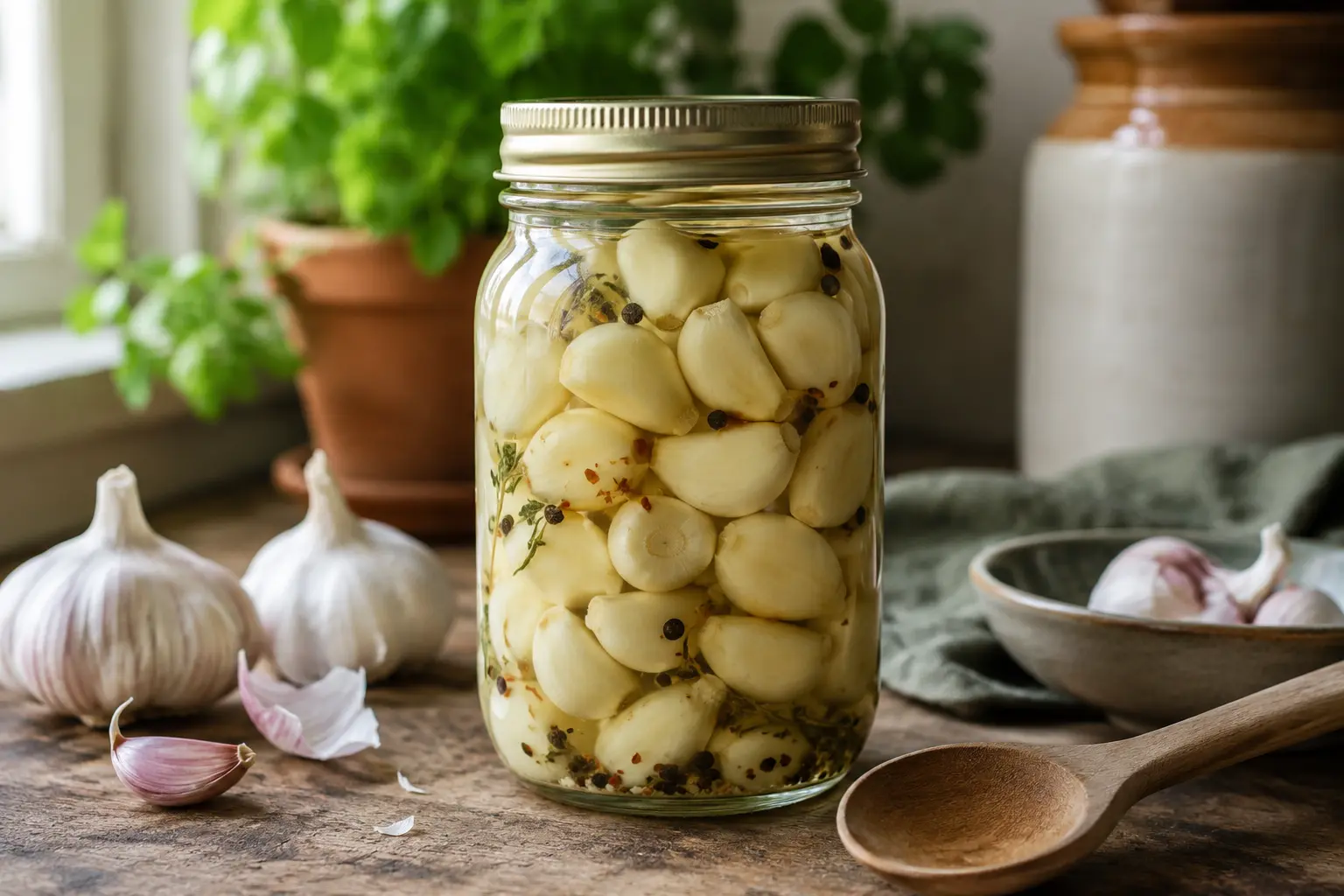
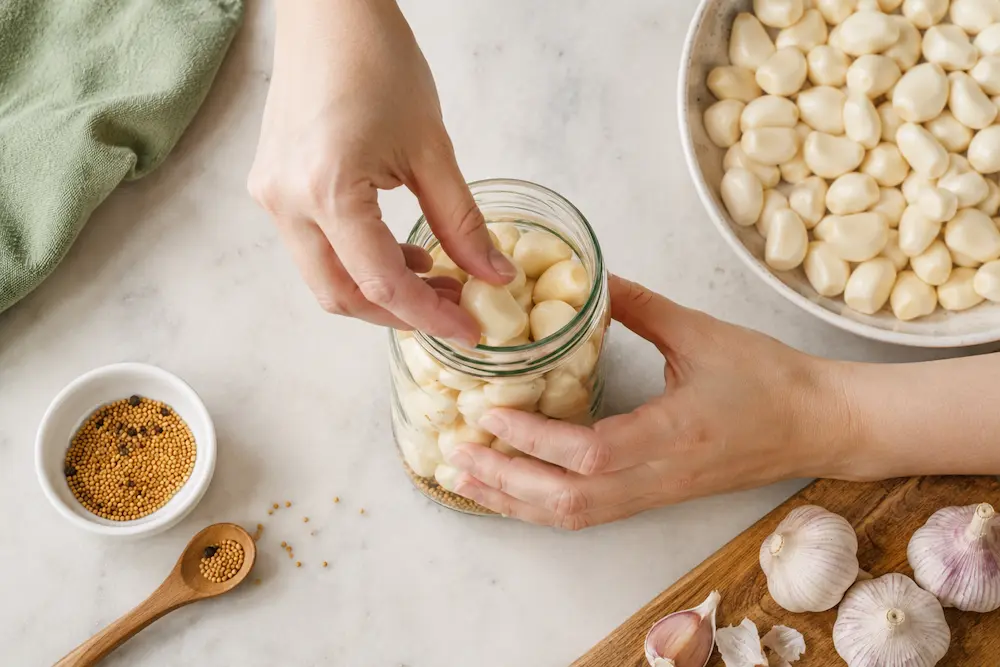
- Pack the jar. Add the pickling spice or mustard seed to the bottom of a clean quart jar, then pack in the peeled garlic cloves fairly tightly — they’ll shrink slightly as they pickle, so a snug pack now avoids a half-empty jar later.
- Pour and submerge. Pour the warm brine over the garlic until every clove is fully covered, leaving about half an inch of headspace. Use a clean utensil to press down any floating cloves.
- Seal and refrigerate. Close the lid and refrigerate. Let the jar sit for at least a week before eating for the flavor to fully develop — the garlic is technically edible sooner, but the mellowing that makes pickled garlic worth making takes time.
Why Pickled Garlic Sometimes Turns Blue or Green
This is one of the most common questions about pickled garlic, and it’s worth addressing directly since it can look alarming the first time it happens: garlic cloves in an acidic brine can turn a blue, green, or teal color over the following days. This is a harmless chemical reaction between sulfur compounds naturally present in garlic and trace amounts of copper or other minerals, and it’s more common in young, freshly harvested garlic. It doesn’t indicate spoilage on its own — the same reaction shows up in our fermented garlic honey recipe, where we cover it in more detail. As with that recipe, discoloration paired with fuzzy growth or an off smell is the actual warning sign, not color alone.
Storage and Shelf Life
This is a refrigerator pickle, meaning it relies on cold storage rather than a shelf-stable canning process. Kept refrigerated, properly made pickled garlic typically stays good for 3-4 months, though texture and sharpness continue to mellow the longer it sits. If you want a shelf-stable version that doesn’t require refrigerator space, that requires a tested water-bath canning process with USDA-verified processing times — a genuinely different procedure from the refrigerator method here, not just the same steps plus a hot water bath.
Frequently Asked Questions
Is pickled garlic the same thing as garlic confit or garlic in oil?
No, and the difference matters for safety. Garlic confit and garlic-in-oil preparations submerge garlic in a low-acid, oxygen-free environment that requires acidification or frozen storage to be safe. Pickled garlic, made correctly with a properly acidified vinegar brine, is a different and well-established preservation method where the vinegar itself is the safety mechanism.
Can I reduce the amount of vinegar in this recipe to make it less sharp?
No — diluting the vinegar below 50% of the total liquid, or substituting a lower-acidity vinegar, changes the acid ratio the recipe’s safety depends on. If the sharpness is too much, balance it with slightly more sugar rather than less vinegar.
Why did my garlic turn blue or green in the jar?
This is a harmless chemical reaction between compounds in the garlic and trace minerals, more common in young or freshly harvested garlic. It’s not a sign of spoilage on its own — see the section above for what actually indicates a problem.
Do I need to cook or blanch the garlic before pickling it?
No, this recipe uses raw garlic cloves. Blanching is sometimes used in other pickled garlic recipes to soften texture slightly, but it’s a preference rather than a safety requirement for a vinegar-based pickle.
Where to Go From Here
For the underlying brine ratios and troubleshooting that apply across pickling projects, our pickle brine guide is the foundational reference this recipe builds on. If you’re growing your own garlic to pickle, how to grow garlic in a pot covers that from the growing side. And if the blue-green discoloration question interested you, our fermented garlic honey recipe covers the same phenomenon in more depth.