Pickled Brussel Sprouts (Tested Canning Recipe)
Pickled brussel sprouts turn a bag of small, tight sprouts into sweet-and-sour jars that keep in the pantry. Thinly sliced onion, diced sweet red pepper, mustard seed, celery seed, and turmeric go into a sugar-and-vinegar pickling liquid, and the filled jars are processed in a boiling-water canner. The recipe makes about nine half-pint jars.
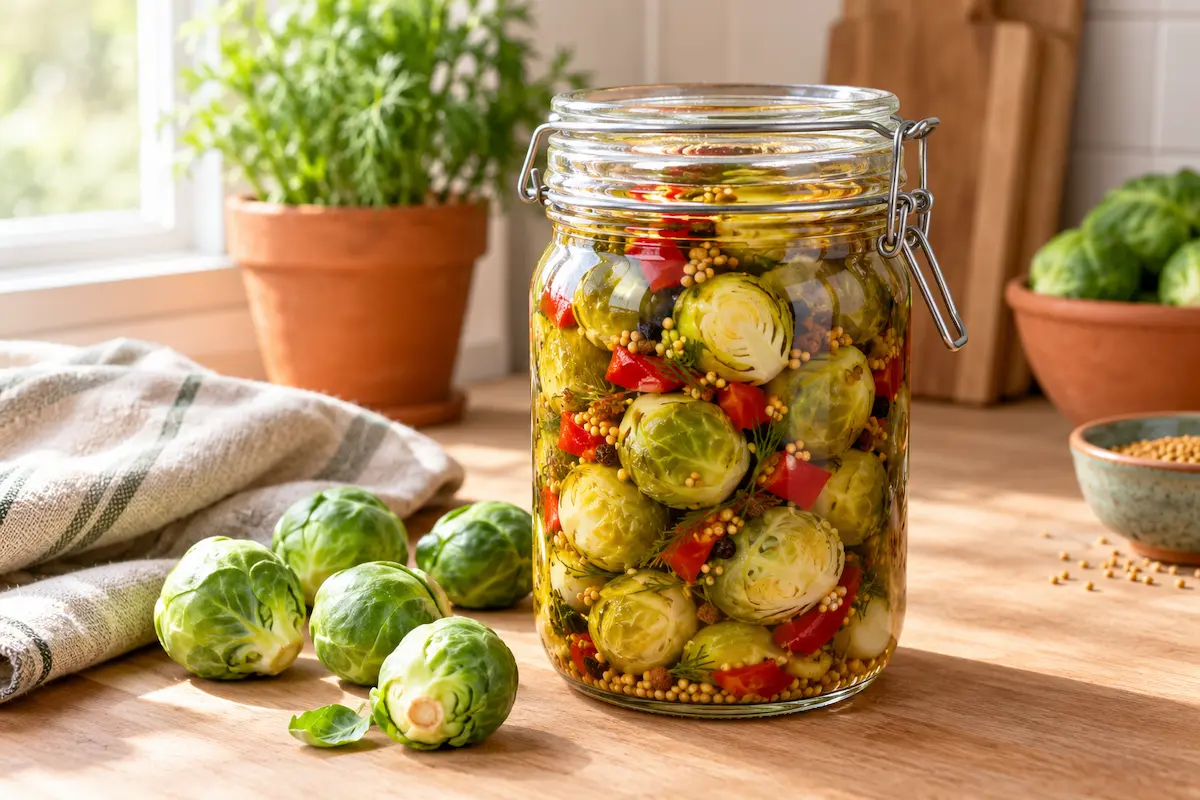
This version follows the National Center for Home Food Preservation (NCHFP) method for pickled cauliflower or Brussel sprouts, adapted from the USDA Complete Guide to Home Canning. The proportions and processing times were tested together, so the steps below stay close to the source for pickled brussel sprouts you can safely store on a shelf.
Read this first: this is a home-canning recipe, not a quick refrigerator pickle. Keep the ingredient amounts, the 5% acidity vinegar, and the half-pint or pint jar sizes exactly as written, and do not shorten the processing time. If you would rather skip canning, the no-canning options near the end of this post are a better fit.
Pickled Brussel Sprouts Recipe: What You Need
The recipe is written for about 12 cups of small sprouts, roughly 1 to 2 inches across, so save larger ones for roasting.
| Ingredient | Amount |
|---|---|
| Small Brussel sprouts, 1 to 2 inches across | 12 cups |
| White vinegar, labeled 5% acidity | 4 cups |
| Granulated sugar | 2 cups |
| Onions, thinly sliced | 2 cups |
| Sweet red pepper, diced | 1 cup |
| Mustard seed | 2 tablespoons |
| Celery seed | 1 tablespoon |
| Turmeric | 1 teaspoon |
| Hot red pepper flakes | 1 teaspoon |
| Canning salt, for the boiling water | 4 teaspoons per gallon of water |
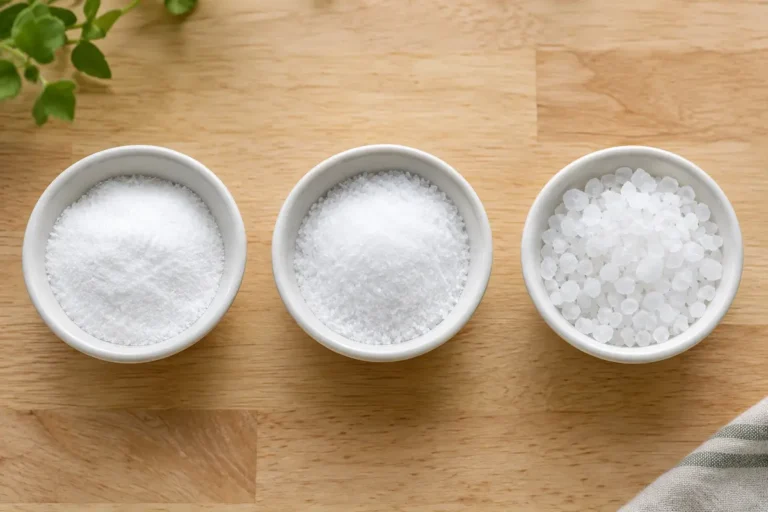
You will also need a boiling-water canner with a rack, half-pint jars (or pints), new lids and bands, and a jar lifter. A ladle and a wide-mouth funnel make filling easier. Use canning or pickling salt for the blanching water, since flake salt varies in density and is not recommended for pickling. The pickling salt guide explains the difference.
How to Make Pickled Brussel Sprouts
Read through the steps once before you start. The sprouts are boiled briefly, the pickling liquid is simmered, and everything is packed hot and processed in the canner.
1. Prep and boil the sprouts
Wash the sprouts, cut off the stems, and remove any blemished outer leaves. Boil them in salted water (4 teaspoons of canning salt per gallon of water) for 4 minutes. Drain them and let them cool.

2. Simmer the pickling liquid
Combine the vinegar, sugar, onions, red pepper, mustard seed, celery seed, turmeric, and pepper flakes in a large saucepan. Bring the mixture to a boil, then simmer it for 5 minutes.
3. Pack the jars
Wash the jars and keep them hot. Divide the onion and diced pepper among the jars, then fill with the sprouts and ladle in the hot pickling liquid, leaving 1/2 inch of headspace. Run a thin plastic tool around the inside of each jar to release air bubbles, top up the liquid if needed, wipe the rims clean, and fit the lids and bands as the lid manufacturer directs.
4. Process in a boiling-water canner
Set the rack in the canner and add enough water to cover the jars by at least 1 inch once they are loaded. NCHFP lists about 180°F for the starting water temperature when jars are hot-packed, so heat the water before the jars go in. Lower the jars in with a jar lifter, put the lid on, and bring the water to a vigorous boil. Start the timer only once the water is boiling, using the time for your elevation in the next section.
If the water stops boiling at any point, bring it back to a vigorous boil and restart the full processing time. If the level drops below the jar tops, add boiling water.
5. Cool and check the seals
When the time is up, turn off the heat and wait 2 to 3 minutes, then remove the lid and lift the jars out without tilting them. Let them cool undisturbed for 12 to 24 hours. Then check each seal, remove the bands, wipe the jars, and label them. Put any jar that did not seal in the refrigerator and eat it first.
Processing Times by Elevation
These times apply to half-pint or pint jars using the hot-pack method described above.
| Elevation | Processing Time |
|---|---|
| 0 to 1,000 feet | 10 minutes |
| 1,001 to 6,000 feet | 15 minutes |
| Above 6,000 feet | 20 minutes |
Why You Can’t Tweak This Pickled Brussel Sprouts Recipe
Safe pickling depends on acid. NCHFP’s general pickling guidance says not to alter the vinegar, food, or water proportions in a recipe, and not to use a vinegar of unknown acidity. That is why this recipe calls for vinegar labeled 5% acidity, why homemade vinegar is out, and why you should not dilute the pickling liquid or stretch it over extra sprouts. Jar size matters for the same reason: the processing times were tested for half-pints and pints, so a quart jar needs a recipe tested in that size. For more on how vinegar and water ratios work, see the pickle brine guide.
How to Serve Pickled Brussel Sprouts
The sweet-and-sour pickle works best against rich, salty food. Chop a few into a grain bowl with roasted squash, slice them over a sandwich with sharp cheddar or ham, or set the jar out beside cheese and crackers. They also stand in well for pickle relish in a potato salad. Use a clean utensil each time you take sprouts from an open jar.
Storing Pickled Brussel Sprouts
Store sealed jars in a cool, dry, dark place. NCHFP’s boiling-water canning steps put best quality at about one year. Refrigerate a jar once it is open. Before you open any jar, check the seal, and do not taste anything from a jar that is leaking, bulging, moldy, or otherwise looks wrong. Throw it out.
Prefer a No-Canning Pickle?
This recipe is for canning. If you would rather keep your pickles in the fridge, the recipes at the end of this post use refrigerator methods, and the apartment homesteading guide covers how to fit preserving into a small kitchen.
Pickled Brussel Sprouts FAQ
Do pickled brussel sprouts need to be refrigerated?
Not while the jars are sealed. Properly processed jars can be stored in a cool, dry, dark place. Refrigerate a jar once it is opened, and put any jar that did not seal straight into the refrigerator.
How long do pickled brussel sprouts last?
Sealed jars keep their best quality for about a year when stored cool, dry, and dark, according to NCHFP’s canning steps. NCHFP does not publish a refrigerated shelf life for an opened jar of this recipe, so eat opened jars promptly and throw out anything that smells off or looks moldy.
Can I use apple cider vinegar?
Yes, if it is labeled 5% acidity. NCHFP’s general pickling guidance recommends white distilled and cider vinegars of 5 percent acidity. Cider vinegar has a milder flavor but can darken the color, which is why white vinegar is usually preferred when a light color is wanted. Never use homemade vinegar or any vinegar of unknown acidity.
Can I reduce the sugar?
Sugar is mainly a flavor and texture ingredient in a vinegar pickle, and Oregon State Extension notes it can be reduced in most quick pickles without affecting safety. This recipe was tested as written, though, so the safest answer is to keep the sugar as listed. For a less sweet jar, look for a tested reduced-sugar recipe. Do not reduce the vinegar or add water.
Can I leave out the onions or red pepper?
Keep them. The onions and peppers are part of the tested mixture, and NCHFP’s guidance is not to alter the food, vinegar, or water proportions. If you do not care for them, pick them out when serving.
Can I use quart jars?
No. The processing times were tested for half-pint and pint jars only. A quart jar needs a recipe that was tested in that size.
How long should I wait before opening a jar?
NCHFP does not give a waiting period for this recipe, so there is no tested number to quote. The sprouts keep absorbing the pickling liquid as jars sit, so a jar opened early will taste sharper and less rounded.
Can I make this as a refrigerator pickle instead?
This recipe was tested for boiling-water canning, and there is no tested refrigerator version of it on this site. If you want a no-canning pickle, the refrigerator dill pickles use a method built for the fridge.
More Pickling Recipes
- Refrigerator dill pickles, a no-canning cucumber pickle
- Kosher dill pickles, a garlicky refrigerator recipe
- Pickled banana peppers, an easy refrigerator version