Refrigerator Dill Pickles (No Canning Required)
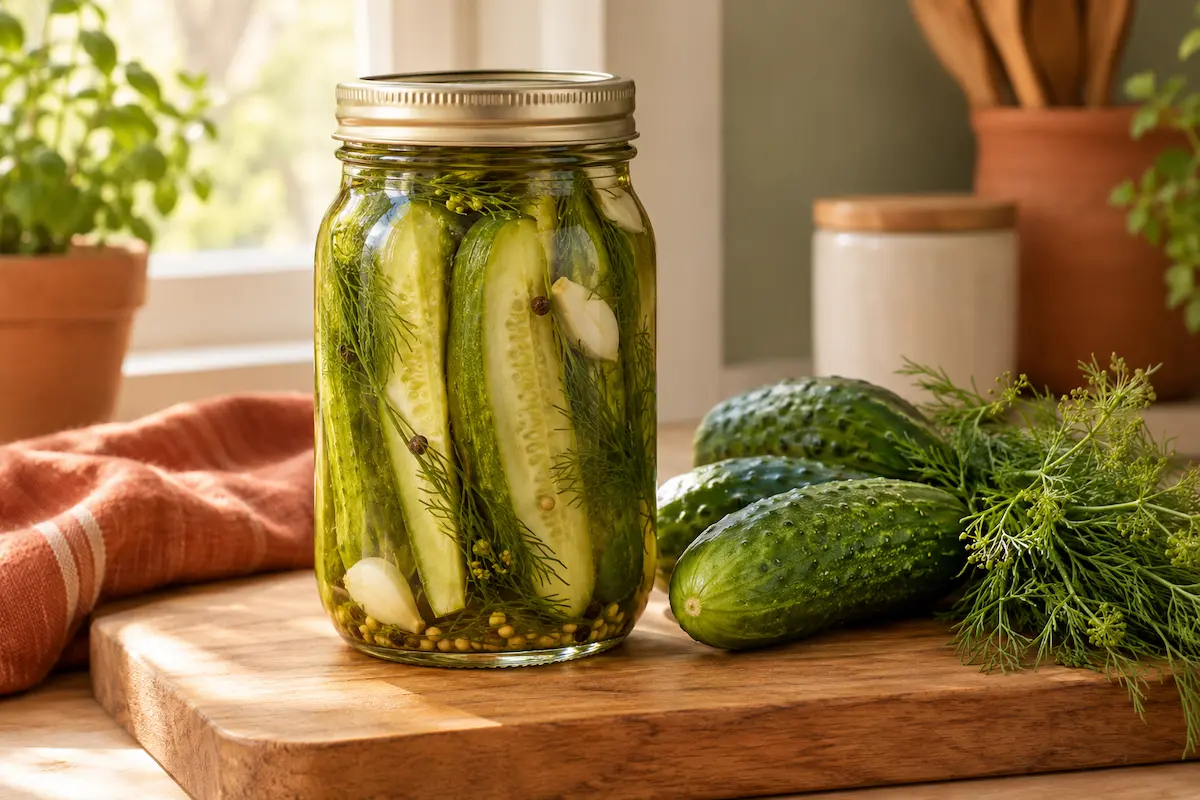
Refrigerator dill pickles are the easiest way into homemade pickling. There is no water bath, no jar lifter, and no hours of processing. You pack cucumbers into a jar, pour hot vinegar brine over them, and let the fridge do the rest. A quart takes about 15 minutes of hands-on work, tastes pickled after a day, and fits in a small apartment kitchen with no special equipment.
This is a vinegar pickle, which is different from the salt-brine method in our fermented pickles recipe. Vinegar pickles get their tang from the acid in the brine and are ready in days, while fermented pickles sour slowly through bacteria over a week or more. These refrigerator dill pickles are not shelf-stable and are not written as a canning recipe. They live in the fridge from the first day to the last.
Recipe at a glance
- Makes: one 1-quart jar
- Hands-on time: about 15 minutes
- Wait time: at least 24 hours, better after 2-3 days
- Keeps: best within about 4 weeks, refrigerated the entire time
Ingredients for Refrigerator Dill Pickles
For one 1-quart (32 oz) jar:
- 4-5 small to medium pickling cucumbers (about 1 to 1.5 lb), Kirby or Persian
- 1 cup water
- 1 cup distilled white vinegar, labeled 5% acidity
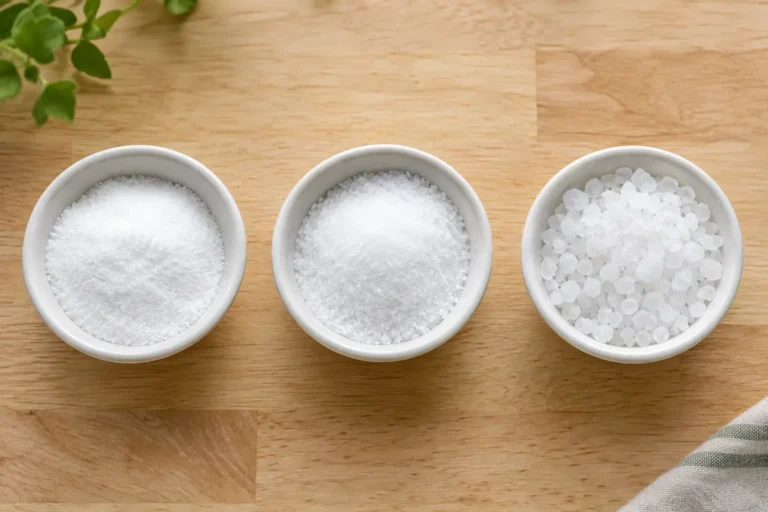
- 1 tablespoon pickling salt (about 18 g; weigh it if you use a different salt, since kosher and sea salts are much lighter by volume). See our pickling salt guide for how it compares to table salt.
- 2-3 garlic cloves, peeled and lightly smashed
- 1 tablespoon whole black peppercorns
- 1 teaspoon mustard seeds (optional)
- 3-4 fresh dill sprigs, or 1 tablespoon dill seed
Choosing Ingredients for Crisp, Clean-Tasting Pickles
The best refrigerator dill pickles start with the right cucumber, and the ingredients matter more than any technique.
Cucumbers. Kirby (often sold as pickling cucumbers) and Persian cucumbers stay crunchiest because they have thick skins, small seed cavities, and less water inside. Look for firm, evenly green cucumbers about 3 to 5 inches long, and use them within a day or two of buying if you can. Standard slicing and English cucumbers work but come out softer. If the skin feels waxy, peel it, since wax can keep brine out.
Vinegar. Distilled white vinegar at 5% acidity gives the cleanest dill flavor. Apple cider vinegar at 5% also works and makes a darker, slightly fruitier pickle. Check the label, and keep the 1:1 vinegar-to-water ratio. Don’t swap in a lower-acidity vinegar or cut the vinegar to make a milder pickle. For more on how ratios work, see our pickle brine guide.
Garlic and dill. Fresh dill gives the brightest flavor. Garlic cloves can turn blue or green in the brine, which is a harmless reaction between compounds in the garlic and the acid and doesn’t mean the batch has spoiled.
Equipment
- A clean 1-quart glass jar with a lid. Vinegar corrodes bare metal, so use a plastic or coated lid, or put a layer of plastic wrap between the jar and a metal lid.
- A stainless steel or enamel saucepan. Avoid aluminum or cast iron, which react with the vinegar.
- A knife, cutting board, and measuring cups and spoons.
How to Make Refrigerator Dill Pickles
- Clean the jar. Wash the jar and lid in hot, soapy water and rinse well. The jar doesn’t need to be sterilized because the pickles stay refrigerated, but it should be spotless.
- Prep the cucumbers. Wash and scrub them, then trim a thin slice off the blossom end (the end opposite the stem). The blossom end contains enzymes that can soften pickles, so removing it helps keep a good crunch. If you have time, soak the cucumbers in ice water for 30 to 60 minutes first, which many cooks do to firm them up. Cut into spears (quarter a 4- to 5-inch cucumber lengthwise) or 1/4-inch rounds.
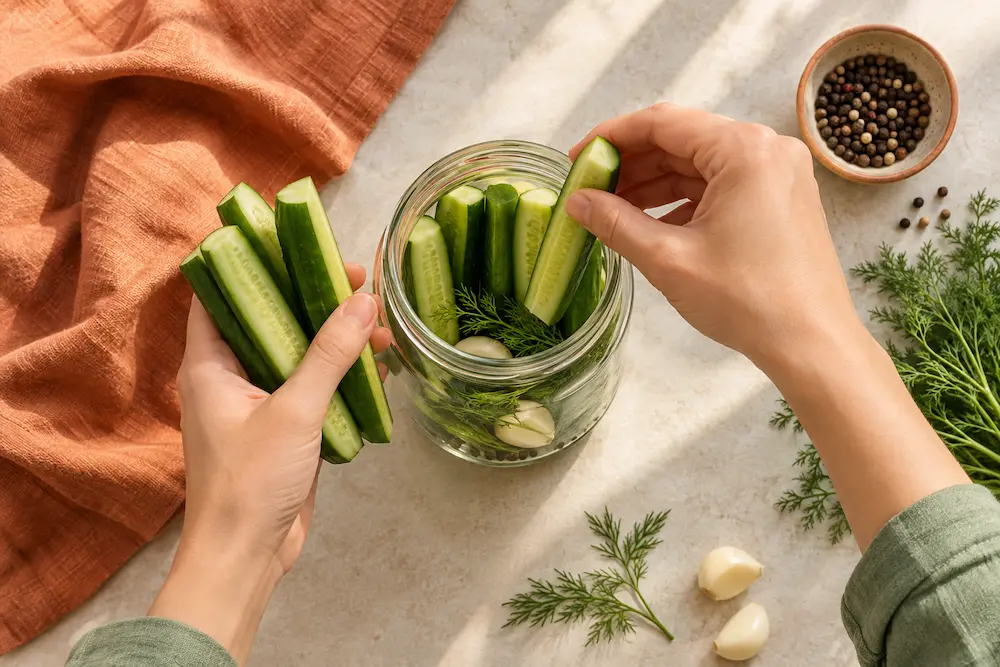
- Pack the jar. Put the garlic, peppercorns, mustard seeds, and dill in the bottom, then pack the cucumbers in snugly, standing spears upright. Packed tight is good, but don’t crush them. Leave about 1/2 inch of space at the top.
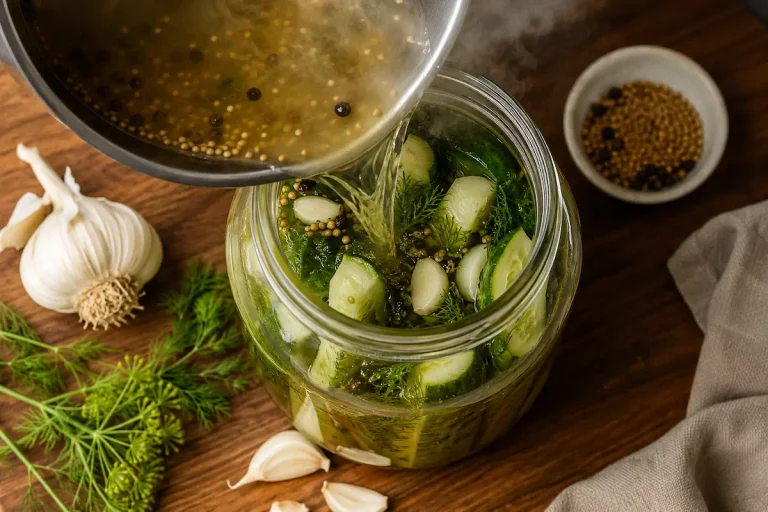
- Make the brine. Combine the water, vinegar, and pickling salt in your saucepan. Bring to a simmer, stirring about a minute or two until the salt dissolves, then take it off the heat.
- Pour the brine. Pour slowly over the cucumbers, since glass can crack if hot liquid hits it fast. Every cucumber needs to be fully under the brine, because anything poking above the surface is where spoilage starts. Tap the jar gently or slide a clean chopstick down the side to release air bubbles. If the jar looks short on brine, make a small extra batch at the same ratio (1/4 cup vinegar, 1/4 cup water, 3/4 teaspoon pickling salt) and top it up. Don’t top up with plain water, which dilutes the brine.
- Cool briefly. Let the jar sit uncovered on the counter for about 30 minutes, until it’s no longer hot, then put the lid on. Don’t leave it out longer than 2 hours total before refrigerating.
- Refrigerate. Move the jar to the fridge and write the date on the lid. For the first 2-3 days, give it a gentle shake once a day with the lid on so the brine distributes evenly.
Hot brine slightly softens cucumbers, which is the trade-off for flavor that develops faster. If crunch is your priority, let the brine cool for 10 to 15 minutes before pouring. The pickles will typically take a day or two longer to taste pickled.
When Your Refrigerator Dill Pickles Are Ready
How long you wait depends on how you cut the cucumbers, since more cut surface means faster flavor:
- Thin rounds (about 1/4 inch): lightly pickled in about 24 hours, with fuller flavor by day 2-3.
- Spears: mild after 24 hours, with real pickle flavor by day 2-3 and the best flavor around day 4-5.
- Whole small cucumbers: need about 5-7 days before the center tastes pickled.
Flavor keeps developing over the first week. Taste one at the 24-hour mark, then judge from there.
Keeping Refrigerator Dill Pickles Crunchy
Soft pickles almost always trace back to one of four causes, and each has a fix:
- Old cucumbers. Cucumbers soften as they sit, so use the freshest ones you can find and pickle them within a day or two. An ice-water soak before packing helps revive slightly tired ones.
- The blossom end. Skipping the trim leaves softening enzymes in the pickle. Trim a thin slice off that end every time.
- Hot brine. The cooler the brine when it hits the cucumbers, the crunchier the result, at the cost of slower flavor.
- Thin cuts. Rounds go soft sooner than spears. Cut thicker if crunch matters most.
For extra insurance, some cooks add a grape leaf for its tannins or a calcium chloride crisping product. If you use a crisping product, follow the label for the amount per quart.
Scaling Refrigerator Dill Pickles for Other Jar Sizes
The ratio stays the same at any size: equal parts vinegar and water, with 1 tablespoon of pickling salt for every 2 cups of total liquid.
| Jar size | Vinegar | Water | Pickling salt | Cucumbers (approx.) |
|---|---|---|---|---|
| Pint (16 oz) | 1/2 cup | 1/2 cup | 1 1/2 teaspoons | 2-3 small |
| Quart (32 oz) | 1 cup | 1 cup | 1 tablespoon | 4-5 small to medium |
| Half-gallon (64 oz) | 2 cups | 2 cups | 2 tablespoons | 8-10 small to medium |
If you use a different salt, weigh it instead of measuring by volume. Never scale down the vinegar to make a milder pickle.
Variations
Once you have the base refrigerator dill pickles down, the flavorings are where you can experiment. The brine ratio is the part to keep consistent.
- Spicy: add a sliced jalapeño or 1/4 teaspoon of red pepper flakes to the jar before pouring the brine.
- Sweeter: stir 1-2 tablespoons of sugar into the brine while it heats, for a profile closer to bread-and-butter pickles.
- Garlicky: double the garlic to 4-6 cloves.
- Different cuts: make chips for burgers, spears for sandwiches, or leave small cucumbers whole.
Troubleshooting Refrigerator Dill Pickles by Symptom
Soft or limp pickles. See the crunch section above. The usual culprits are old cucumbers, a skipped blossom-end trim, hot brine, or thin slices.
Cloudy brine. Often caused by salt with anti-caking additives, minerals in hard water, or sediment from garlic and dill. If the pickles smell clean and look normal, it’s cosmetic. Cloudiness plus fizzing, slime, or an off smell is a different story (see below).
Blue or green garlic. Harmless, as covered above.
Fizzing, bubbles rising, a yeasty smell, slime, or fuzz. Throw the jar out. Unplanned fermentation or spoilage can look and smell like this, and it isn’t worth tasting to find out.
Too salty. On the next batch, cut the salt by about a third (2 teaspoons instead of 1 tablespoon), but keep the vinegar-to-water ratio the same.
Cucumbers floating above the brine. Pack tighter next time, and top up with extra brine so everything stays submerged.
Storing Refrigerator Dill Pickles
Keep refrigerator dill pickles in the fridge the entire time. Stored cold in a clean, sealed jar with the cucumbers fully under the brine, they’re best within about 4 weeks, though flavor and crunch usually peak earlier than that. Use a clean fork each time instead of reaching in with your fingers, which introduces bacteria.
Discard the jar if you see mold, slime, fizzing, or a mushy texture, or if it smells off. A pickle that passes the sniff test isn’t automatically safe, so when in doubt, throw it out.
Ways to Use Them
Refrigerator dill pickles go well beyond the side of a sandwich. Slice spears into chips for burgers, chop them into potato salad, egg salad, or tuna salad, or serve a few alongside anything fried or rich. If you’re building out a small-space pantry, our guide to apartment homesteading covers more projects that work in a rental kitchen.
Frequently Asked Questions
Can I use regular cucumbers?
You can, but expect softer pickles, since slicing and English cucumbers have thinner skins and more water inside. Peel them if the skin is waxy.
Do I have to heat the brine?
Heating dissolves the salt fast and helps flavor soak in sooner. A cooled or cold brine works too if the salt is fully dissolved first, but the pickles will take longer to taste pickled.
Can I reuse the brine for another batch of pickles?
Make fresh brine each time. Used brine has picked up water and flavor from the first batch, which dilutes it and affects how well the next batch keeps.
Can I can refrigerator dill pickles to make them shelf-stable?
No. This recipe was written only for refrigerator storage. For canned pickles, use a tested canning recipe from a source like the National Center for Home Food Preservation, since processing time and jar preparation matter.
Can I use less vinegar for a milder flavor?
Don’t change the vinegar-to-water ratio. For a milder taste, reduce the salt slightly or add a tablespoon or two of sugar instead.
Why do some of my pickles taste better than others in the same jar?
Cucumbers near the bottom sit in more brine and often taste stronger than ones at the top. Shaking the jar daily early on helps even this out.