Ginger Bug Recipe (How to Make a Wild-Fermented Soda Starter)
A ginger bug is the easiest entry point into wild fermentation — no starter to source, no SCOBY to trade with a friend, just ginger, sugar, and water left on the counter for a few days. Once it’s alive, it becomes the base for naturally carbonated sodas: ginger ale, root beer, fruit sodas, whatever you want to flavor and bottle. This recipe covers how to build one from scratch, how to feed it so it stays alive indefinitely, and the sensory cues that tell you it’s actually ready — since “wait a few days” isn’t precise enough on its own.
What Is a Ginger Bug, and How Does It Work?
A ginger bug is a wild-fermented starter culture — the same basic idea as a sourdough starter, but built for carbonating drinks instead of leavening bread. Fresh ginger root naturally carries wild yeast and lactic acid bacteria on its skin. When you combine grated ginger with sugar and water, those microbes wake up and start consuming the sugar, producing carbon dioxide (the bubbles) and a small amount of lactic acid (the tang) as byproducts. Feed it more ginger and sugar every day or two, and the culture keeps growing until it’s active enough to carbonate a full batch of soda.
`
Why Organic, Unpeeled Ginger Matters
This is the one ingredient choice that actually determines whether the recipe works at all. Conventionally grown ginger sold in many grocery stores is often irradiated to extend shelf life, which kills the surface yeast and bacteria the entire ferment depends on — no living microbes, no bug, no matter how long you wait. Leaving the skin on matters for the same reason: most of the wild microbial population lives on the ginger’s outer surface, not in the flesh underneath. Peeling it away before grating removes the very thing you’re trying to cultivate.
Ingredients
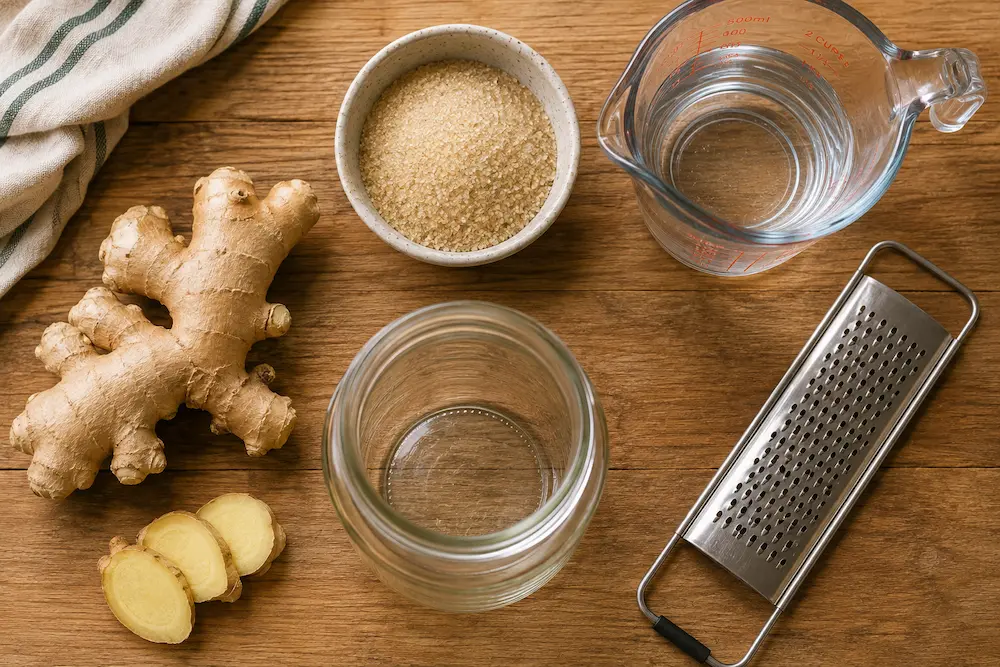
- 2 tablespoons fresh organic ginger root, grated (skin on)
- 2 tablespoons cane sugar
- 1 cup filtered, dechlorinated water
- A pint-size glass jar
- A piece of cheesecloth or breathable cloth, plus a rubber band
For daily feeding (Day 2 onward):
- 1 tablespoon grated ginger
- 1 tablespoon cane sugar
Instructions
- Day 1: Combine the grated ginger, sugar, and water in the jar. Stir well to help dissolve the sugar.
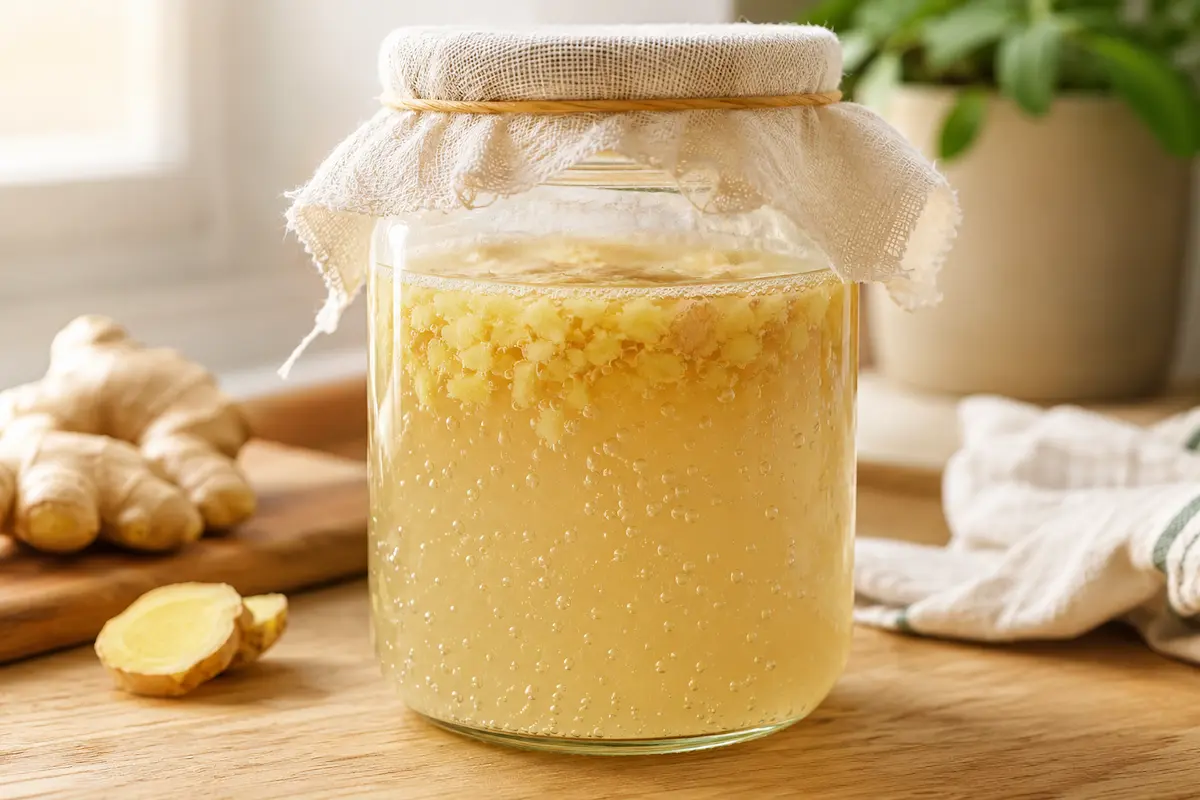
- Cover the jar with cheesecloth secured by a rubber band — not a tight lid. The culture needs airflow in these early days to establish itself.
- Leave the jar at room temperature, out of direct sunlight.
- Each day after, stir in 1 tablespoon each of fresh grated ginger and sugar, then re-cover. Stirring daily also introduces oxygen, which helps the wild yeast establish before the ferment turns more anaerobic.
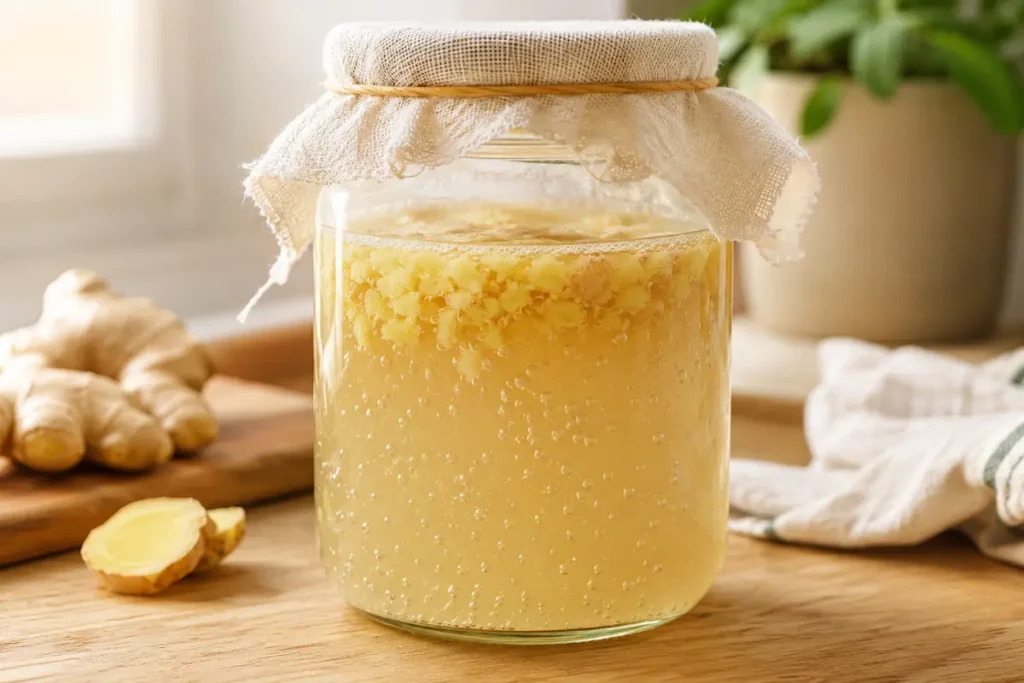
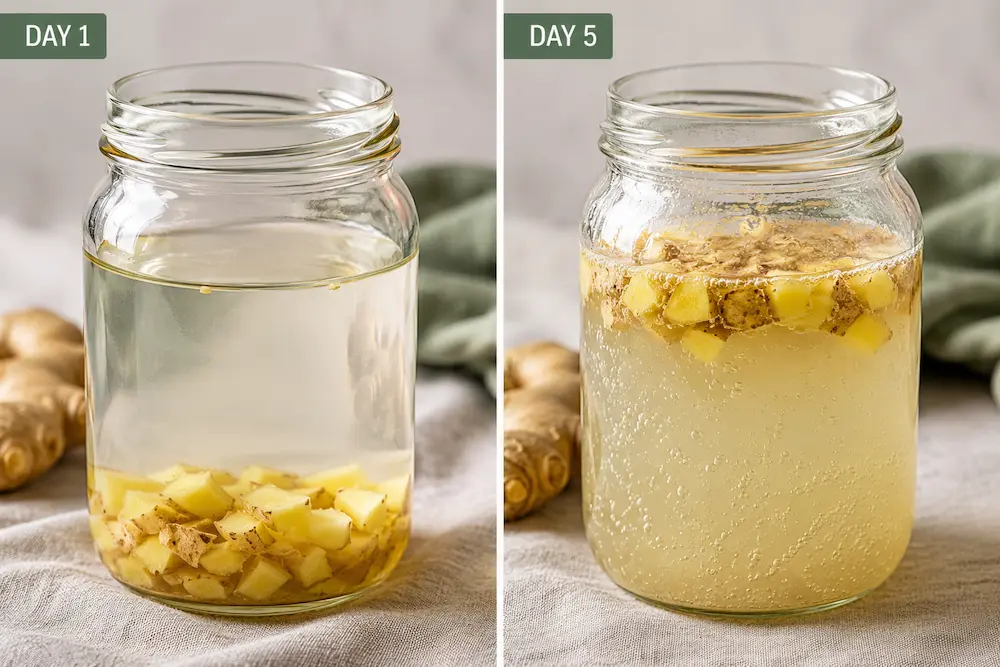
- Watch for small bubbles rising from the bottom starting around day 3, along with the liquid turning slightly cloudy and the ginger pieces floating to the surface.
- Continue daily feeding until the bug is reliably fizzy when stirred and smells yeasty rather than just gingery — typically day 5 to 7, though this varies by kitchen temperature and the ginger’s natural microbial activity.
Feeding Schedule: Room Temperature vs. Refrigerated
Once your ginger bug is established and bubbly, how often it needs feeding depends entirely on where you store it.
| Storage | Feeding Frequency | Best For |
|---|---|---|
| Room temperature, counter | Daily — 1 tbsp ginger + 1 tbsp sugar | Active brewing, making soda regularly |
| Refrigerated | Weekly — 1 tbsp ginger + 1 tbsp sugar | Maintaining the culture between batches |
| Refrigerated, rarely used | Every 2 weeks, minimum | Long-term storage; expect a slower wake-up before your next batch |
If a refrigerated bug seems sluggish after a long gap, don’t discard it — bring it back to room temperature and feed it daily for 2–3 days first. Ginger bugs are resilient and can often be revived even after weeks of neglect, unlike more delicate cultures.
Signs Your Ginger Bug Is Ready
Use your senses rather than the calendar alone:
- Sight: the liquid shifts from clear to cloudy and slightly darker; ginger pieces float and gather at the surface; a thin layer of foam or fine bubbles may form on top.
- Smell: a ripe bug smells distinctly yeasty alongside the ginger scent — not sour, not moldy, not unpleasant.
- Sound/feel: give the jar a gentle swirl — an active bug fizzes visibly and audibly, similar to a freshly opened soda.
Troubleshooting
Nothing is happening after 5 days. Check your ginger — if it’s conventionally grown and possibly irradiated, the microbes needed to start the ferment may already be dead. Switch to organic ginger and restart. Also confirm your water is dechlorinated (tap water left uncovered for 24 hours, or filtered water), since chlorine can suppress the wild yeast before it gets going.
A layer of white film or mold appears on top. A thin, white, harmless kahm yeast film is common and can simply be stirred back in. True mold — fuzzy, colored (green, black, pink, or orange), or accompanied by a foul smell — means starting over with a clean jar.
It smells like alcohol or nail polish remover. This usually means the culture has been feeding on sugar for too long without a fresh feed, and the yeast has shifted heavily toward alcohol production. Feed it and let it stabilize for a day or two — a faint alcohol note is normal in a very active bug, but a strong one means it’s overdue for food.
It’s not fizzy enough to carbonate soda. Give it a few more days of daily feeding at room temperature. A bug that’s only been fed once or twice usually isn’t concentrated enough yet — consistency in feeding matters more than total elapsed time.
Storage and Long-Term Maintenance
A healthy ginger bug can be maintained indefinitely with regular feeding — some home fermenters keep the same culture alive for years. Store it in the refrigerator between uses and feed weekly at minimum to keep it dormant but alive. If you plan to brew soda regularly, keeping it at room temperature with daily feeding keeps it at peak activity, ready to use whenever you want to bottle a batch.
How to Use Your Ginger Bug
Once active, strain out about ¼ cup of the liquid (leaving the ginger pulp behind to keep feeding) and combine it with sweetened juice, tea, or a homemade soda syrup in a flip-top bottle. Seal and leave at room temperature for 1–3 days, “burping” the bottle daily by briefly opening it to release built-up pressure — skipping this step risks an over-pressurized bottle. Once it’s as fizzy as you like, refrigerate to slow the fermentation before drinking.
This same lacto-fermentation logic — wild microbes, salt or sugar as the preservation and food source, patience over precision — shows up across a lot of what’s already on this site, from the fermented pickles to the fermented hot sauce. If you’re building out a small-space fermentation setup in general, our apartment homesteading guide is a good starting point for what else is realistic in a compact kitchen.Frequently Asked Questions
Can I use ground ginger instead of fresh?
Fresh is strongly preferred — the wild yeast and bacteria live on the surface of fresh ginger root, and dried ground ginger doesn’t carry the same living microbial population. Some fermenters report success with ground ginger plus a handful of unwashed raisins (which carry their own wild yeast) as a workaround, but it’s a less reliable starting point than fresh, organic, unpeeled ginger.
Can I use honey or maple syrup instead of sugar?
You can, but expect a much slower ferment — some fermenters report it taking weeks rather than days, since honey’s natural antimicrobial properties can slow the wild yeast down. Plain cane sugar remains the most reliable and fastest-fermenting option for building the initial culture.
Do I need to refrigerate my ginger bug once it’s active?
Not necessarily. Refrigeration just slows the fermentation down for easier maintenance between batches. Keeping it at room temperature is fine too, as long as you commit to daily feeding.
Is ginger bug soda alcoholic?
It contains a very small, typically negligible amount of alcohol as a natural byproduct of wild yeast fermentation — generally comparable to the trace amounts found in kombucha or other short-fermented beverages, not enough to be considered an alcoholic drink under normal fermentation and storage times.
My ginger bug hasn’t been fed in weeks. Is it dead?
Probably not. Ginger bugs are unusually resilient compared to other cultures. Bring it to room temperature, discard any surface mold if present (not just a harmless white film), and resume daily feeding for 2–3 days before judging whether it’s revived.