Two glasses of fizzy water kefir on a wooden counter one plain pale gold and one deep purple blueberry with kefir grains and fresh fruit beside them

Water Kefir Recipe: How to Make Fizzy Probiotic Drinks at Home

Two glasses of fizzy water kefir on a wooden counter one plain pale gold and one deep purple blueberry with kefir grains and fresh fruit beside them

A water kefir recipe needs three things — water, sugar, and a small culture of live water kefir grains. That is the whole ingredient list. The grains do the rest, transforming plain sugar water into a lightly fizzy, mildly tangy probiotic drink in 24 to 48 hours.

Water kefir is dairy-free, gluten-free, and produces a drink that is genuinely enjoyable rather than medicinal tasting. Unlike kombucha which takes 7 to 14 days and needs a specific temperature range, this water kefir recipe is ready in two days and works at normal room temperature in any apartment kitchen.

Once you have the grains, each batch costs a few cents to make — and the grains reproduce with every fermentation cycle, meaning your water kefir supply is self-renewing indefinitely.

What are water kefir grains?

Water kefir grains are small translucent crystals that look like pale yellow gelatinous nuggets. They are not grains in the food sense — they contain no gluten. The name comes from their granular appearance. What they actually are is a symbiotic colony of beneficial bacteria and yeast living in a gelatinous matrix. When placed in sugar water, they feed on the sugar and produce lactic acid, carbon dioxide, and a range of probiotic compounds.

The grains are reusable indefinitely. They grow larger with each batch and can be divided and shared when they multiply.

Water Kefir Benefits — Why Make This at Home

Before getting into the water kefir recipe itself, here is what the drink actually delivers and why it is worth making.

💧 Dairy-free probiotics

Water kefir is one of the most accessible ways to get diverse live probiotic bacteria without consuming dairy — ideal for vegans and people with lactose intolerance.

⚡ Ready in 48 hours

This water kefir recipe ferments in 24 to 48 hours at room temperature — faster than kombucha (7–14 days) and without any temperature control equipment.

💰 Almost free per batch

After the initial grain purchase, each batch costs only the sugar — a few cents per litre. The grains never need replacing and reproduce on their own.

🌿 Low in sugar

The sugar you add is food for the grains, not for you. By the time fermentation completes at 48 hours, the majority of the sugar has been consumed and converted into acids and carbon dioxide.

What You Need for This Water Kefir Recipe
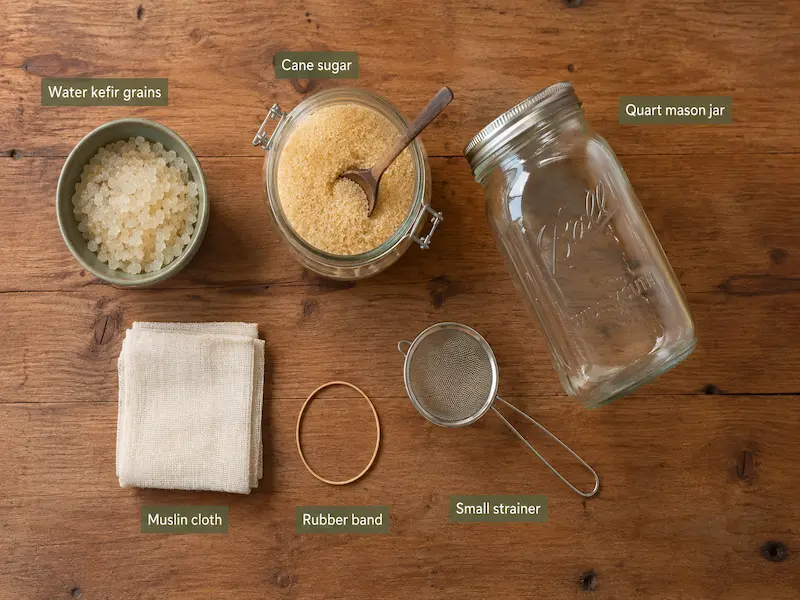
Water kefir recipe ingredients flat lay including translucent kefir grains cane sugar quart mason jar muslin cloth rubber band and fine mesh strainer on a wooden surface

🧪 Ingredients

  • 3–4 tbsp live water kefir grains
  • 500ml non-chlorinated water
  • 3 tbsp (40g) organic cane sugar
  • 1 dried fig or 4 raisins — optional mineral boost
  • 1 slice lemon — optional

🫙 Equipment

  • Quart (1 litre) wide-mouth mason jar
  • Muslin cloth or coffee filter
  • Rubber band to secure cover
  • Fine mesh strainer
  • Second jar for storing finished kefir

On the water: Tap water often contains chlorine which can damage the grains over time. Either use filtered water, leave tap water in an open container for 30 minutes before using (chlorine dissipates), or use bottled still water.

On the sugar: Organic cane sugar or raw sugar works best. Avoid honey — its antimicrobial properties can harm the grains. White refined sugar works but provides fewer minerals for the grains to thrive.

On sourcing grains: Buy live (not dehydrated) grains from a specialist fermentation supplier online. Some health food stores stock them. Many home fermenters also share surplus grains — fermentation communities on Facebook and Reddit are good places to find free local grains.

The Water Kefir Recipe — First Fermentation

1

Dissolve the sugar

Add the sugar to your mason jar. Pour in a small amount of warm water — about 100ml — and stir until the sugar is completely dissolved. Top up with the remaining water at room temperature. The final mixture should be at room temperature before adding the grains — never add grains to warm or hot water.

Tip: If using dried fig or raisins for a mineral boost, add them at this stage. They feed the grains and improve carbonation, especially if your water is low in minerals.
2

Add the water kefir grains

Add 3 to 4 tablespoons of live water kefir grains to the sugar water. Add the lemon slice if using — the citric acid provides additional minerals and helps the grains thrive. Do not use metal spoons or containers — metal can react with the acids produced during fermentation. Use glass, wood, or plastic only.

3

Cover and ferment

Cover the jar loosely with a square of muslin cloth or a coffee filter secured with a rubber band. This allows gas to escape while keeping dust and insects out. Do not use an airtight lid during the first fermentation — the carbon dioxide produced needs to escape or pressure will build up. Place the jar somewhere at room temperature between 68°F and 78°F (20°C to 26°C), out of direct sunlight.

Tip: Warmer temperatures ferment faster. At 75°F your water kefir recipe will be ready in 24 hours. At 68°F allow 48 hours. Taste at both stages and decide which tanginess level you prefer.
4

Ferment for 24 to 48 hours

Leave the jar undisturbed for 24 to 48 hours. You may see small bubbles forming on the grains or rising through the liquid — this is carbon dioxide being produced and means fermentation is active. Do not ferment for longer than 48 hours in most cases — over-fermented water kefir becomes very sour and the grains can begin to starve.

5

Strain the grains

Pour the finished water kefir through a fine mesh strainer into a clean jar or jug, catching the grains. Remove the dried fig or lemon if used. Rinse the grains briefly with non-chlorinated water and start your next batch immediately — never leave grains sitting dry or in plain water. The strained liquid is your finished water kefir, ready to drink plain or go into a second fermentation for fizz and flavour.

Second Fermentation — How to Build Natural Fizz and Flavour
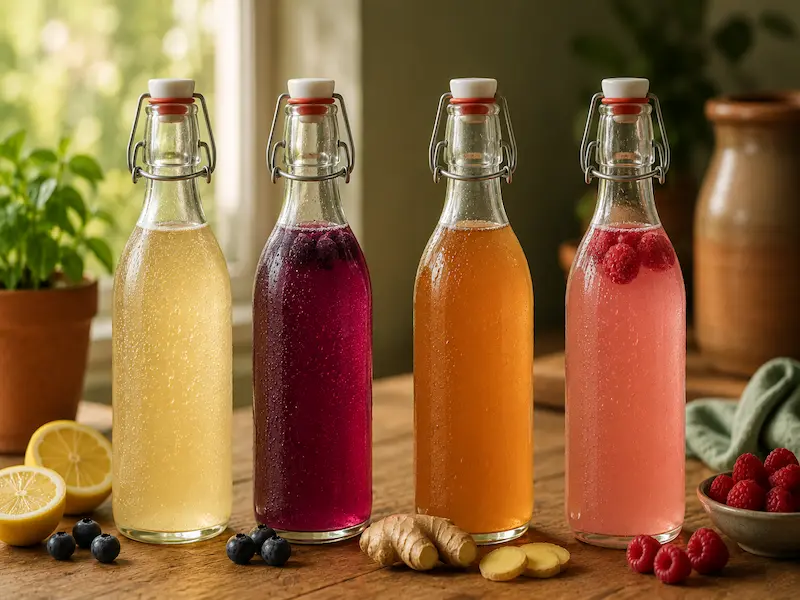
Four sealed flip-top bottles of flavoured water kefir in different colours on a wooden counter showing plain gold blueberry purple amber ginger and pale pink raspberry

The first fermentation produces the probiotic drink. The second fermentation — bottling the strained liquid with a small amount of fruit juice or flavouring for another 24 to 48 hours — builds natural carbonation and adds flavour.

How to do the second fermentation:

Pour the strained water kefir into sealed flip-top or screw-top glass bottles. Add your chosen flavouring. Leave 2 to 3cm of headspace at the top — enough room for gas to build. Seal airtight and leave at room temperature for 24 to 48 hours, burping each bottle once daily by opening briefly over a sink to release pressure. When you hear a healthy hiss on opening, move all bottles to the fridge. The cold slows fermentation and preserves the carbonation.

Flavour combinations for the second fermentation:

FlavourWhat to add per 500mlResult
Blueberry and lemon50ml blueberry juice + a squeeze of lemonDeep purple, strong carbonation, fruity tang
Ginger and lime1 tsp fresh grated ginger + juice of half a limeClosest to a natural ginger beer
Raspberry50ml raspberry juice or 8 fresh raspberriesPale pink, delicate flavour, good fizz
Apple and cinnamon50ml apple juice + a small cinnamon stickWarm and autumnal, mild carbonation
Plain with lemonA slice of fresh lemon onlyCleanest, most refreshing version
Blueberry and Lemon
Add50ml blueberry juice + squeeze of lemon
ResultDeep purple, strong carbonation
Ginger and Lime
Add1 tsp grated ginger + juice of half lime
ResultClosest to natural ginger beer
Raspberry
Add50ml raspberry juice or 8 fresh raspberries
ResultPale pink, delicate, good fizz
Apple and Cinnamon
Add50ml apple juice + small cinnamon stick
ResultWarm, autumnal, mild carbonation
Plain with Lemon
AddA slice of fresh lemon only
Cleanest, most refreshing version

Water Kefir vs Kombucha vs Milk Kefir

FeatureWater KefirKombuchaMilk Kefir
Dairy-free✅ Yes✅ Yes❌ No
Ready in24–48 hours7–14 days24–48 hours
TasteLightly sweet, mildly tangyVinegary, tangyCreamy, sour, thick
Beginner-friendly✅ Very easyModerate✅ Easy
Cost per batchA few cents$1–2Cost of milk
Dairy-Free
Water Kefir✅ Yes
Kombucha✅ Yes
Milk Kefir❌ No
Ready In
Water Kefir24–48 hours
Kombucha7–14 days
Milk Kefir24–48 hours
Beginner-Friendly
Water Kefir✅ Very easy
KombuchaModerate
Milk Kefir✅ Easy
Cost Per Batch
Water KefirA few cents
Kombucha$1–2
Milk KefirCost of milk

Troubleshooting Your Water Kefir Recipe

No bubbles and no fizz after 48 hours. The grains need a mineral boost. Add a pinch of sea salt or a small piece of dried fruit to your next batch — filtered or distilled water strips minerals that the grains need to thrive. Also check your temperature — below 65°F the grains become sluggish and may produce little activity.

Water kefir is too sweet. Fermentation did not complete — either the grains are not active enough or the temperature was too cold. Let it ferment for another 12 to 24 hours and taste again. Very new or recently dehydrated grains can take 3 to 5 batches to reach full activity.

Water kefir is too sour. Over-fermented — left too long or fermented somewhere too warm. Taste from 24 hours onwards and strain earlier next time. You can dilute an over-sour batch with fresh water or juice rather than wasting it.

Grains are not growing. Grains multiply when well-fed and properly mineralised. If yours are staying the same size after multiple batches, try switching to mineral water for a few batches, adding a dried fig, or reducing the batch size so the sugar-to-grain ratio improves.

Finished water kefir is cloudy. Completely normal — cloudiness indicates active fermentation and live bacteria. Clear water kefir is actually less active. Slight sediment at the bottom of the bottle after second fermentation is also normal yeast sediment.

Frequently Asked Questions

How much water kefir should I drink per day?

Start with a small glass — about 100ml — per day and increase gradually over one to two weeks. As with any probiotic food, introducing large quantities too quickly can cause temporary digestive discomfort as your gut microbiome adjusts. Most people settle into one to two glasses per day as a regular amount.

Can I use coconut water instead of sugar water in this water kefir recipe?

Yes — coconut water kefir is a popular variation. However coconut water alone does not contain enough sugar to fully feed the grains. Add one tablespoon of sugar per 500ml alongside the coconut water to keep the grains healthy and ensure proper fermentation activity.

How long do water kefir grains last?

Indefinitely when properly maintained. Water kefir grains are a living culture that reproduces with each batch. As long as they have sugar water to feed on, they will keep fermenting and growing. You can also store grains in the fridge in sugar water for up to 3 weeks without feeding, or freeze them for longer storage.

What if my water kefir recipe does not fizz in the second fermentation?

Check your bottles are sealed completely airtight — any gap lets the carbon dioxide escape. Also make sure you added enough sugar or fruit juice to feed the second fermentation. If the first fermentation ran very long and the sugar is fully depleted, the grains will have nothing left to produce gas in the second ferment. Add an extra teaspoon of sugar or fruit juice and seal tightly.

How is water kefir different from other fermented drinks I make at home?

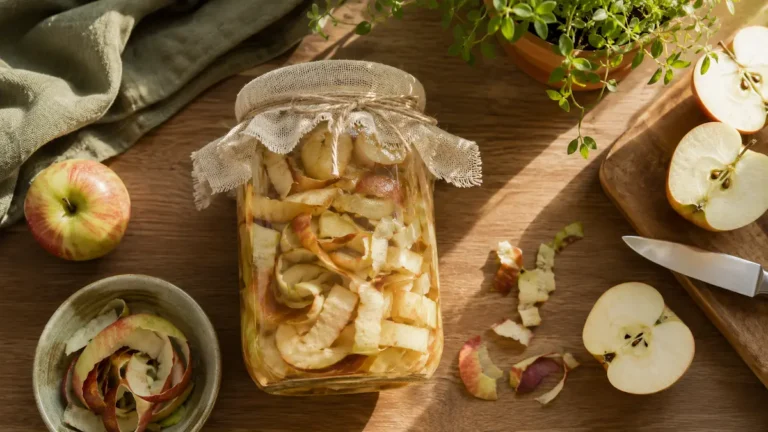
Water kefir uses a reusable grain culture that you feed and maintain continuously — unlike apple cider vinegar which uses bacteria already present on the fruit scraps, or sauerkraut which uses bacteria already on the cabbage. The grain culture is your responsibility to maintain — but in return it produces a fresh batch every 48 hours for as long as you feed it.

Is this water kefir recipe safe during pregnancy?

Water kefir contains trace amounts of alcohol — typically under 0.5% but sometimes higher depending on fermentation time. If you are pregnant or breastfeeding, consult your healthcare provider before consuming fermented drinks. This is a medical question that goes beyond what a food blog can advise on.

More Fermentation Projects for Your Apartment

🥬

Make sauerkraut next

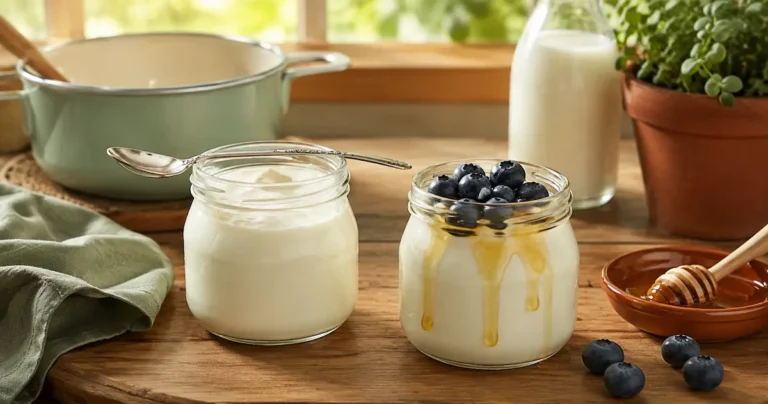
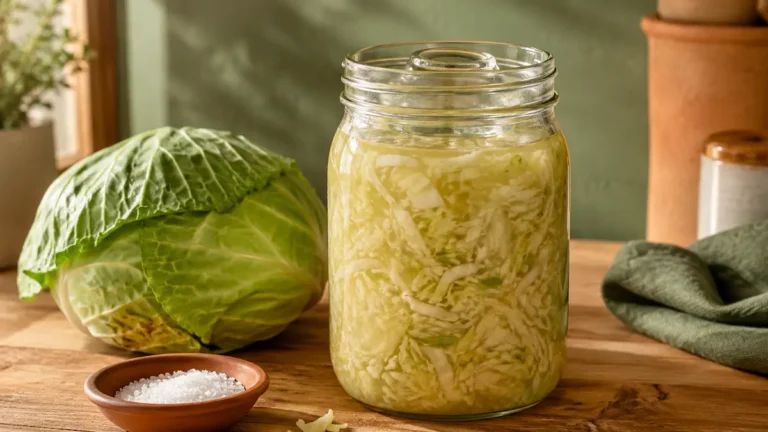
The easiest room-temperature ferment — just cabbage and salt in a mason jar. Ready in 1 to 4 weeks.

Sauerkraut Recipe →
🍶

Make homemade yogurt

Two ingredients, no yogurt maker needed — thick creamy yogurt ready in 8 hours on your stovetop.

Homemade Yogurt Recipe →
🍎

Make apple cider vinegar

Turn apple scraps into raw living vinegar for almost zero cost — a 6 week zero waste ferment.

Apple Cider Vinegar Guide →
🍵

Try kombucha too

Longer wait (7 to 14 days), bigger flavour payoff — a natural next ferment once you've got kefir down.

Kombucha Guide →
🌱

See all fermentation projects

Fermentation is one of six apartment homesteading skill areas — see how they all connect.

Apartment Homesteading Guide →

Similar Posts

Leave a Reply

Your email address will not be published. Required fields are marked *