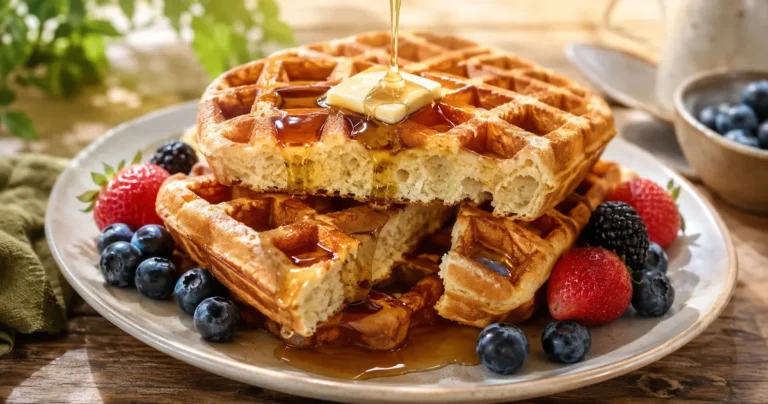
Stack of fluffy sourdough discard pancakes with butter and maple syrup on a white plate with fresh blueberries on a wooden counter

Sourdough Discard Pancakes: Fluffy, Tangy, and Ready in 20 Minutes
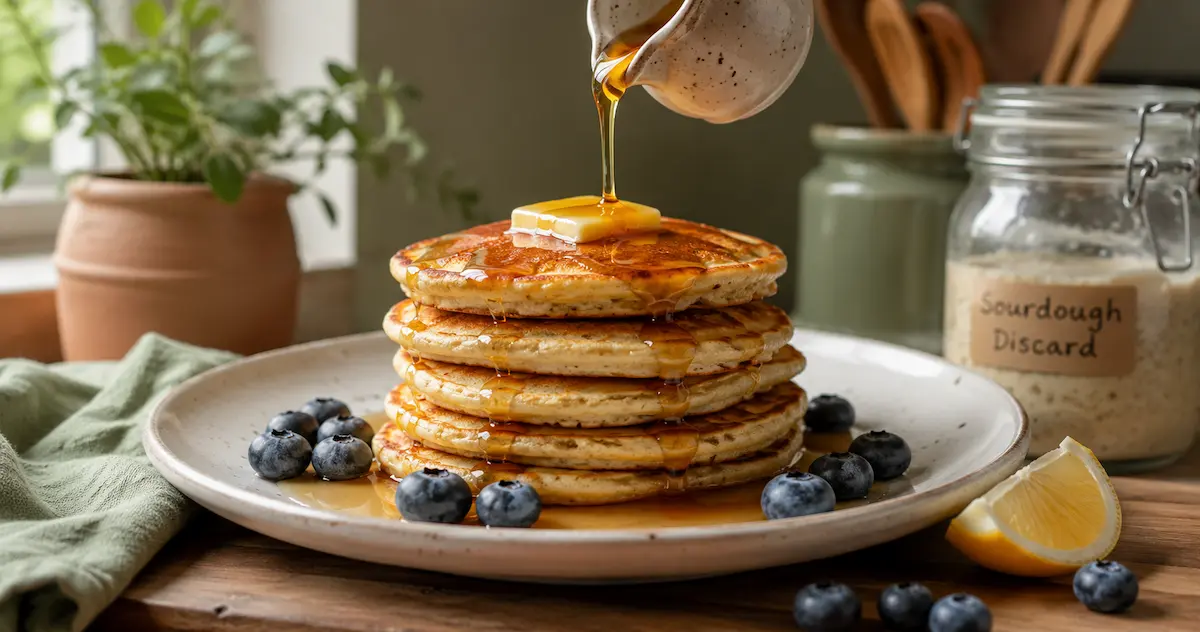
Stack of fluffy sourdough discard pancakes with butter and maple syrup on a white plate with fresh blueberries on a wooden counter

Sourdough discard pancakes are the recipe that turns starter maintenance from a chore into something you look forward to. Every time you feed your starter you have discard to use — and these pancakes are ready in 20 minutes with one bowl, no special equipment, and ingredients you already have.

What makes sourdough discard pancakes different from regular pancakes is not just the tang. The natural acids in the discard react with baking soda to produce exceptional lift, and the fermentation process partially breaks down the gluten in the flour — making these pancakes noticeably lighter, fluffier, and easier to digest than any pancake made from a box mix.

This guide covers the full recipe with two methods — same-day and overnight — five flavour variations, and every common sourdough discard pancake problem with a clear fix.

Sourdough Discard Pancakes — At a Glance

Prep time5 minutes
Cook time15 minutes
Total time20 minutes
Makes8 pancakes
Discard needed120g (½ cup)
DifficultyBeginner

Ingredients

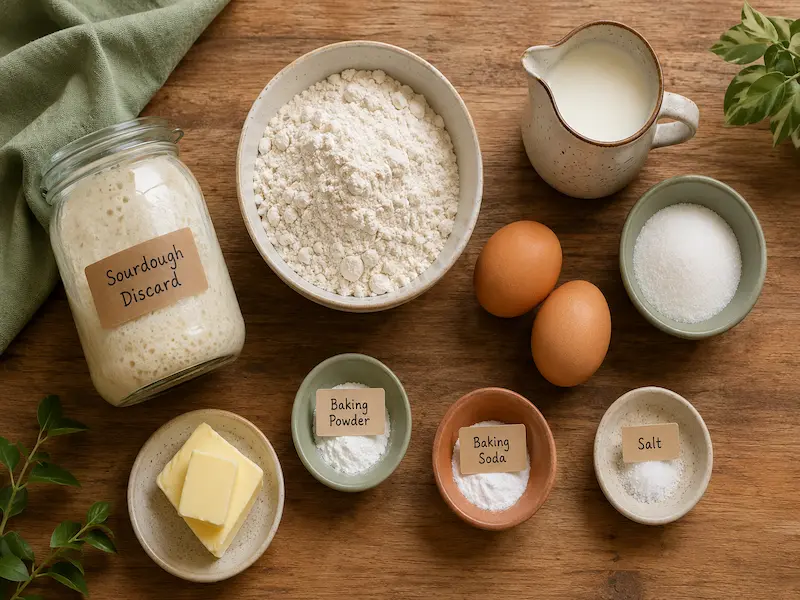
Sourdough discard pancake ingredients flat lay including discard jar flour eggs milk butter baking powder and baking soda on a wooden surface

Wet ingredients

  • 120g (½ cup) sourdough discard
  • 120ml (½ cup) whole milk
  • 1 large egg
  • 1 tbsp melted butter or neutral oil
  • 1 tsp vanilla extract — optional

Dry ingredients

  • 120g (1 cup) plain flour
  • 1 tbsp sugar
  • 1 tsp baking powder
  • ½ tsp baking soda
  • ¼ tsp salt

Why both baking powder and baking soda? Baking powder makes the pancakes rise and stay fluffy. Baking soda reacts specifically with the natural acids in the sourdough discard, lightening the texture and neutralising the sharpest tang. Using both is the key to sourdough discard pancakes that are light, airy, and tender rather than flat and dense. Do not substitute one for the other.

Same-Day Method — 20 Minutes Start to Table

1

Mix the dry ingredients

In a large bowl whisk together the flour, sugar, baking powder, baking soda, and salt until evenly combined. Make a well in the centre.

2

Mix the wet ingredients separately

In a jug or separate bowl whisk together the sourdough discard, milk, egg, melted butter, and vanilla until smooth and fully combined.

Tip: Make sure your butter has cooled slightly before adding the egg — hot butter scrambles eggs and ruins the batter.
3

Combine wet and dry — do not overmix

Pour the wet ingredients into the well in the dry ingredients and fold gently with a spatula until just combined. The batter will look lumpy — this is correct and essential. Overmixing develops the gluten in the flour and produces tough, rubbery sourdough discard pancakes instead of fluffy ones. Stop stirring the moment there are no dry streaks of flour visible.

The most important step: Lumpy batter = fluffy pancakes. Smooth batter = flat tough pancakes. Do not be tempted to keep stirring.
4

Rest the batter for 5 minutes

Leave the batter to rest for 5 minutes before cooking. During this rest the baking powder activates and starts producing bubbles — giving the pancakes a head start on rising. The batter will visibly thicken slightly. Do not skip this step.

5

Preheat the pan and make a test pancake

Heat a non-stick skillet or cast iron pan over medium-low heat. Add a small knob of butter and let it melt and foam. Always make one small test pancake first — pour about 2 tablespoons of batter and cook for 60 to 90 seconds. If it browns too quickly your heat is too high. Adjust before cooking the full batch.

Tip: Medium-low heat is the secret to fluffy sourdough discard pancakes. High heat burns the outside before the inside has time to set, producing a crisp exterior with a raw, gummy centre.
6

Cook and flip

Pour approximately 60ml (¼ cup) of batter per pancake onto the hot buttered pan. Cook until bubbles appear across the surface and the edges look set and no longer shiny — about 2 to 3 minutes. Flip once using a wide spatula and cook for a further 1 to 2 minutes until the underside is golden. Keep cooked pancakes warm in an oven at 200°F (90°C) while you cook the rest.

The flip rule: Only flip once. Flipping sourdough discard pancakes multiple times compresses them and reduces the fluffiness. One flip, then leave them alone.

Overnight Method — Even Fluffier, More Flavour

The overnight method produces noticeably more flavourful sourdough discard pancakes with an extra-tender crumb because the batter ferments slowly in the fridge, allowing the discard's bacteria to break down more of the flour's starch and gluten.

The night before: Combine the sourdough discard, milk, egg, butter, flour, and sugar in a bowl. Do not add the baking powder, baking soda, or salt yet. Cover and refrigerate overnight — or up to 16 hours.

In the morning: Remove the batter from the fridge and let it come to room temperature for 15 minutes. Add the baking powder, baking soda, and salt and fold in gently. Cook immediately — the leavening reaction begins as soon as the baking soda contacts the acids in the discard and batter left to sit too long after this point loses its rise.

Same-day vs overnight — which to choose

Same-day — 20 minutes total, mild tang, light and fluffy. Best for weekday mornings.

Overnight — more complex flavour, deeper tang, extra tender crumb. Best for weekend breakfast when you have time to plan ahead.

5 Sourdough Discard Pancake Variations
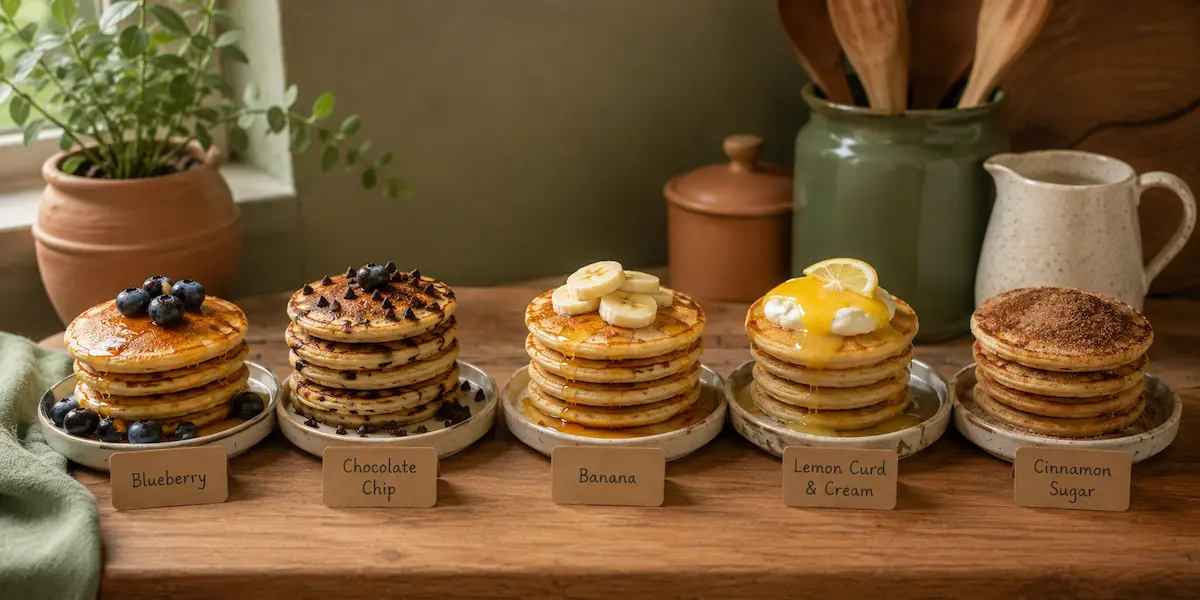
Five stacks of sourdough discard pancakes in a row each with different toppings including blueberries chocolate chips banana lemon curd and cinnamon sugar
VariationWhat to addWhen to add it
BlueberryA handful of fresh or frozen blueberriesDrop onto batter after pouring into pan
Chocolate chip50g dark or milk chocolate chipsFold into batter just before cooking
Lemon and poppy seedZest of 1 lemon + 1 tbsp poppy seedsAdd to dry ingredients before combining
Banana1 ripe banana mashed into wet ingredientsMix into wet ingredients — reduce milk by 2 tbsp
Cinnamon1 tsp cinnamon + pinch of nutmegAdd to dry ingredients before combining
Blueberry
AddA handful of fresh or frozen blueberries
WhenDrop onto batter after pouring into pan
Chocolate Chip
Add50g dark or milk chocolate chips
WhenFold into batter just before cooking
Lemon and Poppy Seed
AddZest of 1 lemon + 1 tbsp poppy seeds
WhenAdd to dry ingredients before combining
Banana
Add1 ripe banana mashed into wet ingredients
WhenMix into wet ingredients — reduce milk by 2 tbsp
Cinnamon
Add1 tsp cinnamon + pinch of nutmeg
WhenAdd to dry ingredients before combining

Troubleshooting Sourdough Discard Pancakes

Pancakes are flat and dense. Almost always caused by overmixing — the batter was stirred until smooth rather than left lumpy. The second most common cause is old baking powder that has lost its potency. Test your baking powder by dropping a teaspoon into hot water — if it does not bubble immediately, replace it. Your sourdough discard pancakes will never be fluffy with dead leavening.

Pancakes are raw in the middle. Heat is too high. The outside sets and colours before the centre has time to cook through. Lower the heat to medium-low, make a test pancake before cooking the full batch, and remember that the pan gets progressively hotter as you cook — turn the heat down slightly after the first two batches.

Pancakes taste too sour. Old discard (1 to 2 weeks from the fridge) is sharper than fresh discard. For milder sourdough discard pancakes use discard that is less than 3 days old. Adding an extra teaspoon of sugar also balances the tang without affecting texture.

Batter is too thick. Different sourdoughs have different hydration levels — a stiffer starter produces a thicker discard. Add milk one tablespoon at a time until the batter falls off a spoon in a slow, thick ribbon. It should be thicker than double cream but pourable — not firm like cookie dough.

Batter is too thin. Very wet discard (high hydration starters) can make the batter runny. Add a tablespoon of flour at a time until it reaches the right consistency. Thin batter spreads too far in the pan and produces flat crispy pancakes rather than thick fluffy ones.

Storing and Reheating

Sourdough discard pancakes reheat better than almost any other pancake because the fermentation makes them more moisture-retentive — they do not dry out or turn rubbery the way standard pancakes do.
  • Fridge — stack with a small square of parchment between each pancake to prevent sticking. Store in an airtight container for up to 3 days. Reheat in a dry pan over low heat for 60 seconds per side, or in a toaster for 1 to 2 cycles.
  • Freezer — freeze in a single layer on a baking sheet first, then transfer to a freezer bag once solid. Keeps for up to 3 months. Reheat directly from frozen in a toaster or warm oven at 325°F (165°C) for 8 to 10 minutes.
  • Make a double batch — sourdough discard pancakes scale perfectly. Double or triple the recipe with no changes to method. Freeze half for instant weekday breakfasts throughout the week.

Frequently Asked Questions

Can I use active starter instead of sourdough discard for pancakes?

Yes — active starter works in this recipe and produces a slightly lighter, more airy pancake because of the additional yeast activity. The flavour will be milder since active starter is recently fed and less acidic than discard. Both produce excellent sourdough discard pancakes — use whichever you have available.

Do sourdough discard pancakes taste very sour?

No — the tang is subtle, not sharp. Most people describe it as a pleasant background flavour that makes the pancakes taste more complex and interesting than regular pancakes. The baking soda in the recipe neutralises the sharpest acidity. If you want a milder flavour use fresh discard (under 3 days old). If you want a stronger tang use older fridge discard or the overnight method.

Can I make sourdough discard pancakes without eggs?

Yes. Replace the egg with one flax egg (1 tablespoon ground flaxseed mixed with 3 tablespoons water, left for 5 minutes to gel) or 60ml of unsweetened applesauce. The texture will be slightly denser but still very good. Use plant milk to make the recipe fully vegan.

Why do my sourdough discard pancakes spread too flat in the pan?

Two causes: batter is too thin (see troubleshooting above), or the pan is too hot which causes the batter to spread fast before setting. Both are easy to fix — thicken the batter with a tablespoon of flour and lower the heat to medium-low before your next batch.

Can I make the batter ahead and refrigerate it overnight?

Yes — this is the overnight method covered above. The key is to leave out the baking powder and baking soda overnight and add them in the morning just before cooking. The leavening reaction happens immediately on contact with the acids in the discard — adding them overnight means the bubbles are all gone before the batter ever hits the pan.

What is the difference between sourdough discard pancakes and regular pancakes?

The sourdough discard adds three things regular pancake batter does not have: natural acidity that reacts with baking soda for extra lift, partial gluten breakdown from fermentation that makes the pancakes more tender and easier to digest, and a mild tangy flavour that adds depth. The result is consistently fluffier, more flavourful, and more nutritious than a standard pancake mix. For more ways to use your discard read our complete sourdough discard recipes guide — 10 recipes covering everything from crackers to pizza dough.

More Sourdough Recipes for Your Apartment Kitchen

🥞

10 more discard recipes

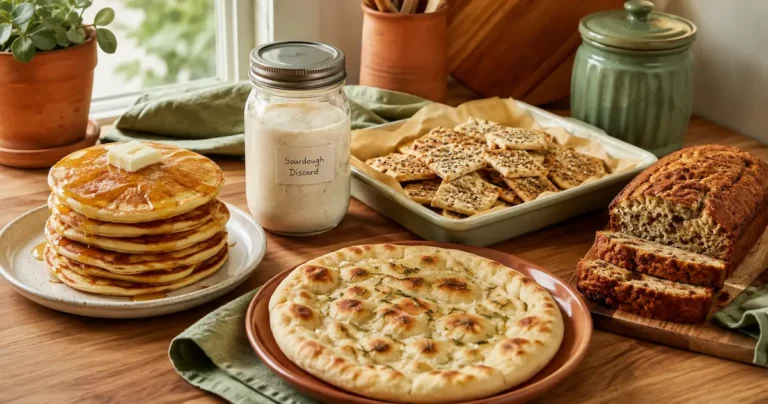
Crackers, pizza dough, banana bread, tortillas, and more — 10 ways to use every last drop of sourdough discard.

Sourdough Discard Recipes →
🍞

Bake sourdough without an oven

A real sourdough loaf on your stovetop — no Dutch oven, no specialist equipment needed.

Stovetop Sourdough Guide →
🔍

Fix a dense sourdough loaf

Every common sourdough problem has one specific cause and one clear fix — find yours here.

Why Is My Sourdough Dense →
🥐

No starter? Try no-knead bread

Four ingredients, five minutes hands-on time, and no sourdough starter required.

No-Knead Bread Guide →
🥪

Discard works in bread too

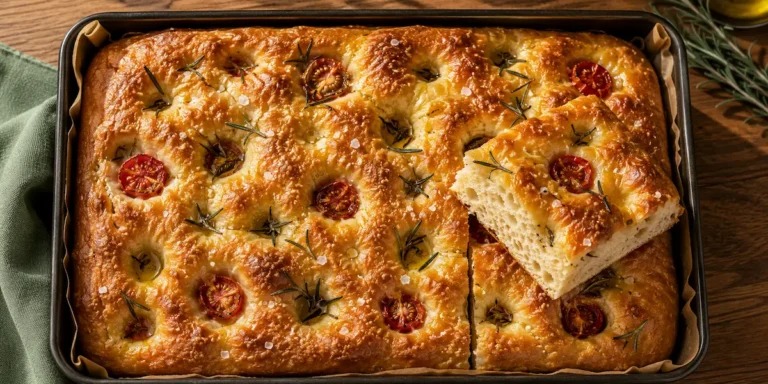
Sandwich bread, focaccia, and English muffins all have their own discard variation — not just pancakes.

Sandwich Bread → / Focaccia → / English Muffins →

Similar Posts

Leave a Reply

Your email address will not be published. Required fields are marked *