Sourdough Waffle Recipe (Straight From the Discard Jar)
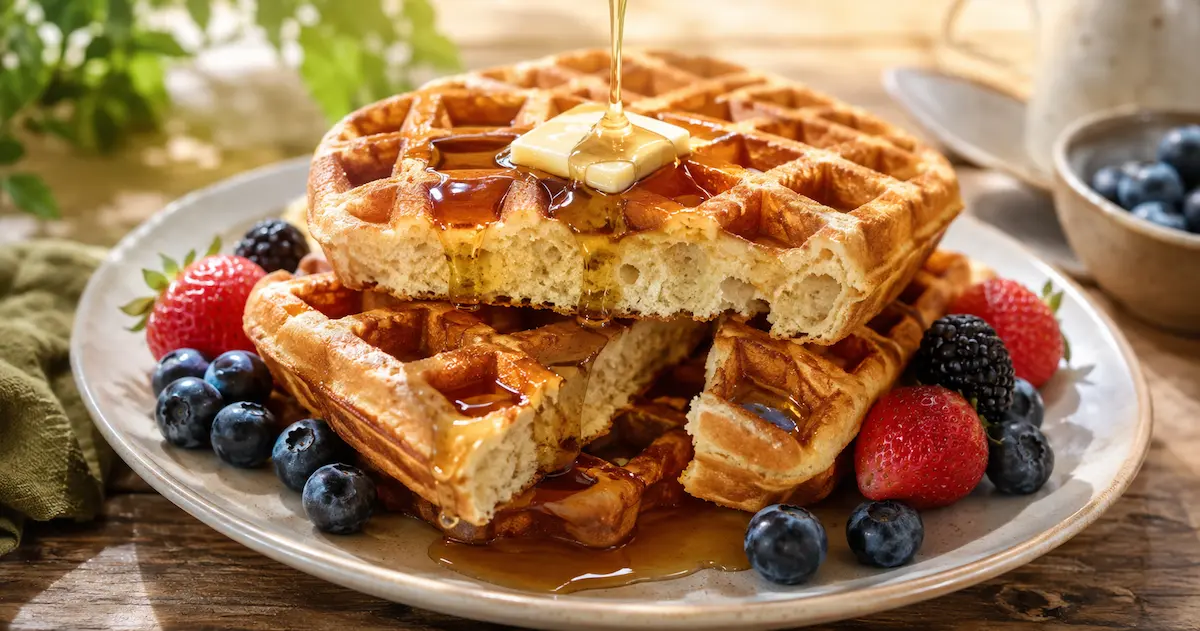
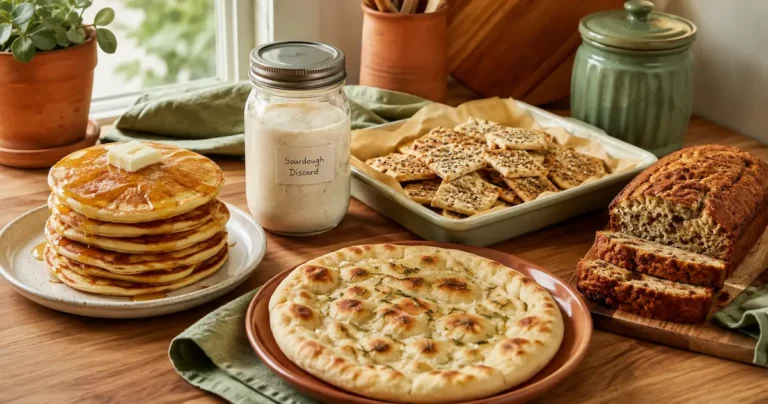
Every other recipe on this site asks you to feed your starter and wait for it to peak before doing anything else. This one doesn't. It's built around the jar of unfed discard already sitting in your fridge — the stuff you'd otherwise scrape off the top before feeding — and it's genuinely one of the lowest-effort things you can make with it. No rise to watch, no dough to knead, no timing window to hit. Mix it, let it sit if you want more flavor, cook it.
That's also why this recipe doesn't behave like the bread recipes on this site. There's no bulk fermentation building structure, because a batter doesn't need structure the way a loaf does — what it needs is lift and crispness, and those come from a couple of specific, small tricks rather than anything resembling sourdough technique.
What actually makes a good waffle here
Two things separate a great sourdough waffle from a flat, chewy one, and neither of them is about the starter itself.
Baking soda goes in right before cooking, not with everything else. Discard is acidic, and baking soda reacts with that acidity the moment it's stirred in — it starts losing its lifting power within minutes. Add it too early and it's spent by the time the batter hits the iron.
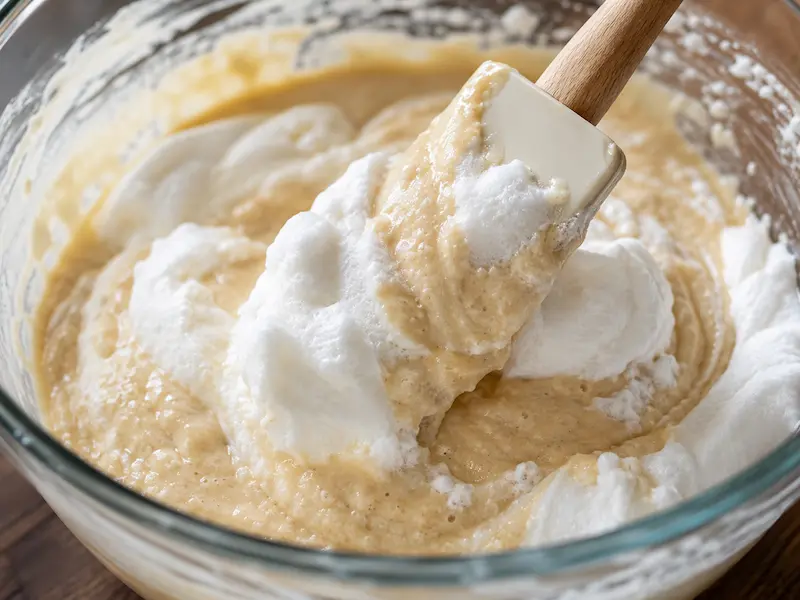
Whipped egg whites, folded in at the end, are what push these from good to genuinely light. It's an extra step and an extra dish to wash, and it's optional — the waffles are still fine without it. But separating the eggs, whipping the whites to soft peaks, and folding them in last is the difference between a waffle that's crisp-outside-dense-inside and one that's crisp-outside-airy-inside. Worth doing on a weekend when you have the extra five minutes; skip it on a rushed weekday and nobody will complain.
Same-day or overnight — pick based on your schedule, not the recipe
Ingredients
Mixing and cooking
Combine the discard, flour, and milk first — this is the part that can sit overnight if you're going that route. When you're ready to cook, whisk in the egg yolk, melted butter, sugar, vanilla, and salt. In a separate bowl, whip the egg white to soft peaks (skip this and just add the whole egg with the yolk if you're not doing the extra step). Stir the baking soda into the batter last, then gently fold in the whipped white just before the batter goes onto the iron.
Preheat the waffle iron fully — a cold or barely-warm iron is the single fastest way to end up with pale, soft waffles instead of crisp ones. Cook according to your iron's normal timing, usually 3 to 5 minutes, until deep golden and the steam coming off it slows down noticeably.
Set finished waffles on a wire rack, not stacked on a plate. Stacking traps steam underneath, which softens the bottom waffle almost immediately — the rack is what keeps every waffle in the batch crisp instead of just the top one.
Freezing — the actual reason to double this recipe
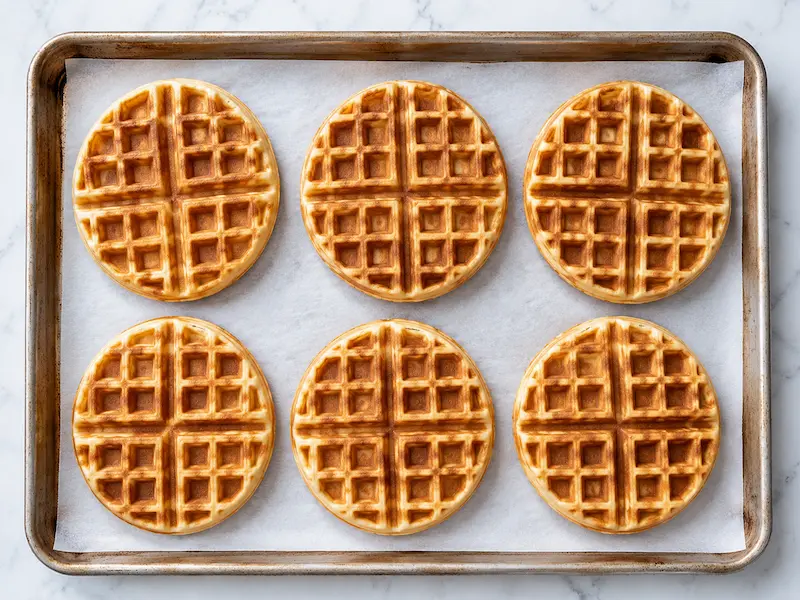
These freeze better than almost anything else on this site, and it's worth making a double batch specifically to freeze rather than treating leftovers as an afterthought. Cool completely on the wire rack first — freezing them warm traps condensation that turns to ice crystals and makes them soggy on reheat. Once fully cool, freeze in a single layer on a tray until solid, then transfer to a freezer bag with parchment between layers so they don't fuse together. They keep well for a couple of months. Reheat straight from frozen in a toaster or a 300°F oven for 10 to 15 minutes — both bring the crisp exterior back; a microwave won't.