Sourdough Bagel Recipe — Boiled, Chewy, Overnight Method
Every other bread on this site is a wet, hands-off, no-knead dough. Bagels are the opposite on every count — a stiff, low-hydration dough that actually needs real kneading, shaped by hand, boiled in a pot before it ever sees the oven. If the rustic loaf or focaccia taught you to trust a slack, jiggly dough, this recipe asks you to unlearn that instinct — a bagel dough that behaves like a rustic loaf’s dough is underworked, not correctly hydrated.
The boil is what makes a bagel a bagel rather than a dense roll shaped like one. Boiling briefly gelatinizes the starch on the surface of the dough before it bakes, which is what creates the thin, chewy, slightly glossy skin — an oven alone can’t replicate that texture no matter how long it bakes.
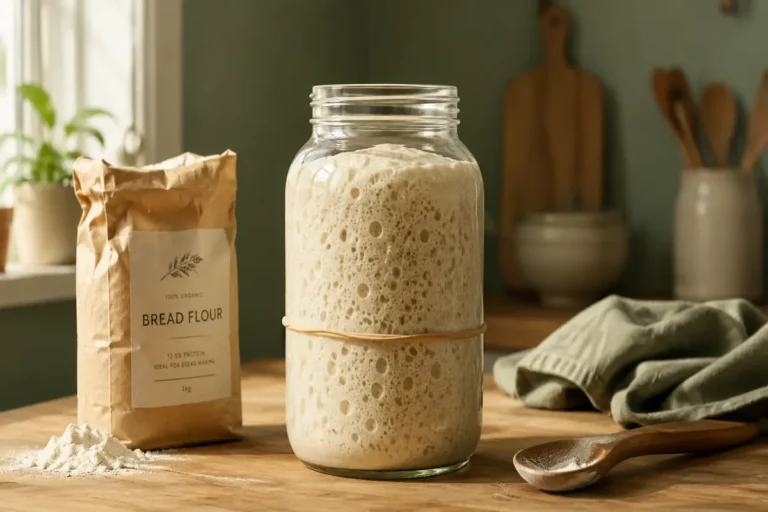
You’ll need an active starter before this works — the sourdough starter guide covers building one from scratch if yours isn’t going yet.
Ingredients
| Ingredient | Amount |
|---|---|
| Bread flour | 500g |
| Water, room temperature | 260g |
| Active starter | 100g |
| Fine sea salt | 10g |
| Honey or barley malt syrup (in the dough) | 20g |
| Baking soda (for the boil) | 1 tsp |
| Honey or barley malt syrup (for the boil) | 2 tbsp |
| Toppings — sesame, poppy seed, everything seasoning | to taste |
That’s about 52% hydration — dramatically stiffer than the 70%+ dough behind most other recipes on this site. Barley malt syrup gives the more traditional flavor and darker crust, but it’s a specialty ingredient; honey is a genuinely fine substitute if that’s what’s already in your pantry.
Mixing and kneading — yes, actually kneading
Combine the flour, water, starter, and honey and mix until it comes together into a shaggy mass, then add the salt. Unlike every wet, no-knead dough elsewhere on this site, this one needs real kneading — 10 to 12 minutes by hand, or about 8 minutes with a stand mixer’s dough hook — until it turns smooth, stiff, and only slightly tacky. It should feel closer to play-dough than to any other sourdough recipe here; if it still feels loose or sticky after 10 minutes, it needs more flour, not more time.
Let it bulk ferment at room temperature for 3 to 4 hours, until it’s grown noticeably but not necessarily doubled — a stiff dough like this rises less dramatically than a wet one, and that’s expected rather than a sign something’s gone wrong.
Shaping
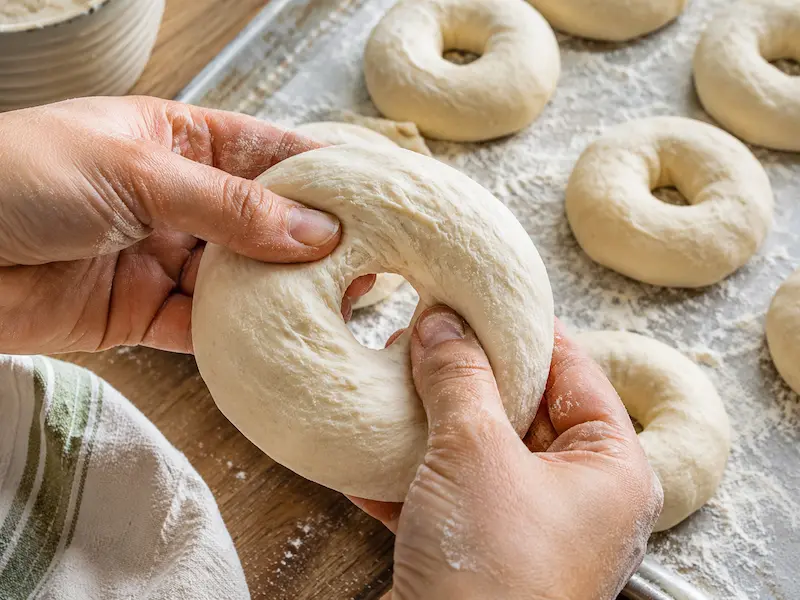
Divide the dough into 8 equal pieces, about 100g each, and roll each into a tight ball. Rather than rolling a rope and pinching the ends together — which tends to come apart during boiling — poke a hole straight through the center of each ball with your thumb, then gently stretch the hole open with both hands until it’s roughly 2 inches across. This matters more than it sounds like it should: sourdough has strong elastic memory, and a hole that looks appropriately sized right after shaping will spring back and nearly close during the cold retard and boil if it isn’t stretched wider than looks necessary.
Set the shaped rings on a parchment-lined, lightly floured tray, spaced apart so they don’t touch.
The overnight cold retard
Cover the tray tightly and refrigerate 12 to 24 hours. This isn’t an optional flavor upgrade the way it sometimes is for other recipes — it’s the step that develops real bagel flavor and, practically, splits the process across two days so you’re shaping dough one evening and boiling fresh bagels the next morning rather than doing everything in one long session.
Before boiling, run a float test on one bagel: drop it into a bowl of room-temperature water. If it floats within about 10 seconds, the batch is ready. If it sinks and stays down, give the tray another 30 to 60 minutes at room temperature and test again — this is the same logic as testing a starter for readiness, just applied to the shaped dough instead.
Boiling
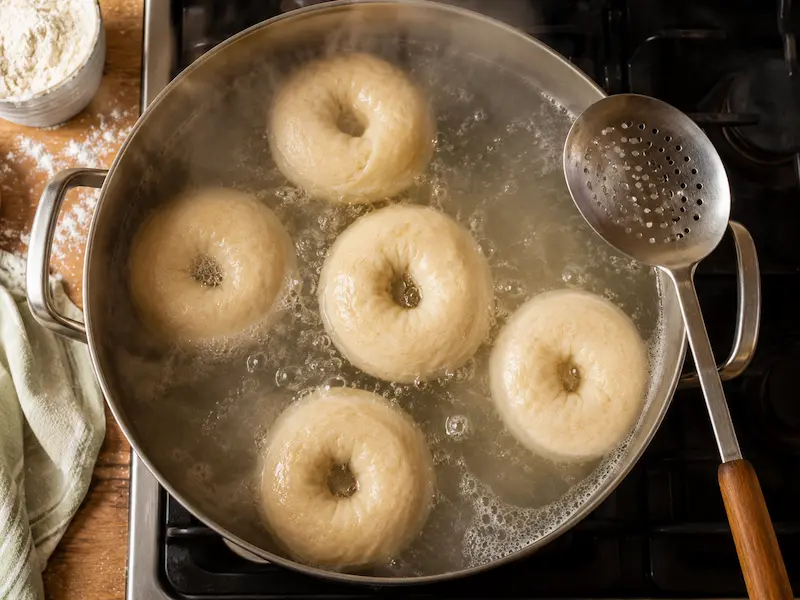
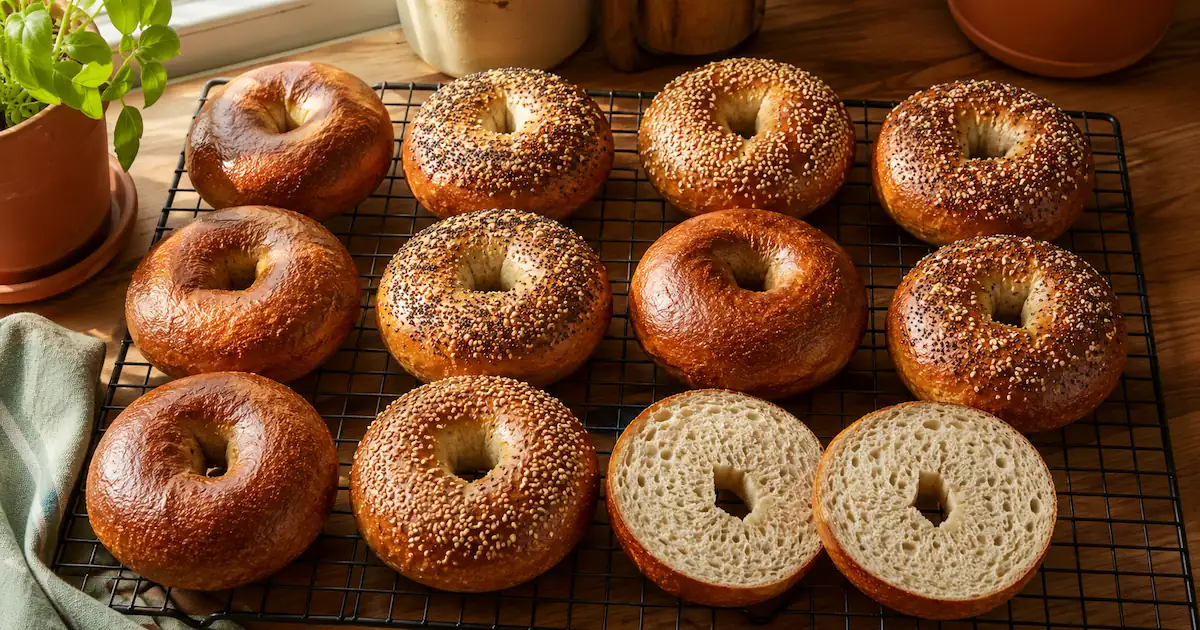
Preheat the oven to 450°F while the water comes up to a rolling boil. Stir in the baking soda and the 2 tablespoons of honey or malt syrup — the baking soda raises the water’s pH, which speeds up the browning reaction in the oven and is a real part of why boiled bagels turn a deep mahogany rather than a plain golden brown; the sweetener adds flavor and a slightly sticky exterior that helps toppings actually stay put.
Working in batches of 2 to 3 so the pot isn’t crowded, lower the bagels in gently. Boil 1 minute per side for a classically chewy crust, or as little as 30 seconds per side if you’d rather it lean thinner and lighter. Lift out with a slotted spoon, letting the excess water drain back into the pot, and set back on the tray. If you’re topping them, press seeds or seasoning on now, while the surface is still damp and tacky enough to hold them — waiting until after baking won’t work, since the crust sets and stops being sticky almost immediately.
Baking
Bake at 450°F for 20 to 25 minutes, until deeply golden and glossy. Confirm doneness the same way as the English muffin recipe — an instant-read thermometer reading 200-205°F in the center means it’s done; color is a reasonable secondary check but less reliable on its own given how dark the boiling-soda bath already makes the crust before it even goes in the oven.
Cool on a wire rack at least 20 minutes before slicing — a bagel sliced hot tears rather than cuts cleanly.
Sourdough discard bagel recipe (using discard instead of active starter)
Discard alone usually doesn’t have enough leavening power to raise a stiff, low-hydration dough like this one on its own — the same limitation it runs into with discard focaccia and discard English muffins. Swap the 100g active starter for 100g discard straight from the fridge, and add ½ teaspoon of instant yeast to the flour along with everything else — slightly more yeast than the wetter discard recipes on this site need, since a stiffer dough gives the yeast less room to work with. Everything else about the method, including the overnight retard, stays the same. The discard version won’t carry quite the same depth of tang, but it puts a jar of fridge discard to genuine use instead of pouring it out.
Where this goes wrong
| Problem | Likely cause | Fix |
|---|---|---|
| Center hole closed up almost entirely by bake time | Hole wasn’t stretched wide enough before the retard | Stretch to about 2 inches across during shaping — it will spring back smaller than that on its own |
| Bagels sink and won’t float during the float test | Underproofed, or starter wasn’t active enough at mixing | Give the tray more time at room temperature and retest rather than boiling on schedule regardless |
| Dense, tight crumb with no chew | Underkneaded — dough was still loose rather than smooth and stiff | Knead the full 10-12 minutes by hand; it should feel like play-dough, not like any other bread dough on this site |
| Pale crust despite a full bake | Baking soda or sweetener left out of the boiling water | Both are doing real work on color and browning, not just flavor — don’t skip either |
| Toppings fall off after baking | Toppings added after baking instead of right after boiling | Press toppings on while the surface is still wet from the boil, not once the crust has set |
For dense or flat results not specific to this recipe’s stiffer dough, the general sourdough troubleshooting guide covers causes common across every recipe on this site.
Storing
Bagels are best the day they’re baked but keep 2 to 3 days at room temperature in a bag or beeswax wrap. They freeze exceptionally well — better than most bread here, honestly — sliced in half before freezing so they go straight from freezer to toaster.
FAQ
Do I really need to knead this dough, or can I treat it like the other recipes here?
Yes, actually knead it. A bagel needs a stiff, tightly developed gluten structure to hold its shape through boiling; treating it like a no-knead dough will leave you with something closer to a dense roll.
Can I skip the overnight cold retard and bake same-day?
It’s possible, but the flavor won’t develop the same depth, and the schedule stops making practical sense — the whole point of the retard is shaping one evening and boiling fresh the next morning without a long same-day wait.
Is barley malt syrup necessary, or is honey a real substitute?
Honey works well and is what most home bakers use — barley malt syrup gives a slightly more traditional flavor and darker color, but it’s a specialty ingredient not worth tracking down for a first attempt.
Why did my bagels come out pale instead of the deep mahogany color from the photo?
Almost always missing baking soda in the boiling water — it’s not optional for color, it’s doing real chemistry to speed up browning in the oven.
Can I use discard instead of feeding my starter first?
Yes, with added yeast — see the discard section above. Discard alone can’t reliably leaven a dough this stiff.
What do I do with the leftover starter discard from feeding before this recipe?
The sourdough discard recipes collection has other uses for it between bakes.