
Sourdough Cinnamon Roll Recipe (Tangzhong Method, Overnight Rise)

Sourdough cinnamon rolls have a real problem that plain sourdough bread doesn’t: an enriched, sweet dough leavened with wild yeast alone tends to bake up denser and drier than one made with commercial yeast, because sourdough’s natural acidity actually weakens gluten development in a butter-and-sugar-heavy dough over a long fermentation. Nearly every well-tested version of this recipe solves it the same way — a technique called tangzhong.
Tangzhong is a flour-and-milk paste cooked briefly on the stove before it goes into the dough. Heating it to around 149°F pre-gelatinizes the starch in the flour, which lets it hold far more liquid than raw flour can. That extra trapped moisture is what keeps these rolls soft two or three days later instead of turning dry and tough the way an enriched sourdough dough often does without it. It’s a small extra step with an outsized effect on the final texture — worth doing even on a first attempt rather than treating it as optional.
You’ll need an active starter before this works — the sourdough starter guide covers building one from scratch if yours isn’t going yet.
Ingredients
| Ingredient | Amount |
|---|---|
| Bread flour (dough) | 450g |
| Bread flour (tangzhong) | 30g |
| Whole milk (tangzhong) | 150g |
| Milk, room temperature (dough) | 80g |
| Active starter | 100g |
| Egg | 1 large |
| Sugar | 50g |
| Butter, softened | 60g |
| Fine sea salt | 8g |
| Brown sugar (filling) | 100g |
| Cinnamon (filling) | 2 tbsp |
| Butter, softened (filling) | 40g |
This is a significantly richer dough than anything else on this site — closer to the sourdough sandwich bread recipe in spirit, just with more egg, butter, and sugar layered on top.
Making the tangzhong
In a small saucepan, whisk the 30g flour and 150g milk together until smooth, then cook over medium-low heat, whisking constantly, until it thickens into a thick paste — about 3 to 5 minutes. It should hold its shape when you drag a whisk through it, roughly the texture of a thick pudding. Pull it off the heat immediately once it reaches that point; overcooking it doesn’t ruin the recipe, but the paste gets harder to fully incorporate into the dough smoothly. Transfer to a bowl and let it cool to room temperature before mixing it in — adding it hot would start cooking the egg and killing some of the starter’s activity.
Mixing and kneading
Combine the cooled tangzhong, the 80g of room-temperature milk, active starter, egg, and sugar, then add the flour and salt. Mix until it comes together into a shaggy dough, then knead — by hand or stand mixer — for about 10 minutes before adding the butter in small pieces, a few at a time, kneading until each addition disappears before adding more. This is a genuinely sticky dough even after full development; resist adding much extra flour, since the stickiness is part of what tangzhong is doing correctly, not a sign the dough needs correcting.
Continue kneading another 5 minutes after all the butter is in, until the dough is smooth, elastic, and passes a rough windowpane test — stretch a small piece thin enough to see light through it without tearing.
Bulk rise
Cover and let rise at room temperature 4 to 6 hours, until puffy and about 1.5 times its original size — sourdough-leavened enriched dough typically doesn’t double the way a lean loaf does, and that’s expected rather than a sign it’s underproofed.
Filling and shaping
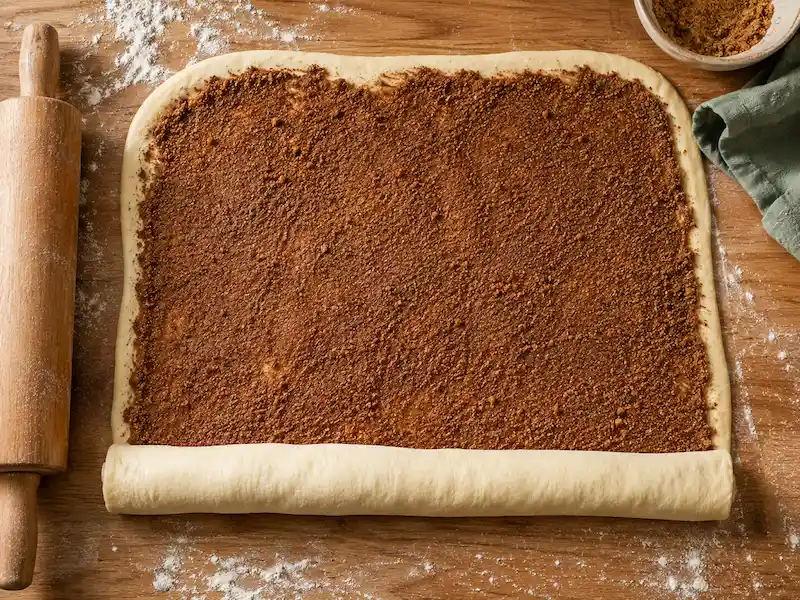
Turn the dough out onto a lightly floured surface and roll into an 18×10-inch rectangle. Spread the softened filling butter edge to edge, then mix the brown sugar and cinnamon together and sprinkle evenly over the butter, pressing gently so it sticks rather than sliding off during rolling.
Starting from a long edge, roll the dough into a tight log. Use unflavored dental floss or a length of thread slid underneath and crossed over the top to slice through the log cleanly — a knife tends to compress the layers and squeeze the filling out, where floss cuts through without flattening the spiral. Cut into 12 even rolls and arrange cut-side up in a greased 9×13-inch pan, leaving a little space between each for the second rise.
The overnight fridge rise
Cover the pan tightly and refrigerate 8 to 16 hours rather than doing a same-day second rise at room temperature. This is the step that makes this recipe realistic on an actual morning schedule — assemble the rolls the evening before, and they’re ready to bake with no more than a short rest on the counter the next day. The cold slow rise also develops more flavor than a fast room-temperature proof would.
The next morning, let the pan sit out 30 to 45 minutes to take the chill off before baking — rolls going into the oven ice-cold from the fridge bake unevenly.
Baking
Bake at 350°F for 25 to 30 minutes, until deep golden brown on top and the centers no longer look raw or doughy between the swirls. An instant-read thermometer inserted into the center of a middle roll should read about 190°F — a slightly lower target than a lean loaf’s 200-205°F, since this dough’s high butter and sugar content means it’s fully cooked at a lower internal temperature.
Let the rolls cool in the pan about 10 minutes before icing — icing them straight out of the oven melts the glaze into the rolls rather than letting it sit on top.
Icing
A simple cream cheese icing (cream cheese, butter, powdered sugar, a splash of milk, whisked smooth) is the classic pairing. A maple pecan glaze is a good alternative if you want something less sweet and slightly nutty — pick one rather than doing both, since the rolls are already rich enough that layering two toppings tends to be too much.
Sourdough discard cinnamon roll recipe (using discard plus yeast)
Discard alone typically can’t leaven a dough this enriched with butter and sugar in a reasonable timeframe — the same limitation it runs into in the discard versions of focaccia, English muffins, and bagels on this site. Swap the 100g active starter for 100g discard straight from the fridge, and add ½ teaspoon of instant yeast to the flour. Everything else stays the same, including the overnight cold rise. The discard version leans more on the tangzhong for texture and less on wild fermentation for flavor, but it’s a legitimate way to use up discard rather than pouring it out.
Freezing for later
These freeze exceptionally well unbaked. After shaping and cutting the rolls, arrange them on a parchment-lined tray and freeze until solid, then transfer to a freezer bag for up to 3 months. To bake from frozen, arrange the frozen rolls in the pan the night before, let them thaw and rise in the fridge overnight the same way as the regular overnight method, then bring to room temperature and bake as directed.
Where this goes wrong
| Problem | Likely cause | Fix |
|---|---|---|
| Dense, dry rolls despite following every step | Tangzhong step skipped | Don’t treat it as optional — it’s doing real, measurable work on softness, not just an extra step |
| Filling squeezed out during slicing | Cutting with a knife instead of floss or thread | Slide floss underneath the log and cross it over the top to slice cleanly |
| Rolls baked unevenly, some centers still doughy | Baked straight from the fridge without resting | Let the pan sit out 30-45 minutes before baking so it isn’t ice-cold going in |
| Butter incorporation left lumps in the dough | Butter added cold instead of softened, or added all at once | Use fully softened butter and add it a few pieces at a time, kneading each in before adding more |
| Icing melted into the rolls instead of sitting on top | Iced while still too hot | Cool in the pan about 10 minutes before icing |
For fermentation issues beyond this recipe’s specific enrichment challenges, the dense sourdough troubleshooting guide covers causes common to any sourdough bake.
Storing
2 to 3 days at room temperature, covered, thanks to the tangzhong keeping them soft longer than a typical enriched roll. Reheat individual rolls with a short 10-15 second stint in the microwave, or tent the whole pan in foil and warm in a 350°F oven for a few minutes.
FAQ
Is the tangzhong step really necessary, or can I skip it?
It’s the single biggest factor in whether these come out soft or dense. Sourdough’s acidity works against gluten development in an enriched dough over a long ferment, and tangzhong is what compensates for that — skipping it is the most common reason a homemade version disappoints.
Why is my dough so sticky even after kneading?
Expected for this recipe. The tangzhong holds extra moisture in the dough on purpose — resist adding much flour to fix it, since that undoes some of what the tangzhong is doing.
Can I do a same-day version instead of the overnight fridge rise?
Yes — let the shaped rolls rise at room temperature for 1.5 to 2 hours instead of refrigerating overnight, until visibly puffy, then bake as directed. The overnight version is more convenient for morning baking and develops a bit more flavor, but it isn’t required.
Can I use discard instead of feeding my starter first?
Yes, with added yeast — see the discard section above. Discard alone usually can’t leaven a dough this rich in a reasonable timeframe.
Cream cheese icing or maple pecan glaze — which one should I use?
Either works well; pick one rather than both, since the rolls are already rich enough that two toppings tends to be too much.
What do I do with the starter discard left over from feeding before this recipe?
The sourdough discard recipes collection has other uses for it between bakes.