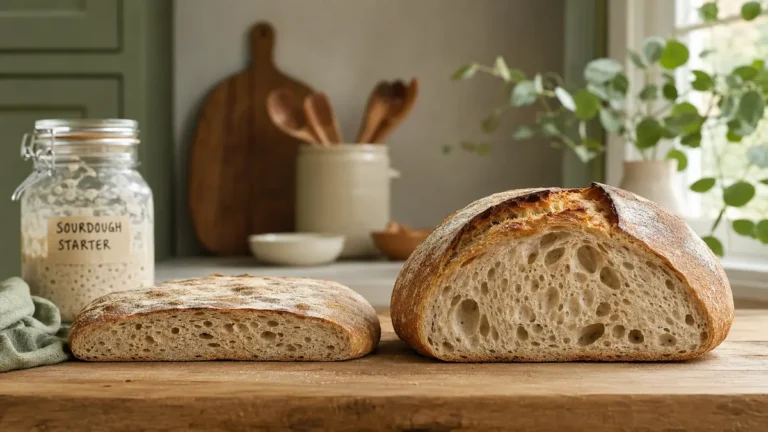
Small Batch Sourdough: How to Bake One Perfect Loaf
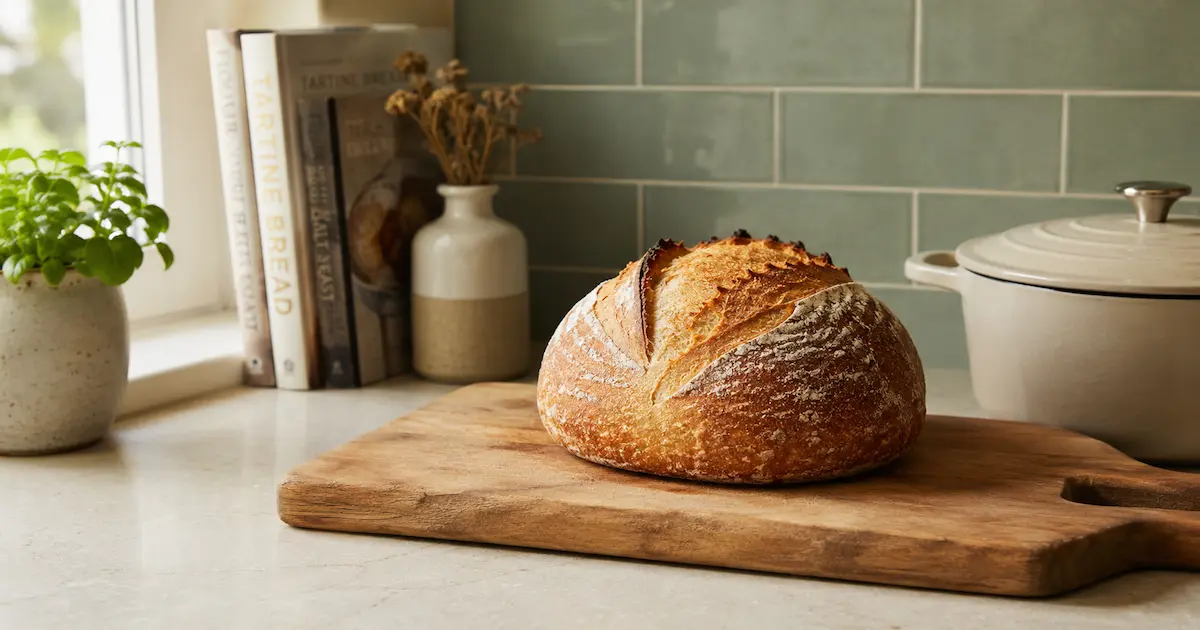
If you have ever wanted to bake sourdough but felt overwhelmed by giant recipes that make two or three loaves at once, small batch sourdough is exactly what you need.
This guide walks you through making one perfect small batch sourdough loaf using minimal ingredients, minimal space, and a starter you already have on your counter.
Small batch sourdough is ideal for apartment bakers who do not want a week's worth of bread sitting around going stale. One loaf. No waste. No giant Dutch oven taking up half your kitchen.
In this guide you will learn:
What Is Small Batch Sourdough?
Small batch sourdough is a scaled-down version of a traditional sourdough recipe. Instead of making two large loaves you make one smaller loaf — usually around 500 to 600 grams of dough. The process is identical to full-size sourdough but uses less flour, less water, and fits easily in a standard apartment oven.
The keyword here is simplicity. Small batch sourdough gives you all the flavour and satisfaction of homemade bread without committing to a massive bake.
Why Small Batch Sourdough Works for Apartment Living
Most sourdough recipes online are written for home bakers with large kitchens and families to feed. Small batch sourdough solves three real apartment problems:
What You Need
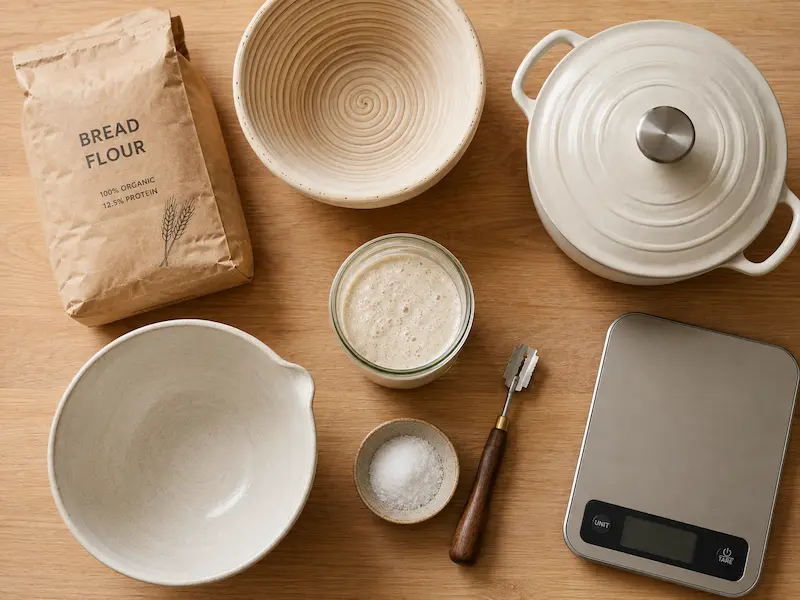
Equipment
Ingredients
Hydration: 74% — ideal for beginners. High enough for a good crumb, low enough to handle easily.
How to Know Your Starter Is Ready
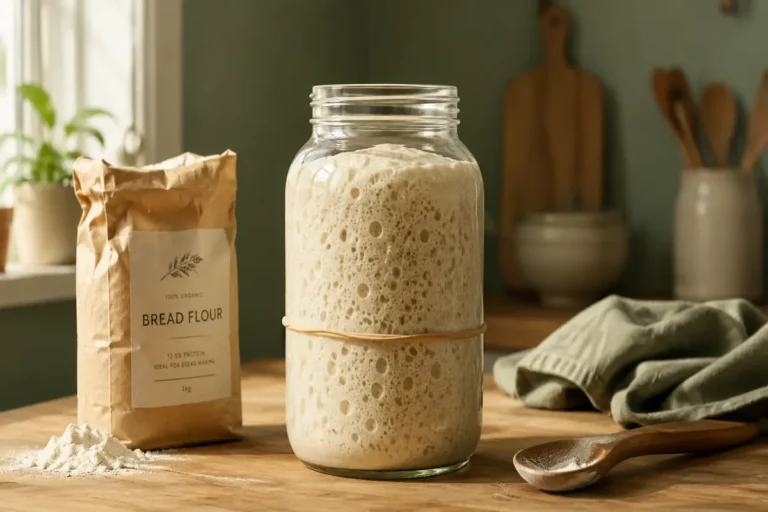
Before making small batch sourdough your starter must be active and bubbly. A starter that is not ready will give you a dense flat loaf.
The float test: Drop a small spoonful of starter into a glass of water. If it floats it is ready. If it sinks wait another hour and test again.
Your starter should have doubled in size since its last feeding and smell pleasantly sour — not like nail polish remover. If it smells like acetone it is hungry — feed it and wait four to six hours before baking.
Small Batch Sourdough Recipe — Step by Step
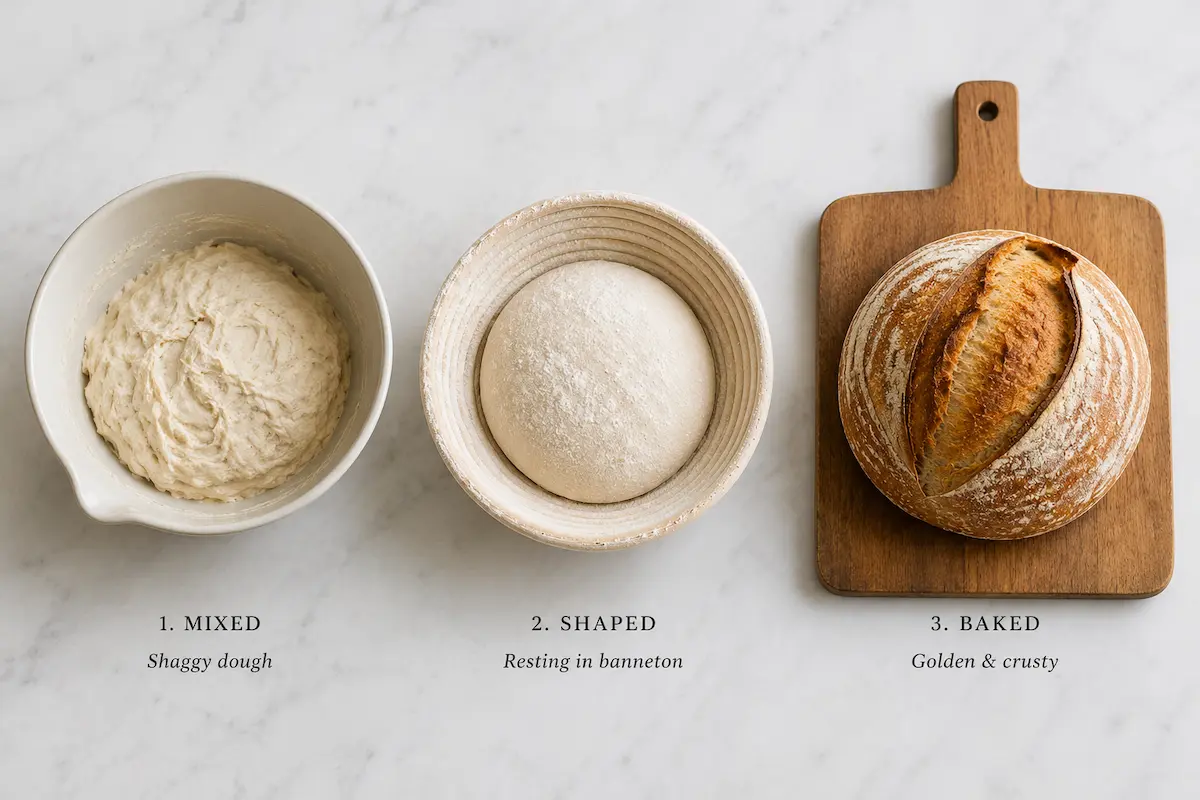
Step 1 — Mix the Dough
In your mixing bowl combine 185g room temperature water and 50g active starter. Stir until the starter dissolves into the water. Add 250g bread flour and 5g salt. Mix until no dry flour remains. The dough will feel shaggy and rough — this is completely normal at this stage.
Cover the bowl with a damp towel and rest for 30 minutes. This rest period is called autolyse and it allows the flour to fully hydrate before you start building structure.
Step 2 — Stretch and Fold
This is where small batch sourdough builds its structure. Instead of kneading you perform a series of gentle stretch and folds.
How to stretch and fold:
Stretch and fold schedule:
After four sets your small batch sourdough dough should feel smoother, more elastic, and slightly puffy.
Step 3 — Bulk Fermentation
Cover the bowl and leave it at room temperature to ferment. Small batch sourdough bulk fermentation takes 4 to 6 hours at 21 degrees Celsius.
Signs bulk fermentation is complete:
Temperature matters: Warmer kitchens ferment faster. If your apartment runs warm check at 3.5 hours. If it runs cool it may take 7 hours. Watch the dough not the clock.
Step 4 — Shape the Dough
Lightly flour your counter and gently turn the dough out. For small batch sourdough you want to shape a tight round boule:
Step 5 — Cold Proof Overnight
Cover your shaped small batch sourdough with a shower cap or plastic wrap and refrigerate overnight. Cold proofing develops deeper sour flavour, makes the dough easier to score, and fits any schedule — bake whenever you are ready.
You can cold proof for as little as 8 hours or as long as 16 hours.
Step 6 — Bake
Preheat your oven to 260 degrees Celsius with your Dutch oven inside for at least 45 minutes. A properly preheated pot is essential for small batch sourdough oven spring.
Baking schedule:
Remove when the crust is deep brown — not golden. Deep brown means fully baked.
Step 7 — Cool Completely
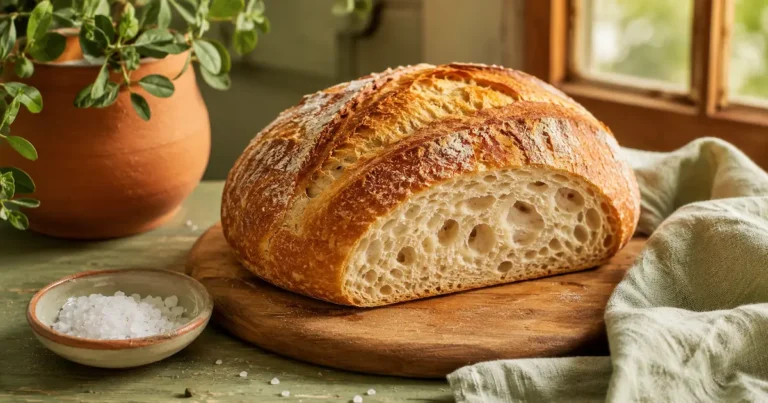
Place your small batch sourdough on a wire rack and wait at least one hour before cutting. Cutting too early releases steam and makes the crumb gummy. The internal temperature should reach 98 degrees Celsius if you have a thermometer.
Troubleshooting Small Batch Sourdough
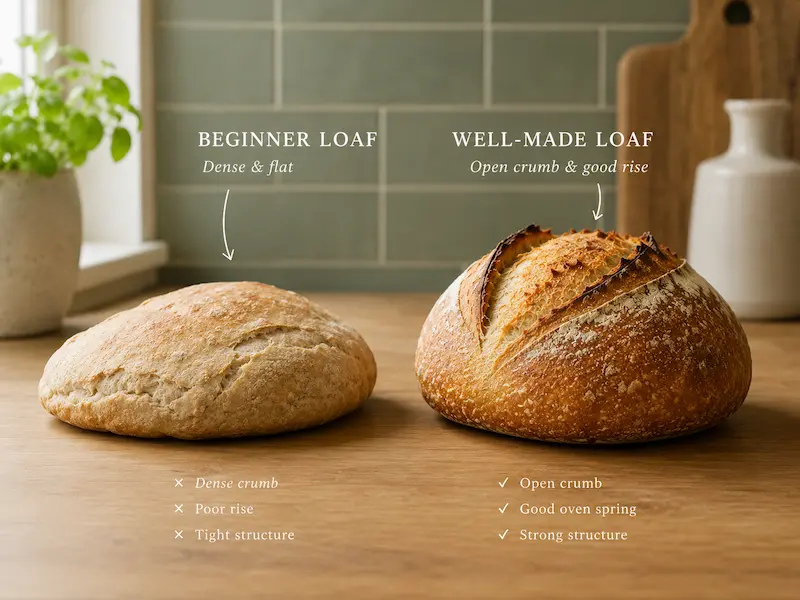
How to Store Small Batch Sourdough
Never store sourdough in a plastic bag at room temperature — it makes the crust soft and speeds up mould.
Small Batch Sourdough Variations to Try Next
Once you have mastered the basic small batch sourdough recipe try these simple variations: