Reusable Produce Bags: How to Choose, Use & Care for Them
The thin plastic bags on the roll at the grocery store’s produce section are one of the easiest single-use habits to swap out — and unlike a lot of zero-waste changes, this one doesn’t ask much of you. A small set of reusable bags lives in your tote, comes out at checkout instead of a fresh plastic one, and gets reused for years. For an apartment kitchen where storage is already tight — the same kind of space constraints we cover in Homesteading for Renters — they also tend to stack and store more neatly than a drawer full of crumpled plastic bags ever did.
How to Choose Reusable Produce Bags
Not all reusable produce bags behave the same way, and a few factors matter more than they might seem to at a glance.
Material. This is the biggest factor in how your food holds up:
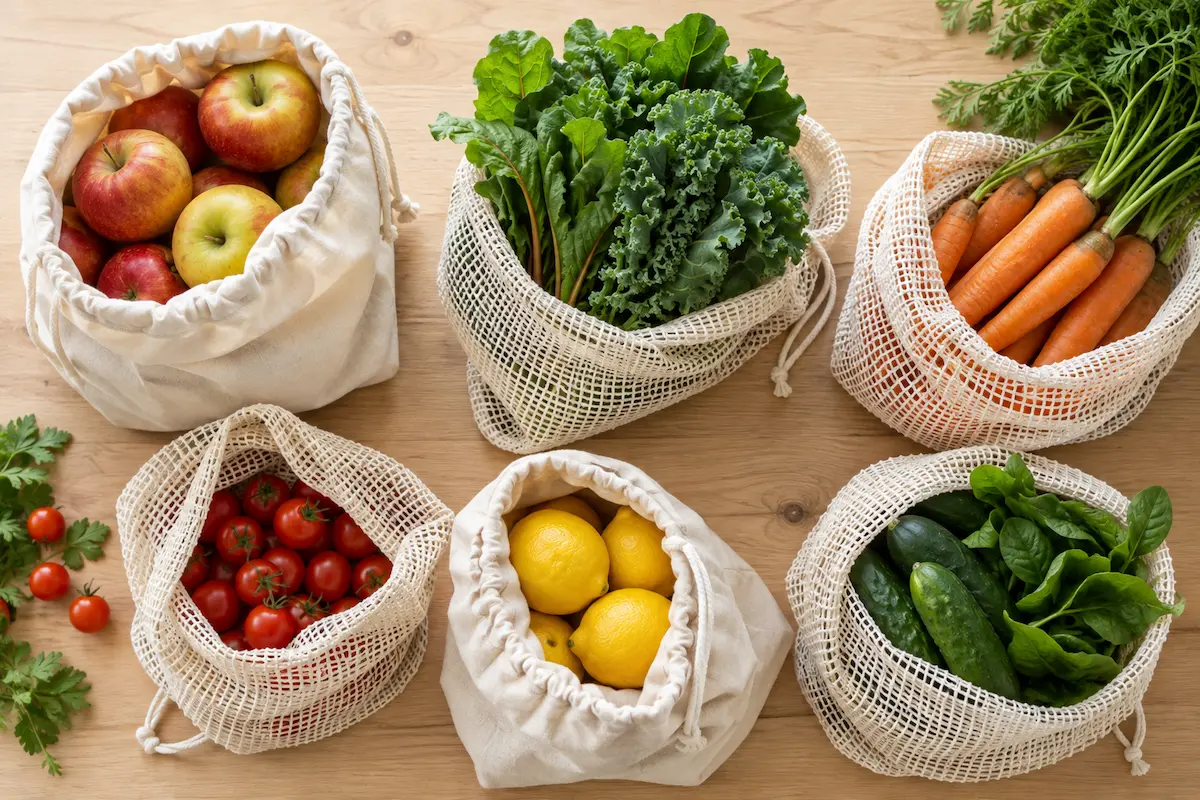
- Open-weave mesh allows plenty of airflow, which suits produce that’s prone to trapping moisture and molding in a sealed bag — things like berries, herbs, and leafy greens.
- Tighter cotton or muslin restricts airflow somewhat and holds in more humidity than open mesh, which can help slow wilting in vegetables like celery, broccoli, or carrots — though it shouldn’t be airtight (more on why below).
- Recycled synthetic weaves (often sold in variety packs) sit somewhere in between and are a reasonable all-purpose, lightweight choice if you don’t want to sort produce by bag type.
- Size. A single size rarely covers everything well — small bags suit herbs, garlic, or a handful of items; medium bags fit apples, peppers, or a few carrots; and large bags are worth having for bulky leafy greens or a big bunch of produce.
- Washability. Look for simple, reinforced seams and a sturdy drawstring rather than a flimsy cord — these are usually the first parts to fail with repeated machine washing.
- Weight. A lighter bag adds less tare weight at checkout, which matters more than it sounds like for produce priced by the pound.
- Visibility. Transparent or semi-transparent mesh makes it easier for you and store staff to see what’s inside without opening the bag.
If you’re buying your first set, a mixed pack with a couple of each material and size gives you more flexibility than a set of identical bags.
How Airflow and Humidity Affect Produce
It’s not just about looks — produce is still respiring (using up stored energy and releasing moisture and gases) after it’s picked, and how it’s packaged affects how fast that process runs. A few things worth knowing:
- Ethylene is a natural plant hormone involved in ripening and aging. Some fruits and vegetables produce more of it than others, while certain vegetables are particularly sensitive to it. Keeping high-ethylene producers such as apples and bananas away from ethylene-sensitive produce can help reduce premature deterioration in some cases, though the effect varies by produce and storage conditions.
- Some humidity is good, too much is not. A completely sealed bag traps moisture that would otherwise evaporate, and that trapped moisture condenses and encourages rot rather than preventing wilting. This is one reason breathable or perforated storage is generally preferable to completely airtight packaging for many refrigerated vegetables.
- Respiration rate varies a lot by produce. Delicate items like berries and herbs respire and spoil faster than sturdier vegetables like carrots or potatoes, which is part of why the “one bag type fits everything” approach falls short for some produce more than others.
None of this means you need to obsess over which exact vegetable goes in which exact bag — for a typical apartment-sized grocery haul, using mesh for delicate produce and a tighter weave for sturdier vegetables gets you most of the benefit without needing to track it precisely. And to be clear: the bag itself isn’t a freshness-preserving technology on its own — how long produce keeps still depends on temperature, humidity, ethylene exposure, and the specific item, with the bag as one piece of that picture rather than the whole answer. If you’re growing some of your own harvest — say, potatoes from a balcony bucket — the same storage basics apply once they’re out of the ground and headed for the crisper drawer.
How to Use Them at the Store and in Storage
Using them is close to using disposable produce bags, with a couple of small habits worth building in:
- Bring your bags along with your regular shopping totes — a lot of people remember the totes but forget the smaller produce bags, so keeping them clipped together helps.
- Use a separate bag per type of produce rather than mixing everything into one, both for weighing at checkout and to avoid, say, garlic flavor migrating into your berries.
- At checkout, ask whether the store can tare (zero out) the bag’s weight before weighing your produce. Many scales can deduct the bag’s weight automatically, but the exact process varies by store, country, and checkout system.
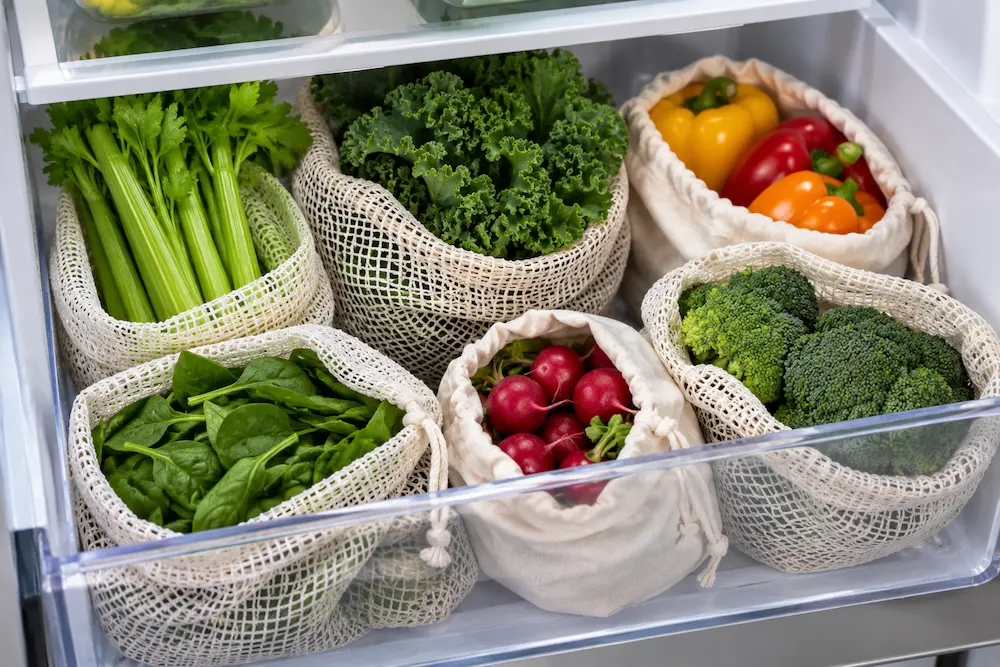
- For produce that belongs in the refrigerator, you can often place the breathable bag directly in the crisper drawer, provided the bag and the produce are suited to that kind of storage — some items keep better on the counter or in a pantry regardless of what bag they’re in.
How to Wash and Care for Them
Many reusable produce bags are machine washable, but check the care instructions for your particular bag. For ones that are, toss them into a mesh laundry bag first so the drawstrings don’t tangle with the rest of your laundry, then air dry rather than using high heat, which can weaken the seams over time on lighter mesh styles. For a bag that’s only lightly soiled, a quick rinse and air dry is usually enough between full washes.
Let bags dry completely before folding them away or reusing them — a damp bag stored in a drawer is a good setup for musty odors and mold, regardless of how clean it was when it went in.
Check the care tag if you have one, since some tightly woven cotton or muslin bags shrink slightly the first time they’re washed in hot water — washing cold is a safer default if you’re not sure.
Other Uses Worth Knowing
Once you have a small stack of these bags, they tend to earn their keep well beyond the produce aisle:
- Bulk bin shopping for grains, nuts, or dried beans
- A washable alternative to plastic sandwich bags for snacks or lunches
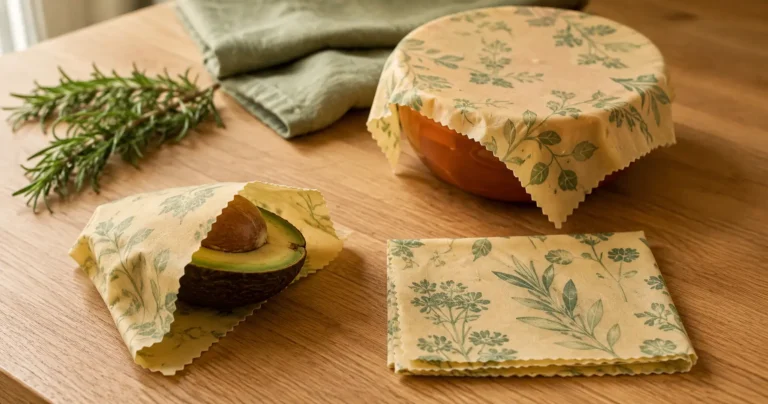
- Covering a fruit bowl loosely to keep produce protected while still allowing airflow
- Storing bath toiletries or small items when traveling
If produce is heading toward a bumper crop or a farmer’s market haul rather than everyday portions, pairing better storage with a preservation project — like turning extra peppers into a small batch of refrigerator pickles — is often a better long-term fix than storage alone.
Cost and Lifespan
A set of reusable produce bags typically costs more upfront than a roll of plastic ones, but the same bags can be used repeatedly rather than replaced after each shopping trip. With reasonable care, a durable bag can last for years, though its actual lifespan depends on the material, construction, and how often it’s washed.
Common Mistakes to Avoid
- Using the wrong bag type for the produce. A tightly woven bag over moisture-heavy produce like berries can trap humidity and speed up mold, while very open mesh over something like herbs can let them dry out and wilt faster.
- Overpacking a single bag. Stuffing too much into one bag limits airflow no matter what it’s made of, and can bruise softer produce.
- Skipping regular washing. Reusable produce bags can accumulate food residue and microorganisms over time, particularly when used with damp or dirty produce. Wash them regularly and let them dry completely between uses rather than treating them like a permanent, unwashed tote.
- Storing bags while they’re still damp. Putting a damp bag away — even a clean one — is a good way to end up with musty odors or mold by the next time you reach for it.
- Forgetting them at home. It sounds obvious, but the single biggest reason people fall back into using plastic ones is simply not having the reusable bags on hand — keeping them with your shopping totes solves this more reliably than trying to remember on your own.
Frequently Asked Questions
Are reusable produce bags actually more sanitary than plastic ones?
They can be, since you control the washing, but only if you actually wash them regularly. An unwashed reusable bag isn’t automatically cleaner than a fresh plastic one — the benefit comes from consistent care, not the material itself.
Can I make my own instead of buying a set?
Yes — a lightweight cotton t-shirt can be cut and sewn (or even no-sew tied) into a simple drawstring produce bag, and it’s a reasonable way to start with zero upfront cost if you already have fabric on hand.
Do reusable produce bags actually keep food fresher?
Breathable mesh and cotton allow more airflow than sealed plastic, which can help for some produce — but the bag itself isn’t the main factor. Temperature, humidity, ethylene exposure, and the specific item all matter more than which bag it’s stored in.
Are reusable produce bags worth it?
For most people who regularly buy loose produce, yes — but only if you’ll actually reuse and wash them rather than letting them sit unused in a drawer. Their main advantage is replacing a steady stream of single-use bags; whether that’s worth the upfront cost depends on how often you shop and how consistently you keep them in rotation.
How many bags do I actually need?
A set of 5 to 8 in a mix of sizes and materials covers most weekly grocery trips for an apartment-sized household without needing to do laundry between every single shop.
Can produce bags go in the dishwasher instead of the washing machine?
It’s better to stick with the washing machine or a hand wash — dishwasher heat and detergent are formulated for dishes, not fabric, and can be harder on drawstrings and seams over repeated cycles.
Should I keep different produce in separate bags in the fridge?
For some produce, yes. Keeping ethylene-sensitive vegetables separate from high-ethylene fruits such as apples can help reduce premature deterioration, although the effect varies by produce and storage conditions.