Homesteading for Renters: Leases, Landlords, and What Actually Applies
Every apartment homesteading guide eventually gets to the same sentence: “this works even if you rent.” Ours has too. What most guides skip is what homesteading for renters actually involves in practice — what your lease really restricts, how to raise it with a landlord before it becomes a problem, and what happens to a windowsill garden or a worm bin when you move out in eleven months. That’s the gap this one fills.
What Your Lease Actually Restricts for Homesteading Renters
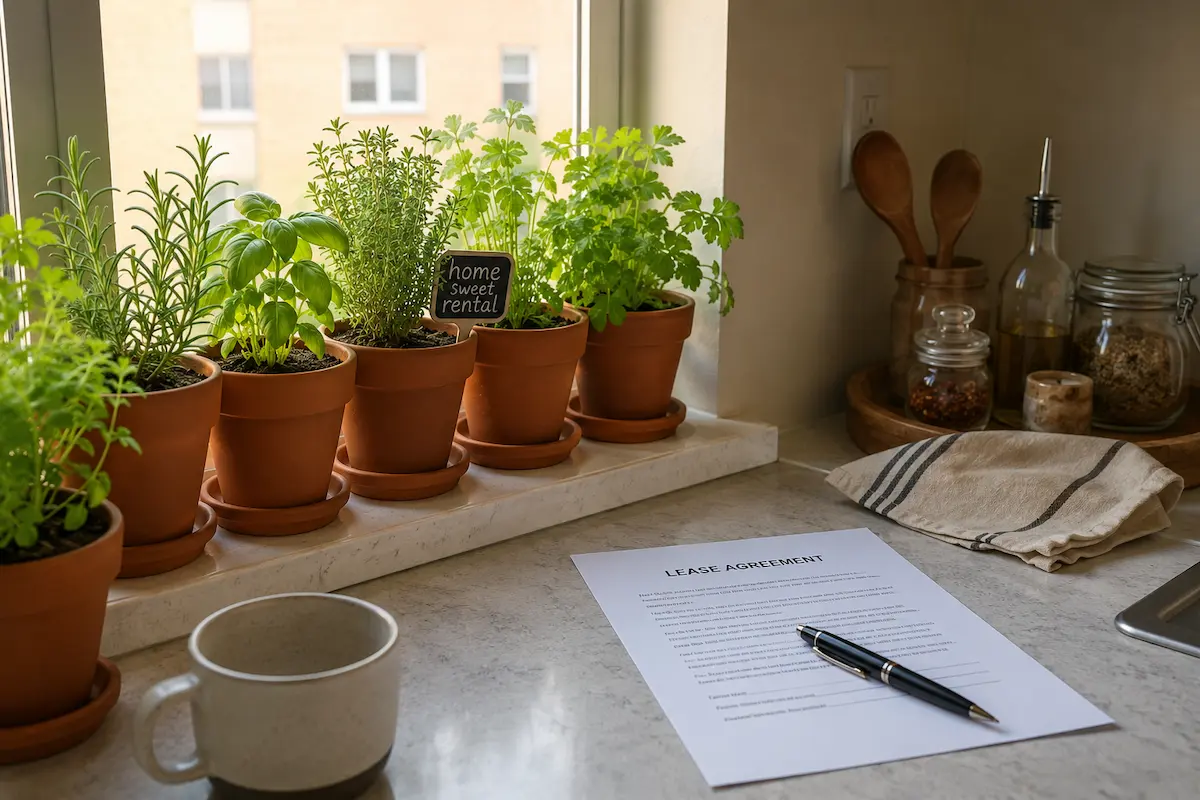
Most renters have never read the clause they assume is stopping them. “No modifications” and “no alterations” show up in nearly every standard lease, and most people mentally file every homesteading project under that ban without checking the actual wording. These clauses commonly address structural or permanent changes — drilling, painting, installing fixtures, or modifying plumbing — but the exact wording of your lease controls, not a general pattern like this one. A worm bin under the sink, a row of herb pots on a windowsill, or a fermentation jar on the counter is unlikely to fall under most versions of this kind of clause.
The clauses that actually matter more for apartment homesteading tend to be narrower and easier to miss:
- Balcony and patio restrictions — some leases specifically limit what can be stored or grown on balconies, often for fire-code or building-appearance reasons rather than a blanket ban on plants.
- Balcony load limits — multiple large containers, wet soil, and water-filled planters can become surprisingly heavy. If you’re planning more than a few lightweight containers, check your lease or building rules and ask property management whether specific balcony-load restrictions apply — this isn’t something to estimate yourself.
- Window treatment and exterior-facing rules — HOAs and some buildings regulate what’s visible from outside, which can affect window box placement more than indoor growing.
- Pest and infestation clauses — composting done without proper care can trigger this, which is really a maintenance issue framed as a lease issue.
Read your specific lease for these four categories before assuming a restriction applies to your project. Most apartment homesteading — indoor herbs, sourdough, fermentation, a small worm bin — falls outside all of them, but your lease’s actual text is what settles it, not this general guide.
Common Lease Language, Translated for Apartment Homesteading
Lease language is often vaguer than it needs to be, which is exactly why so many renters over-restrict themselves. Here’s how some of the most common phrases tend to function in practice.
A note on scope before this table: landlord-tenant law, security deposit rules, and what legally counts as a lease violation vary significantly by state, province, and country. What follows describes common patterns seen in standard residential leases, not legal advice for your specific lease or jurisdiction. If a real dispute comes up, your local tenant-rights resources or a lawyer are the right next step, not general patterns like these.
| Common lease phrase | What it usually targets | What it usually doesn’t touch |
|---|---|---|
| “No alterations or modifications to the unit” | Drilling, painting, structural changes, permanent fixtures | Freestanding pots, counter appliances, tension-mounted shelving |
| “No exterior storage or displays” | Balcony clutter visible from outside, building appearance | Indoor growing, windowsill setups not visible from the street |
| “Tenant responsible for pest control if caused by tenant” | Food storage and composting done without proper care | Properly contained and maintained composting systems |
| “No changes to fixtures or plumbing” | Installing new sinks, altering water lines, adding hardwired equipment | Countertop fermentation, jars, non-plumbed setups |
The Reversibility Test: A Practical Filter, Not a Legal One
Reversibility is a useful practical filter for deciding what’s low-risk to try — but it isn’t a legal test, and it doesn’t override a specific lease or building rule that names something directly. A completely removable activity can still be against your lease if that lease specifically prohibits balcony gardening, certain animals, composting, exterior displays, or particular appliances. Check the actual lease language above first; use this test as a second-pass gut-check, not a replacement for it.
With that caveat in mind, run any project through these three questions:
- Can it be removed in under an hour?
- Does it leave holes, stains, odors, or residue behind?
- Would a new tenant walking in the next day have any way of knowing it was there?
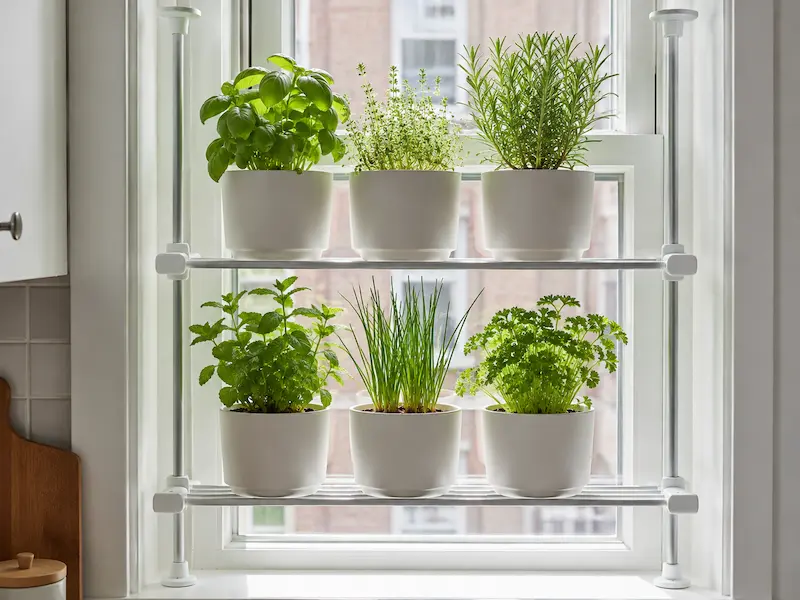
A tension-rod herb shelf passes easily. A drilled-in wall-mounted planter doesn’t. A worm bin on a tray passes. A bokashi system without a catch tray under it, sitting directly on hardwood, doesn’t — not because bokashi itself is risky, but because an unprotected setup is. If you can remove it completely and leave zero trace, that’s generally lower-risk from a property-damage and alteration standpoint, provided nothing in your lease specifically addresses that project by name.
Talking to Your Landlord Before They Bring It Up
A short, proactive conversation prevents most landlord issues apartment homesteaders run into. Waiting for a landlord to notice a worm bin during an inspection and ask “what is that” puts you on the back foot. Bringing it up first, briefly, does the opposite.
A workable script: “I keep a small worm composting bin under the sink for kitchen scraps — it’s well-contained, doesn’t smell, and I’m happy to show you how it’s set up if that’s useful.” That single sentence answers the three questions a landlord actually has — will it smell, will it damage anything, will it attract pests — without turning it into a negotiation.
For ordinary indoor, non-structural activities, you may not need written permission — but your lease and building rules take precedence over that general assumption. Written approval is particularly worth getting when a project involves balconies, exterior-facing areas, plumbing, fixtures, significant weight, or anything specifically addressed in your lease. This matters most for a few specific projects:
- Balcony container gardens — confirm there’s no restriction you missed, especially with anything heavier than a standard plastic pot, and get sign-off in writing if the lease mentions balconies at all.
- Worm bins and bokashi systems — a two-minute reassurance that it’s contained and odor-controlled heads off pest-clause concerns before they start.
- Anything visible from a shared hallway or building exterior — check building rules, not just your individual lease, since these can be governed separately by an HOA or property management company.
Protecting Your Deposit While You Homestead
Security deposits are the practical stake most renters actually worry about, more than any abstract lease violation. A few habits keep that risk close to zero:
- Use trays and liners under everything that touches a floor or windowsill — pots, worm bins, fermentation crocks. Water damage and staining, not the homesteading activity itself, is what actually costs deposit money.
- Photograph your setup areas at move-in and periodically after — a dated photo of a windowsill before you added pots is the easiest way to show no damage occurred if a dispute ever comes up.
- Keep basic supplies on hand for minor marks — spackle for the rare pushpin hole, an appropriate cleaner for minor water marks matched to the actual surface (painted wall, wood, laminate) — so anything minor gets fixed immediately rather than accumulating.
- Avoid anything that interacts directly with paint or wallpaper — adhesive hooks marketed as “damage-free” vary in how true that claim actually is on different paint finishes; test on an inconspicuous spot first.
Security deposit return rules and timelines are set by local and state or provincial law, so what counts as “normal wear” versus chargeable damage varies by jurisdiction — the habits above reduce risk generally, but they aren’t a substitute for knowing your specific area’s deposit rules.
What Happens When You Move
This is the part almost no apartment homesteading guide addresses, and it’s often the actual dealbreaker for renters who consider starting.
The honest answer: most of an apartment homestead moves with you, and the parts that don’t are the easiest ones to replace.
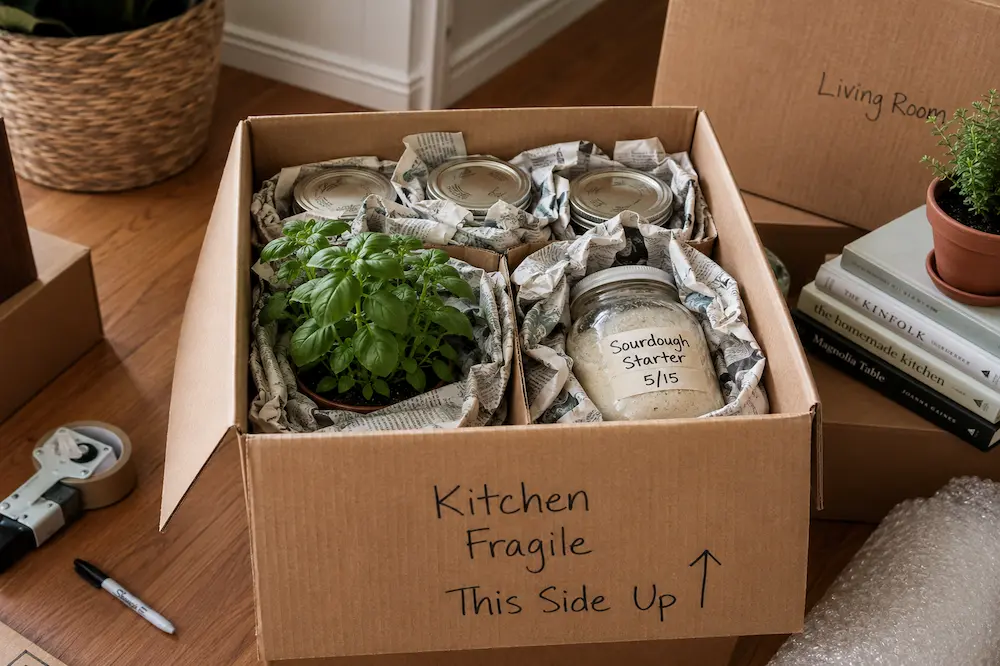
- Sourdough starters are relatively portable in a sealed jar for short moves, and can also be dried onto parchment paper for longer-term storage or long-distance relocations and reactivated later.
- Worm bins can sometimes be transported for short moves, provided the worms remain appropriately ventilated and the bedding stays in suitable condition. For long-distance moves, rehoming the worms and restarting the bin can be simpler.
- Fermentation projects mid-ferment are the trickiest — a jar of sauerkraut two weeks into fermenting doesn’t travel cleanly. Timing major ferments so they’re finished and refrigerated before a known move date helps where possible.
- Container plants move like any other houseplant — the main risk is a few days of transit stress, not permanent loss.
Planning a move a few weeks out, rather than the day before, is really the only “trick” here — most apartment homesteading projects are inherently portable by design, since portability was the whole reason the space-constrained approach works in the first place.
Renters Insurance and Your Homestead Setup
Don’t assume your homesteading equipment is covered just because it’s kept inside your rental. Renters insurance policies vary considerably by insurer and by state or region, and depending on the policy, items like grow lights, gardening equipment, food supplies, plants, or other specialized equipment may be subject to specific coverage limits or exclusions that ordinary household items aren’t. Check your policy’s personal-property, liability, and exclusions sections directly, or ask your insurer, rather than assuming coverage based on general patterns like this one.
Frequently Asked Questions
Could apartment homesteading violate my lease?
Possibly, if your specific lease names something like composting, balcony gardening, or certain equipment directly — but for ordinary indoor, non-structural activity, it’s unlikely. Check the lease language and clause table above rather than assuming either way.
Do I need written permission to start apartment homesteading projects?
Not necessarily — check your specific lease and building rules first. Written approval is most worth getting for anything involving balconies, exterior space, plumbing, fixtures, or significant weight.
What should I do if my landlord raises a concern about something I’m already doing?
Ask what specifically concerns them and address that directly — most concerns resolve once a landlord sees the setup is contained and well-maintained.
Is it worth starting apartment homesteading projects if I move often?
Many renters find it is, since most projects here are genuinely portable compared to something like a backyard garden bed.
Where to Go From Here
If this is your first time thinking seriously about apartment homesteading as a renter, our complete guide to apartment homesteading covers the six core practice areas and a full beginner roadmap. For the terminology question of how this differs from the broader urban homesteading movement, see our urban homesteading vs. apartment homesteading breakdown. And if composting is the piece you’re most nervous about as a renter, how to compost in an apartment without smell addresses the pest and odor concerns directly.