Natural Laundry Detergent Recipe: Simple Small-Batch Powder
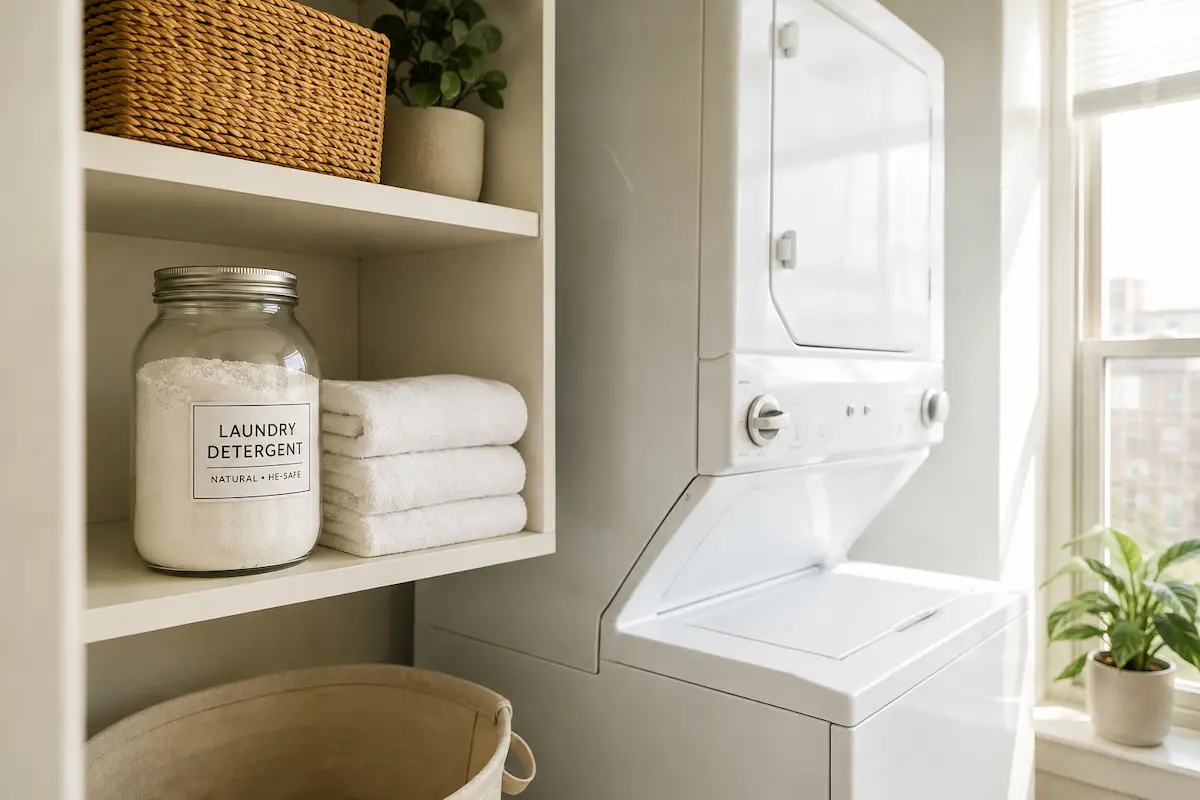
Most homemade laundry detergent recipes assume you’ve got a garage, a 5-gallon bucket, and room to store a giant batch that’ll last six months. None of that describes apartment life. This recipe is built for small-batch mixing in a mason jar, uses ingredients that are widely available at larger grocery stores, natural-food stores, and online, and stores in the same cabinet space as your current detergent bottle. It’s designed as a small, low-sudsing powder — if you have an HE washer, check your machine’s manufacturer instructions before switching to any homemade detergent, since some manufacturers specifically call for commercially formulated HE detergent.
People commonly call recipes like this one “homemade laundry detergent,” though it’s worth naming clearly what it actually is: this formula uses castile soap as its cleaning agent rather than the synthetic surfactant systems found in conventional laundry detergent. Soap and modern detergent aren’t chemically identical, and that distinction matters for how you should think about performance expectations, further down.
Before you start: If you have an HE washer, check the manufacturer’s detergent requirements first. Homemade soap-based laundry formulas aren’t universally approved for HE machines — more on this below.
Why Make Your Own Laundry Detergent
Commercial detergents often carry synthetic fragrances, optical brighteners, and dyes. For some people with sensitive skin, fragrance and other additives can be a source of irritation. Making your own version lets you control exactly which ingredients are present, and it can be inexpensive, particularly if you’re already buying washing soda or baking soda for other household projects.
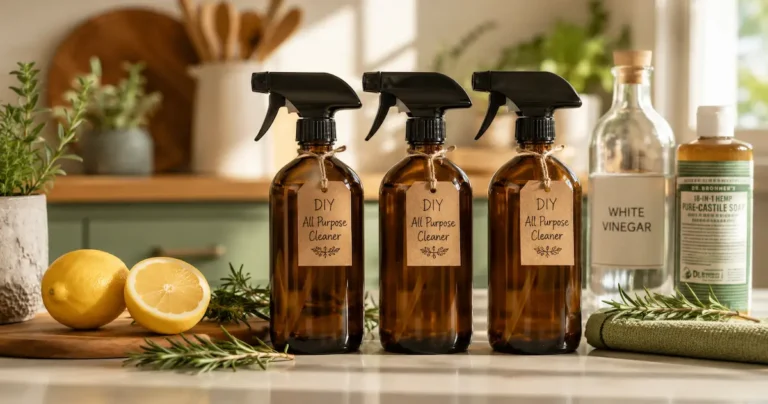
This isn’t just a cost-saving swap either — it fits naturally alongside other lower-waste kitchen and home habits. If you’ve already made the switch to a DIY all-purpose cleaner for surfaces, this is the same philosophy applied to the laundry room: fewer plastic bottles, fewer unknown ingredients, more control. Worth naming honestly: this recipe still involves buying packaged ingredients, so “lower-waste” is a more accurate description than “zero waste” — the win here is fewer plastic detergent jugs over time and full visibility into what’s in the mix, not a completely packaging-free product.
There’s also a cost angle worth mentioning, though without exact figures to cite here: washing soda, baking soda, and a bar of castile soap bought in bulk tend to cost less per load than a bottle of name-brand liquid detergent, and that gap widens further if you’re already buying washing soda or baking soda for other household projects, since a single box covers multiple batches.
What You’ll Need
This recipe uses three core ingredients, plus one optional addition for scent. Unlike recipes that call for grating a bar of soap, this version keeps that step simple — no cheese grater dedicated to soap-making required, which matters if your kitchen tools are already doing double duty in a small space.
- Washing soda (sodium carbonate) — 1 cup. Not the same as baking soda; look for it in the laundry aisle, not the baking aisle.
- Baking soda — 1 cup. Softens water and helps neutralize odors.
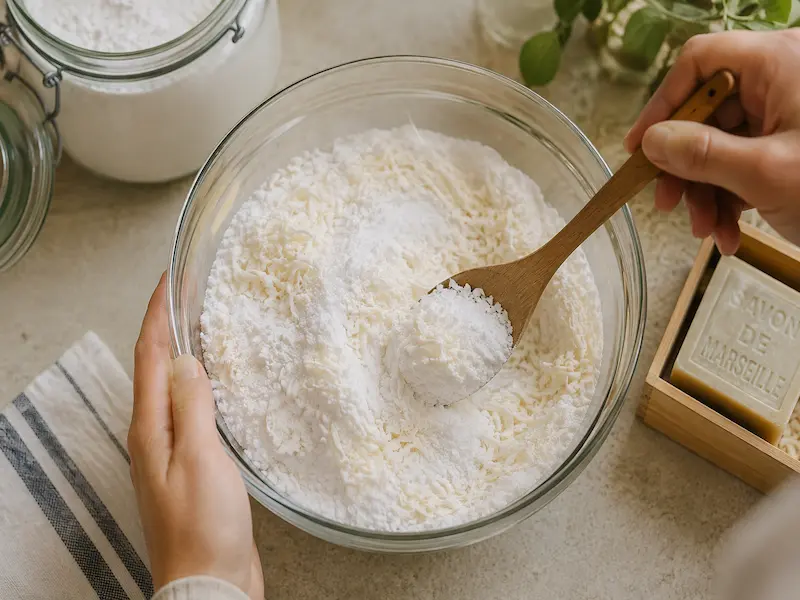
- Grated castile soap or castile soap bar shavings — 1/2 cup. Castile soap is plant-based and low-sudsing. A bar grates easily by hand in a couple of minutes on a standard box grater.
- Optional: 10–15 drops of essential oil for scent, if desired. Skip it for sensitive skin, baby clothing, or anyone who reacts to fragrance — the unscented version works just as well as a cleaning base.
Can’t find washing soda? Washing soda is sodium carbonate, while baking soda is sodium bicarbonate — they aren’t interchangeable in this recipe. It’s simplest to buy a box rather than modify the recipe.
On sourcing: washing soda and castile soap aren’t always stocked at every grocery store, but they’re reliably available at larger supermarkets in the laundry or natural foods aisle, at health food stores, and online. Buying a larger box of washing soda or a bulk bar of castile soap up front costs more initially but stretches across several batches, which brings the per-batch cost down further the more you make it.
How to Make It
- Combine the washing soda and baking soda in a mixing bowl and stir until evenly blended.
- Grate the castile soap bar using a standard box grater directly into the bowl, or use pre-shredded castile soap flakes if you have them on hand.
- Mix all three ingredients together thoroughly, breaking up any soap clumps with your fingers or a fork until the texture is uniform.
- Add essential oil drops if using, and mix again to distribute the scent evenly through the powder.
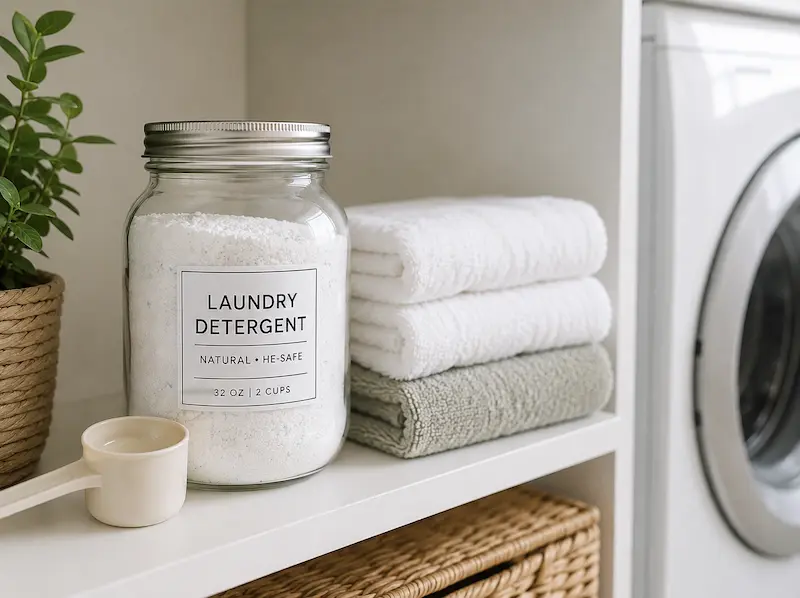
- Transfer to an airtight jar or container. A quart-sized mason jar holds a full batch comfortably and fits in a standard laundry room shelf or under-sink cabinet.
How to Use It
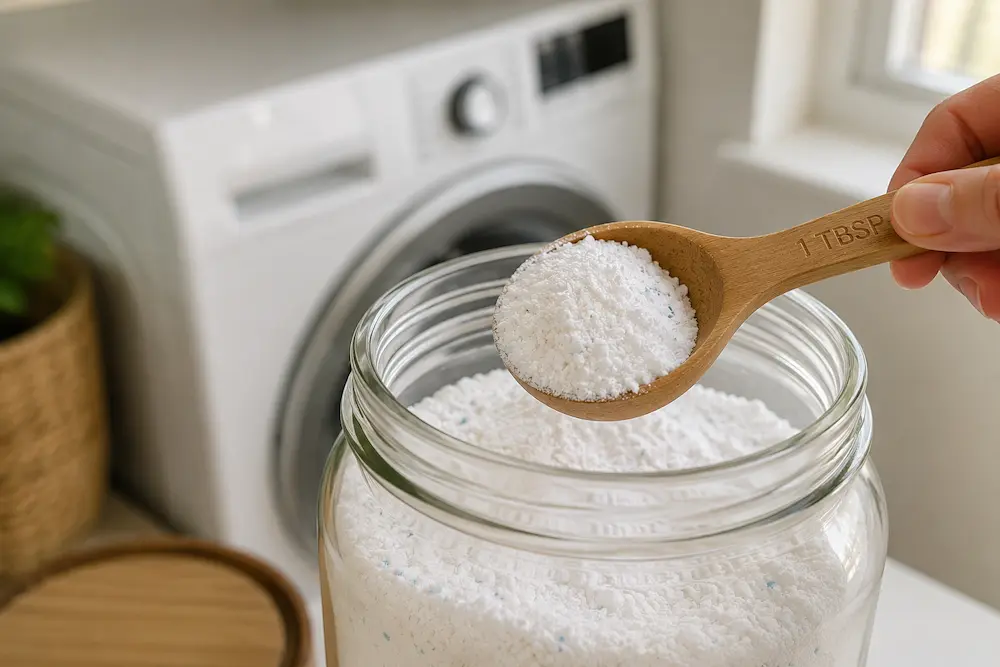
Start with 1 tablespoon for a normal load. If clothes aren’t coming out clean, adjust gradually on future loads rather than jumping straight to a large amount — using too much powder tends to increase residue and rinsing problems rather than improving cleaning. Follow your washer manufacturer’s instructions if they specify a detergent type, amount, or placement, especially for HE machines.
For extra stain-fighting power on a particularly dirty load, a small scoop of oxygen booster (a sodium percarbonate-based product sold for natural stain removal) added directly to the drum alongside the detergent gives an additional boost without changing the base recipe. Not all oxygen boosters are formulated identically, so check that the one you’re using is meant for fabric rather than a surface-cleaning version.
Dosage starting points by load type — adjust based on results:
- Lightly soiled, small load: 1 tablespoon
- Standard everyday load: 1 to 1.5 tablespoons
- Heavily soiled or large load: up to 2 tablespoons
- Extra-dirty loads (workout gear, mud, heavy grease): 2 tablespoons plus a scoop of oxygen booster
Can I Use This Homemade Laundry Detergent in an HE Washer?
This is worth addressing directly rather than glossing over. The recipe is designed to be low-sudsing, which is the main quality HE machines are sensitive to — but low-sudsing on its own doesn’t mean a homemade formula is universally approved for every HE washer. Some appliance manufacturers, including Whirlpool, specifically recommend commercially formulated HE detergent and note that non-HE detergent — which includes most homemade formulas — can produce excessive suds, reduced spin speed, and longer cycle times as the machine runs extra rinses to clear the excess.
Before using this or any homemade detergent in an HE machine, check your washer’s owner’s manual or manufacturer guidance. If your manual is silent on homemade detergents, a cautious approach is to start with a very small amount (half a tablespoon) on a normal-soil load and watch for excess suds or a longer-than-usual cycle before settling into a regular routine.
Does It Actually Get Clothes Clean?
This type of homemade powder can work reasonably well for lightly to moderately soiled everyday laundry, but performance varies with water hardness, wash temperature, fabric type, soil level, and washer design — it shouldn’t be treated as a drop-in equivalent to a commercially formulated detergent, since soap and modern detergent chemistry aren’t the same thing. For genuinely tough stains (grease, wine, ground-in mud), pretreating the spot directly with a bit of castile soap or a stain stick before washing tends to get better results than relying on the detergent alone during the wash cycle — true of most commercial detergents too, it’s just less obvious since store-bought stain boosters are often blended in already.
Water hardness also plays a bigger role in homemade detergent performance than it does with commercial products, which are often formulated with synthetic water softeners built in. If you’re in a hard water area and notice the detergent underperforming, check your washer’s recommendations for hard water conditions, and consider a commercially formulated detergent designed for that water type if the issue persists.
Sensitive Skin and Allergy Considerations
One of the most common reasons people switch to a homemade detergent is skin sensitivity, so it’s worth addressing directly. If you’re making this specifically because conventional laundry products irritate your skin, start with the unscented version and leave out the essential oil entirely — fragrance ingredients, including essential oils, can trigger irritation or allergic reactions in some people, and “natural” doesn’t automatically mean an ingredient is incapable of causing a reaction.
For cloth diapers specifically, don’t assume this homemade formula is suitable without checking first. Detergent choice affects absorbency, buildup, and repelling in cloth diapers in ways that don’t apply to regular clothing, so follow your diaper manufacturer’s washing guidelines rather than substituting this recipe by default. For baby clothing more broadly, or for anyone with genuinely reactive skin, a small patch test — washing one item, drying it fully, and checking for a reaction — is worth doing before committing a full laundry load to the switch.
Storage and Shelf Life
Because this recipe contains no water, it doesn’t spoil the way a liquid detergent can. Because this is a dry mixture, moisture and contamination are bigger storage concerns than spoilage — keep it sealed and dry, and make a fresh batch if it becomes heavily clumped or contaminated. A tight-lidded jar solves this without needing any special storage setup, which is exactly the kind of low-footprint solution that fits an apartment laundry closet or a shelf above a stacked washer-dryer unit.
If you’re scaling up to make a larger batch to save on future prep time, doubling or tripling the recipe works without any adjustment to the ratios — just make sure your storage container is large enough, and consider splitting a large batch across two smaller jars rather than one big one, since a smaller jar is easier to scoop from without spilling and easier to fit into tight cabinet space.
Troubleshooting Common Issues
- Detergent isn’t dissolving fully in cold water washes: Try dissolving your measured scoop in a small cup of warm water first, then adding that to the wash rather than the dry powder directly onto fabric — this matters more in cold-water cycles than warm or hot ones.
- Clothes feel slightly stiff after drying: Check whether hard water, overloading the washer, insufficient rinsing, or detergent residue from using too much powder is contributing to the problem. Follow your washer’s instructions for fabric softener or rinse additives if it specifies compatible products.
- Powder is clumping in the jar: A humidity issue. Keep the container tightly sealed in a cool, dry spot; if clumping becomes heavy or persistent, replace the batch rather than trying to break it apart and reuse it.
- Not enough sudsing, and it feels like it’s not working: This is expected and not a sign of poor cleaning — suds level has no reliable correlation with cleaning power, and low-sudsing is the intended design of this recipe.
- White residue left on dark clothing: Usually means slightly too much detergent was used for the load size, or the powder didn’t fully dissolve before the rinse cycle. Reducing the amount and making sure the powder dissolves fully can help. If residue continues, follow your washer’s instructions and consider whether a commercially formulated detergent would be a better fit for your machine and water conditions.
A Few Other Lower-Waste Laundry Swaps
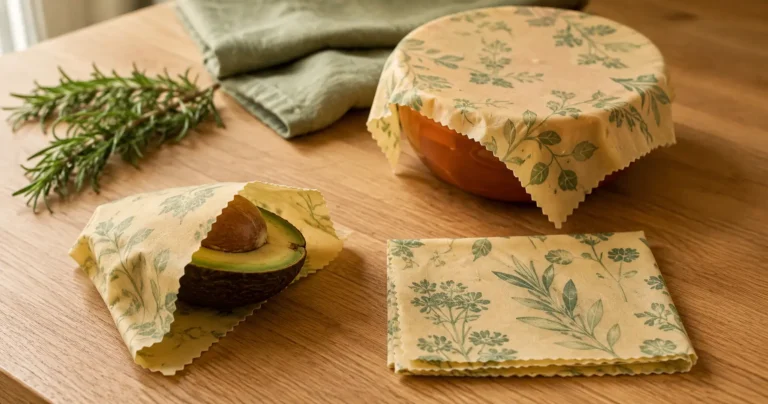
Once the detergent itself is handled, a couple of other small swaps round out a lower-waste laundry routine without much extra effort. Wool dryer balls replace disposable dryer sheets and reduce drying time slightly by improving air circulation in the dryer — they’re reusable for years and eliminate a recurring purchase entirely. The same one-time-effort logic applies to food storage: our guide to making beeswax wraps replaces disposable plastic wrap the same way this detergent replaces a disposable bottle. If you’re also working through other lower-waste swaps around the apartment, our guide to making reusable paper towels covers a similar low-cost, low-effort project that tackles a different disposable habit using the same basic philosophy — replace a recurring purchase with something reusable, made once and used for years.
This kind of project is exactly what the “Natural Home and DIY Products” section of our complete guide to apartment homesteading is about — small, repeatable swaps that reduce both cost and waste without requiring any outdoor space or major equipment.
FAQ
Can I use this homemade laundry detergent in an HE washer?
It’s designed to be low-sudsing, but homemade detergent isn’t universally approved for every HE washer. Check your washer’s owner’s manual before using it — some manufacturers specifically recommend commercially formulated HE detergent and note that homemade formulas can produce excess suds or leave residue in certain machines.
Can I make this without castile soap?
Castile soap is the main cleaning agent in this recipe, so it’s not recommended to leave it out entirely. If you don’t have castile soap on hand, a mild, unscented bar soap can work as a substitute, though it may suds more than castile soap does.
Is borax necessary for this recipe to work?
No. This recipe intentionally leaves out borax, which some natural detergent recipes include as a stain-fighting booster. Washing soda and castile soap provide the cleaning base for regular laundry without it, and skipping borax avoids a common point of hesitation for people who prefer to keep it out of their home entirely.
How long does homemade laundry detergent last before it goes bad?
Since this is a dry powder recipe with no water content, it doesn’t spoil in the way a liquid detergent could. Moisture and contamination are the bigger concerns than spoilage — keep it sealed and stored in a cool, dry place, and make a fresh batch if it becomes heavily clumped or you suspect moisture has gotten in.
Is homemade detergent safe for baby clothes or cloth diapers?
For cloth diapers specifically, don’t assume this homemade formula is suitable — detergent choice can affect absorbency and repelling in ways specific to diaper fabric, so follow your diaper manufacturer’s washing instructions rather than substituting this recipe. For general baby clothing, a small patch test on one item before switching fully is a reasonable precaution, since essential oils and fragrance can still cause reactions even in a natural formula.
Why does my homemade detergent leave a residue on black or dark clothing?
This usually means either too much detergent was used relative to the load size, or the powder didn’t fully dissolve before the rinse cycle finished. Reducing the amount and making sure the powder dissolves fully can help. If residue continues, follow your washer’s instructions and consider whether a commercially formulated detergent would be a better fit for your machine and water conditions.