Pickling Salt vs. Table Salt: What’s Actually Different?
If you’ve ever stood in the grocery aisle staring at three different salt containers, wondering which one belongs in your pickle jar, you’re not alone. Pickling salt looks almost identical to table salt, but the difference matters more than you’d think — especially in a small apartment kitchen where you can’t exactly stockpile five kinds of salt “just in case.”
Here’s what pickling salt actually is, why recipes call for it specifically, and what to do if your pantry doesn’t have any.
What Makes Pickling Salt Different
Pickling salt is a fine-grained salt made without the additives commonly found in some table salts — no anti-caking agents, and typically no iodine. Table salt, by contrast, may or may not be iodized, and often contains anti-caking agents to keep it from clumping in humid weather. Both iodized and non-iodized table salt can technically be used in pickle recipes, but the additives in table salt are known to cause a couple of cosmetic issues in a pickling brine, according to home food preservation guidance from the National Center for Home Food Preservation (NCHFP):
- White sediment or cloudiness. Anti-caking agents or other additives don’t fully dissolve and can leave a white sediment in the jar or a murky brine instead of a clear one.
- Discoloration. Iodized salt is separately listed as a cause of dark or discolored pickles in NCHFP’s canning troubleshooting guidance, alongside things like hard water minerals or metal utensils.
Neither issue is a food-safety problem on its own — they’re quality and appearance concerns. But a cloudy brine can make it harder to visually judge a jar later, which is worth keeping in mind (more on that below).
Pickling Salt vs. Kosher Salt vs. Table Salt
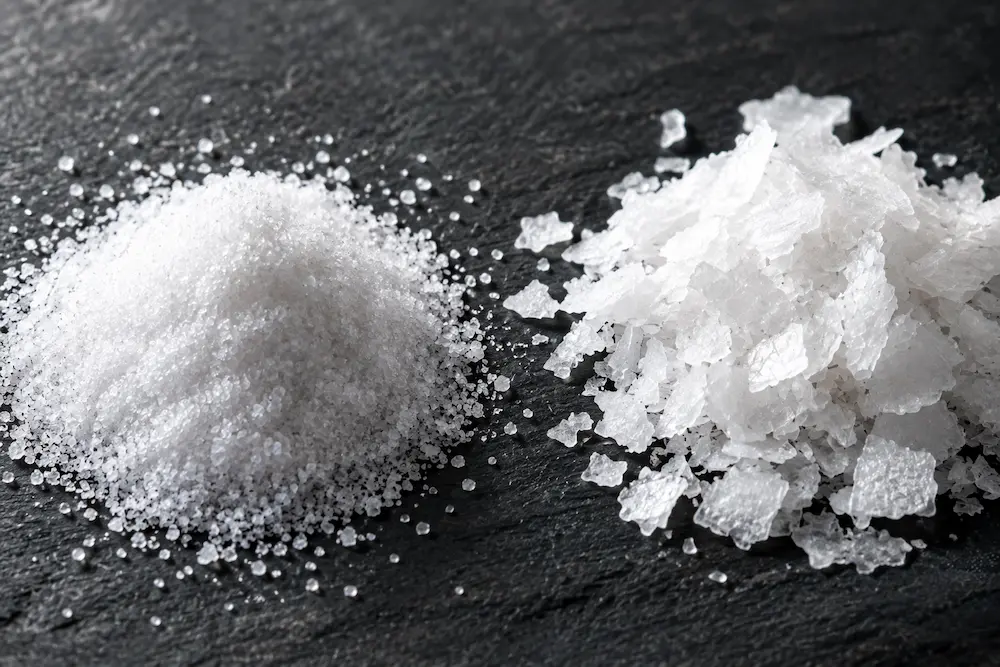
This is where a lot of home picklers get tripped up, because salt isn’t measured by weight in most home recipes — it’s measured by volume, and the crystal size changes how much salt fits in a tablespoon.
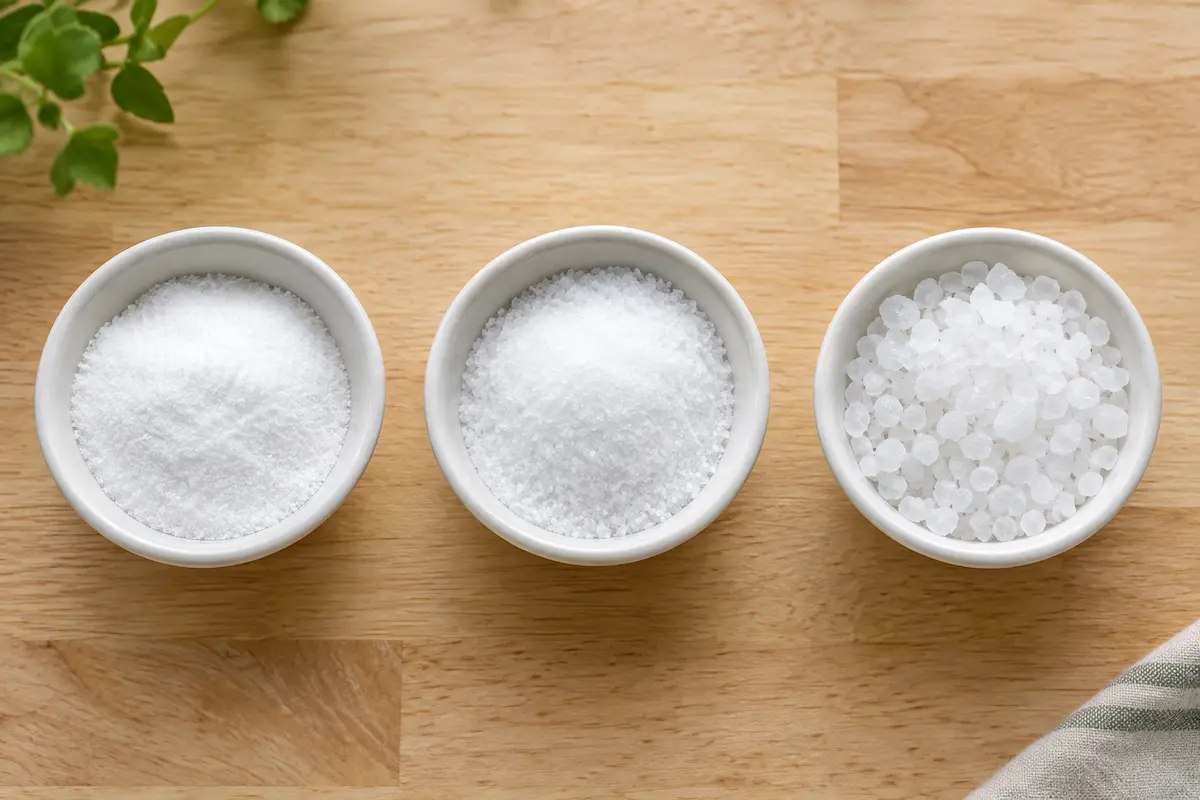
- Pickling salt: fine, uniform grains, no additives.
- Table salt: fine grains, may be iodized or non-iodized, often anti-caking.
- Kosher salt: larger, flakier crystals. Brands vary significantly in density, so a tablespoon of one kosher salt brand can weigh noticeably less than another. NCHFP guidance specifically notes that flake-style salts vary too much in density to be recommended for pickling and fermenting.
Because of this, swapping salts by volume (spoon for spoon) rather than by weight can throw off the salinity of your brine. Weighing your salt on a kitchen scale, when possible, removes the guesswork entirely, though for a tested recipe the safest approach is still to use the salt type and amount the recipe specifies rather than converting on your own.
Can You Substitute Something Else?
If pickling salt isn’t in your pantry and you don’t want to make a special trip, here’s how the common alternatives stack up:
Kosher salt can work for some pickling recipes, but given how much crystal size and density vary by brand, don’t swap it in tablespoon-for-tablespoon. If you’re following a tested recipe, it’s worth using the salt type and amount the recipe specifies rather than converting on your own; if you do substitute, weigh the salt rather than measuring by the spoonful.
Plain non-iodized table salt is a closer match to pickling salt than iodized table salt, since it’s missing one of the two additives (it may still contain an anti-caking agent, so check the label). Iodized and non-iodized table salt can both technically be used in pickling, but plain pickling salt gives the most predictable, clear result.
Whichever salt you use, the amount matters more than the brand — follow the quantity a tested recipe calls for rather than eyeballing it, since salt concentration affects flavor, texture, and in fermented recipes, safety.
Does Salt Matter for Every Type of Pickle?
Salt doesn’t play the same role in every pickle. In quick, vinegar-based refrigerator pickles, acidity is the main safety factor, and NCHFP guidance notes that some fresh-pack recipes can be made safely with reduced or even no salt. Quality (texture and flavor) will differ, but the underlying acid level is what’s doing the preservation work.
In fermented or brined pickles, like our fermented pickles or a batch of sauerkraut, salt plays a much bigger role. It favors the growth of the beneficial bacteria that produce lactic acid while discouraging the organisms that would otherwise spoil the batch. NCHFP guidance is explicit that salt should not be reduced in fermented pickle or sauerkraut recipes, and that reduced-sodium salt substitutes aren’t recommended for fermenting even though they can be fine in some quick pickle recipes.
The takeaway: for a quick refrigerator pickle, salt choice is mostly about flavor and appearance. For a fermented pickle, stick to the salt type and amount the recipe specifies.
A Small-Batch Apartment Perspective
For apartment-scale pickling, you’re often making a small batch for the refrigerator rather than processing dozens of shelf-stable jars. In that situation, choosing pickling salt is mainly about getting the expected flavor and appearance, provided you’re following a reliable recipe and its storage instructions. That said, keeping one small container of pickling salt on hand is worth it if you make pickles regularly, since it removes one variable from an already trial-and-error process. A single box tends to last a long time in a small kitchen, since a batch of refrigerator dill pickles only calls for a tablespoon or two at a time. If you want a closer look at how salt amount affects the finished brine, our pickle brine guide breaks down the ratios in more detail.
Where to Find It and How to Store It
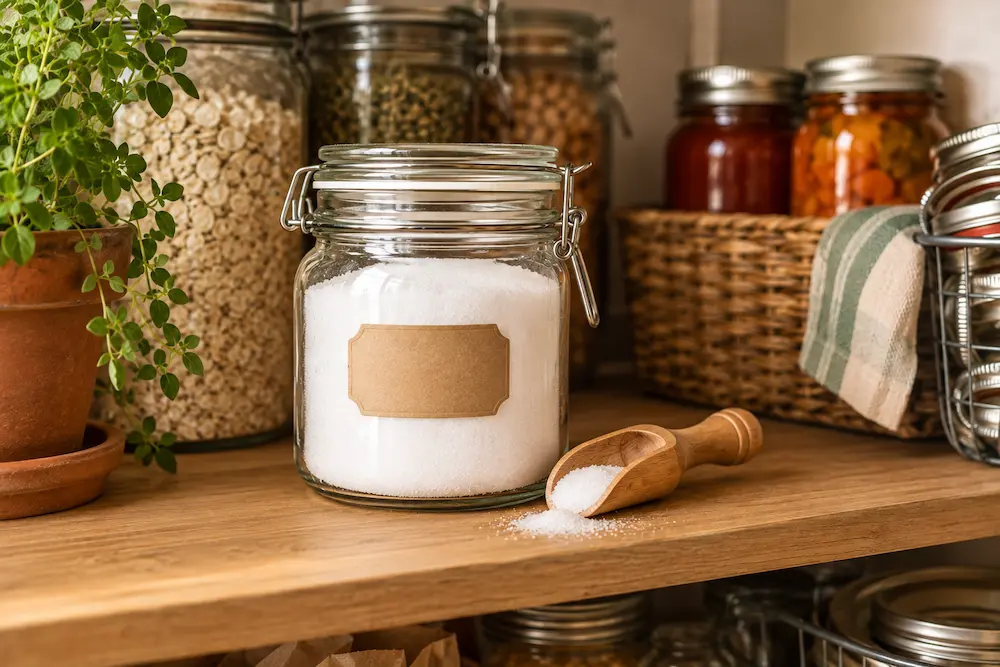
Pickling salt isn’t always shelved next to table salt. In most grocery stores it’s grouped with canning supplies — jars, lids, and pectin — especially in late summer when home canning season ramps up. If your local store doesn’t carry it, it’s widely available online, usually sold in boxes similar in size to table salt.
Storage is simple: keep it in a sealed container away from moisture. Because it has no anti-caking agent, it’s a little more prone to clumping in a humid kitchen than table salt is. A tightly closed container is the main thing that keeps it pouring freely.
Common Mistakes to Avoid
A few small missteps account for most of the “why did my brine turn out weird” questions:
- Assuming all salts measure the same. A tablespoon of table salt, kosher salt, and pickling salt can each weigh a different amount because the crystals pack differently. If a recipe was written using pickling salt and you swap in a coarser salt by volume, the amount of actual sodium chloride going into your brine can change substantially, which matters even more in fermented recipes, where salt level affects safety, not just taste.
- Using a salt with added minerals or color. Some specialty salts, like pink Himalayan salt, contain trace minerals that can tint the brine or the vegetables themselves. They’re not unsafe, just visually unpredictable, and like sea salt, their crystal size means a tablespoon isn’t necessarily equivalent to a tablespoon of pickling salt.
- Storing pickling salt somewhere damp. Without an anti-caking agent, it clumps faster than table salt if left near a stove or a humid window.
- Treating brine clarity as a safety test in either direction. Cloudiness can come from anti-caking agents, hard water minerals, starch, or genuine spoilage; appearance alone doesn’t tell you which. A clear brine isn’t automatically safe, and a cloudy one isn’t automatically spoiled. Follow a tested recipe and its storage instructions, and discard anything with clear spoilage signs like mold, an off odor, or a soft or slimy texture rather than judging by clarity alone.
Frequently Asked Questions
Is pickling salt the same as canning salt?
In most recipes, yes. Pickling salt and canning salt generally refer to the same thing: fine-grained salt without additives, used for pickling and canning.
Will iodized salt make my pickles unsafe to eat?
Not on its own. It’s listed in home food preservation guidance as a cause of discoloration, and additives in table salt can cause cloudiness, but neither is a safety issue by itself. Judge a jar by following a reliable recipe and watching for genuine spoilage signs (mold, an off odor, a soft or slimy texture) rather than by whether the brine looks clear.
Can I use sea salt for pickling?
Fine, additive-free sea salt can work, but check the label since some sea salts include anti-caking agents or trace minerals that can still affect color and clarity, and because sea salt crystal size varies by product, don’t assume a tablespoon of it is equivalent to a tablespoon of pickling salt.
Does pickling salt dissolve differently than table salt?
Its fine, uniform crystals dissolve at a similar rate to table salt. The difference is in what’s not included, not how it dissolves.
How much pickling salt should I use for a quick refrigerator pickle?
This depends on the specific brine recipe you’re following, since ratios vary by recipe and desired tanginess. Always follow the amounts given in your specific recipe rather than a general rule.