Sauerkraut Recipe: How to Make Homemade Sauerkraut in a Mason Jar
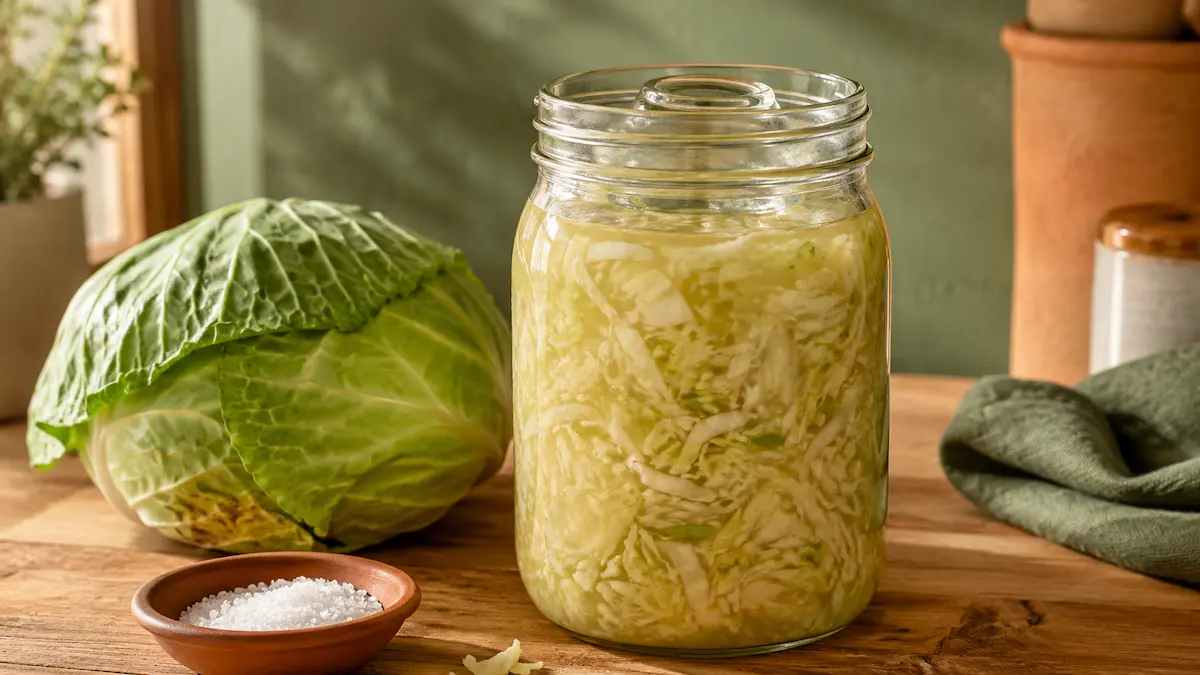
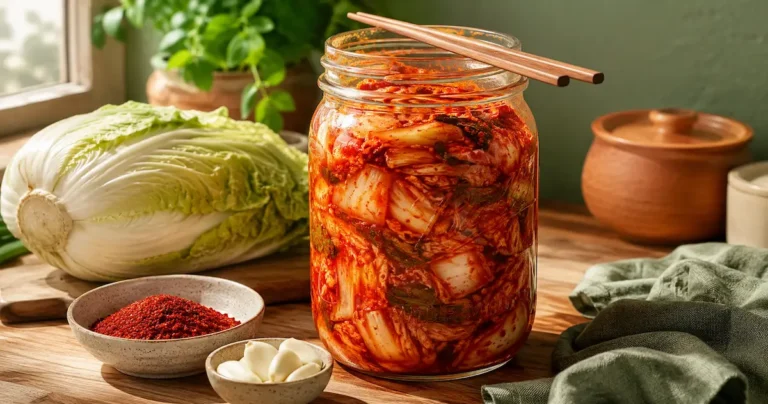
This sauerkraut recipe needs just two ingredients — cabbage and salt — and one mason jar. No crock, no specialist equipment, no starter culture. The bacteria that ferment it are already living on the cabbage leaves. Your only job is to create the right environment and stay out of the way.
This easy homemade sauerkraut recipe is the best starting point for anyone new to fermentation — small enough to fit in one quart jar, forgiving enough to get right on the first attempt, and ready to eat in one to four weeks.
What Is Sauerkraut, Really?
Sauerkraut is fermented cabbage — but the more useful way to think about it is this: it's cabbage preserved by its own bacteria.
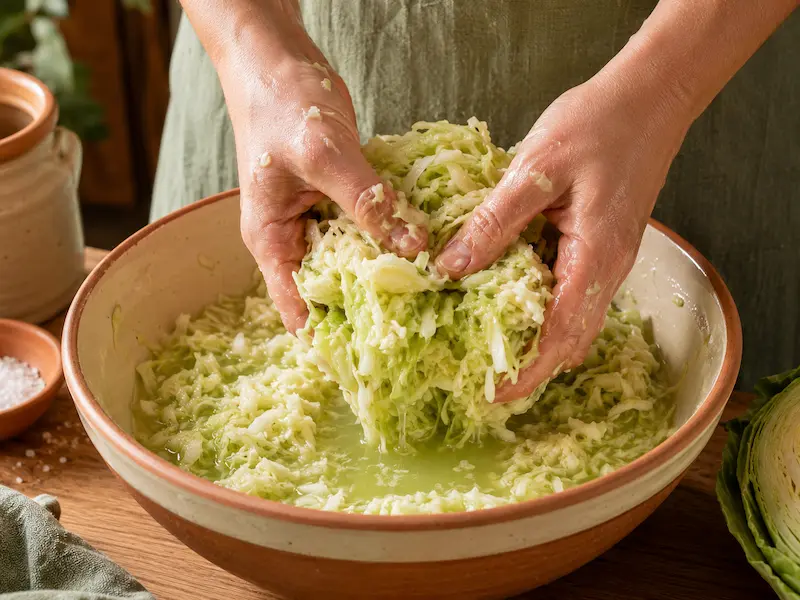
Cabbage leaves are naturally covered in lactic acid bacteria, or LAB. When you salt shredded cabbage, the salt draws water out of the plant cells through osmosis, creating a salty brine. That brine does two things at once — it creates an oxygen-poor environment that favours the LAB you want, and it suppresses the bad bacteria that would otherwise cause spoilage. As the LAB feed on the natural sugars in the cabbage, they produce lactic acid, which is what gives sauerkraut its tang and what makes it shelf-stable in the fridge for months.
This is the same family of fermentation behind kimchi, pickles, and yogurt — and it's been used to preserve vegetables safely for thousands of years before refrigeration existed.
On botulism, specifically: it's the question every beginner is quietly worried about, so it's worth answering directly. Botulism-causing bacteria cannot produce their toxin in an environment below pH 4.6, and a correctly salted vegetable ferment drops below that threshold within 48 to 72 hours. As long as you use the salt ratio below and keep the cabbage fully submerged, botulism is not a realistic risk in this process.
Why a Mason Jar Is the Best Way to Start
A single quart jar is the right entry point for apartment homesteading, for a few reasons.
What You'll Need
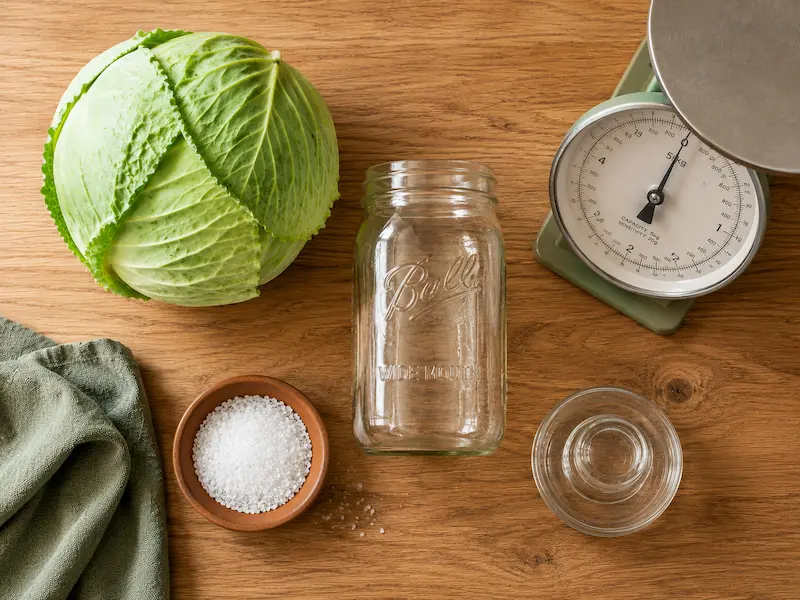
Step-by-Step Instructions
How Long Does It Actually Take?
Fermentation speed depends almost entirely on temperature. Warmer rooms ferment faster but can soften texture if they run too hot; cooler rooms take longer but tend to produce a crisper, more vitamin-rich result.
Kahm Yeast vs. Mold — The One Safety Skill You Actually Need
This is the part that makes new fermenters nervous, and it's worth understanding properly rather than panicking the first time you see something on the surface.
Kahm yeast is a harmless wild yeast that can form when the surface of your ferment is exposed to oxygen. It looks like a thin, flat, white-to-cream film — sometimes with a slightly web-like or wrinkled texture — that spreads across the whole surface. It does not grow below the brine line. It's not dangerous, though it can give the kraut a slightly off, cheesy flavour if left too long. If you see it, simply skim it off the surface and continue fermenting or move the jar straight to the fridge.
Mold is a different situation entirely, and it means the batch should be discarded. Mold looks fuzzy or hairy, has visible three-dimensional texture, and can appear in white, green, black, blue, or other colours. Unlike kahm yeast, mold sends root-like structures below the surface that you can't see or scrape away — so removing the visible patch doesn't make the rest of the jar safe.
One color deserves special attention: pink or reddish discoloration. This is not a normal part of fermentation. It can indicate contamination by a bacterium called Serratia marcescens, which is not safe to eat around — particularly for young children, older adults, or anyone with a weakened immune system. If you see any pink or red tint in the brine or on the cabbage (and you're not working with red cabbage to begin with), discard the batch.
The simplest rule covers all of it: trust your senses. A healthy ferment smells pleasantly sour and tangy, almost sharp. A spoiled one smells musty, rotten, or like a damp cellar — that off smell is the clearest warning sign you'll get. When in doubt, throw it out.
Common Troubleshooting
My sauerkraut turned mushy instead of crunchy. This almost always comes down to temperature or salt. Fermenting above 75°F softens texture quickly, and too little salt has the same effect. For your next batch, ferment somewhere cooler, weigh your salt on a scale rather than estimating, and consider tucking a grape leaf, oak leaf, or horseradish leaf into the jar — the tannins in these leaves help preserve crispness.
It tastes too salty. Salt measured by volume varies wildly between brands, so recalculate by weight next time. In the meantime, a quick rinse before serving cuts the saltiness without affecting the fermentation that already happened.
I don't see any bubbles — did it fail? Not necessarily. Visible bubbling depends on how tightly your lid is sealed and how easily gas escapes, and it also slows considerably in cooler rooms. The real test is taste, not bubbles — start tasting around day 5 to 7. If it's getting noticeably tangy, fermentation is working even without a single bubble in sight.
The cabbage keeps floating above the brine. This is the single most common cause of kahm yeast and mold, since exposed cabbage is directly exposed to oxygen. Check your weight is heavy enough and fully submerged, press the cabbage down again, and top up with a small batch of 2.5% salt water if the brine level has dropped.