Apartment Homesteading: The Complete Guide to Self-Sufficient Living in a Small Space
Apartment homesteading is one of the fastest growing lifestyle movements among renters — and one of the most misunderstood.
Most people hear the word homesteading and picture something that has nothing to do with their life. Acres of land. Chickens. A root cellar full of preserved food. A farmhouse somewhere in the countryside.
But apartment homesteading is something entirely different. It is the practice of applying the core values of homesteading — self-sufficiency, reduced waste, growing your own food, making things from scratch — to the reality of how most people actually live today. In rented flats. In cities. With a kitchen the size of a cupboard and a landlord who does not want nails in the walls.
It is homesteading for the real world. And it works.
Curious how this compares to the broader urban homesteading movement? See our breakdown of urban homesteading vs. apartment homesteading.
In this guide you will learn:
What Is Apartment Homesteading?
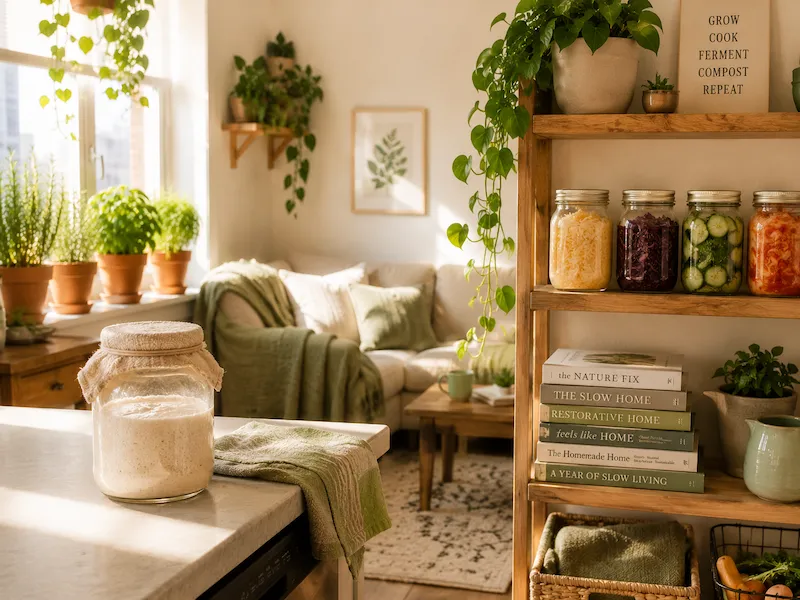
Apartment homesteading is the practice of building a more self-sufficient, sustainable life within the constraints of a rented apartment or small urban space.
It draws on the traditional homesteading philosophy — take responsibility for your own food, reduce your dependence on commercial systems, reduce waste, and develop practical skills — but applies it to a context where land, outdoor space, and permanent modifications to your home are not available.
The movement has grown significantly over the past decade as more people live in cities, more people rent rather than own, and more people question the environmental cost of modern convenience. Apartment homesteading offers a practical, accessible answer to those questions that does not require moving to the countryside or owning property.
At its core apartment homesteading is built on three ideas.
Why Apartment Homesteading Works Without Land
This is the question most people have when they first encounter the concept. Can you really homestead meaningfully in a flat?
The answer is yes — and the reasoning is simpler than you might expect.
The skills that define homesteading — growing food, fermenting and preserving, baking from scratch, reducing waste — are not land-dependent skills. They are knowledge-dependent skills. A windowsill herb garden produces just as nutritious a harvest as a garden bed. A worm bin converts kitchen scraps into compost just as effectively whether it sits under a sink or in a barn. Sourdough bread baked in a small flat oven tastes identical to sourdough baked in a farmhouse kitchen.
What changes at scale is quantity — not quality, not satisfaction, not the value of the skill itself.
In fact apartment homesteading has several genuine advantages over rural homesteading:
The Six Core Areas of Apartment Homesteading
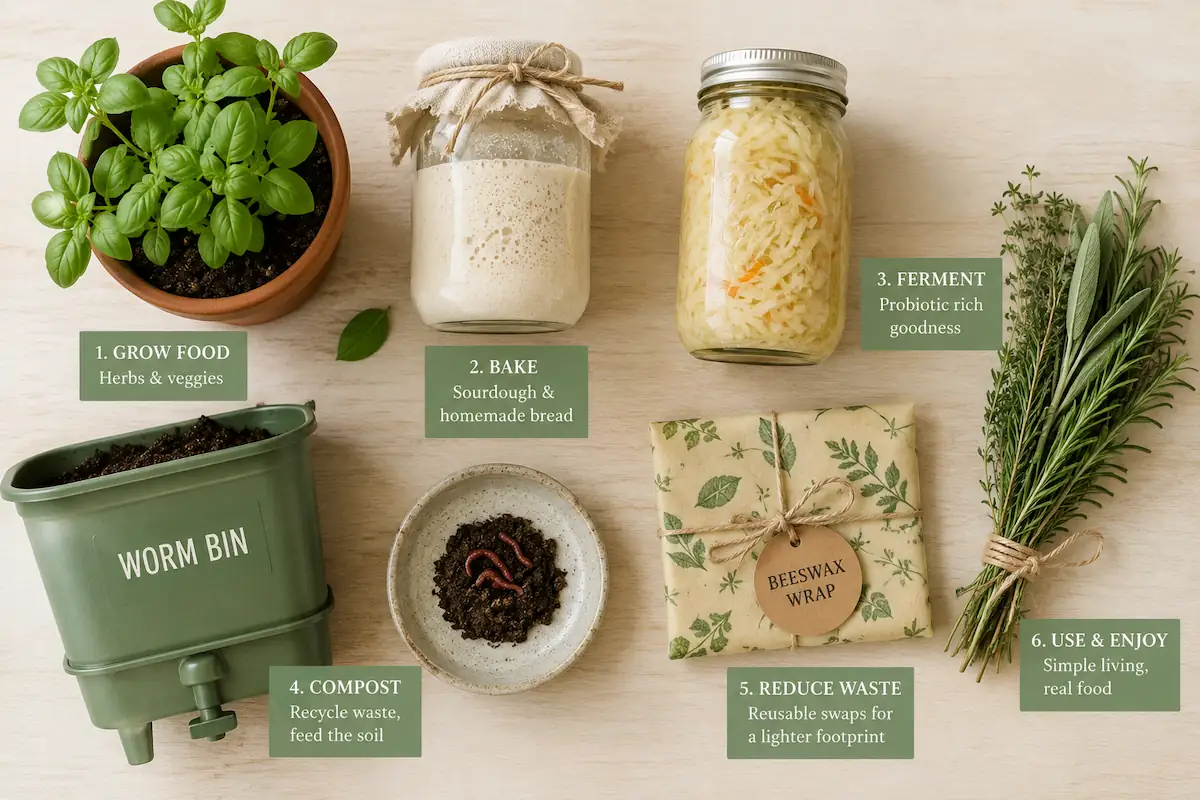
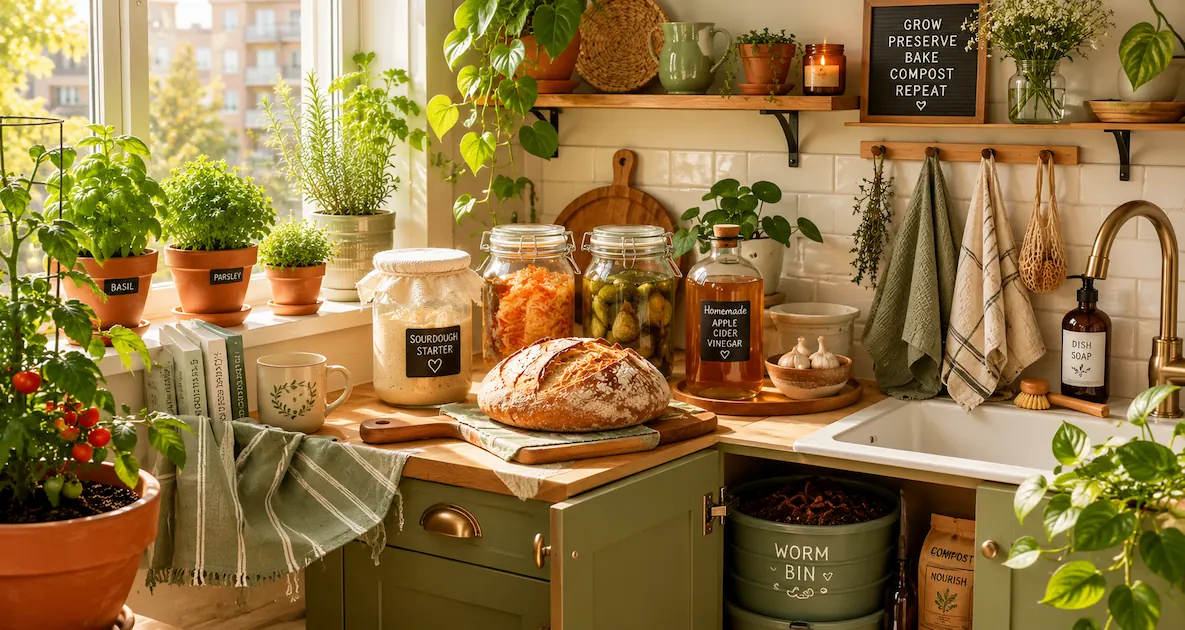
Apartment homesteading covers six interconnected areas. Most people start with one or two and expand naturally over time as each new skill builds on the last.
1. Growing Food Indoors
Growing even a small amount of your own food is the most fundamental act of apartment homesteading. It reconnects you to where food comes from, reduces your grocery bill, and produces flavours dramatically better than anything you can buy.
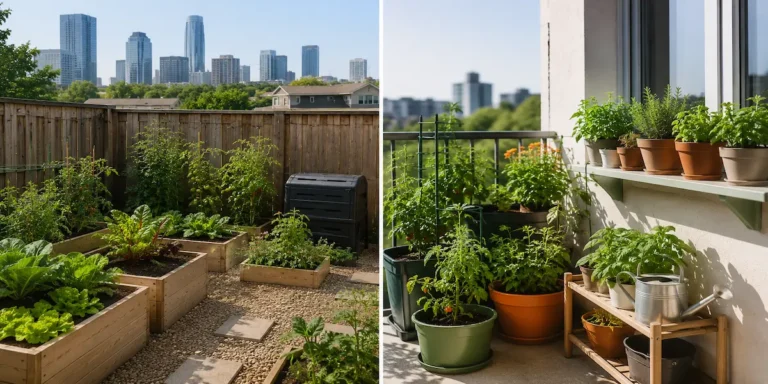
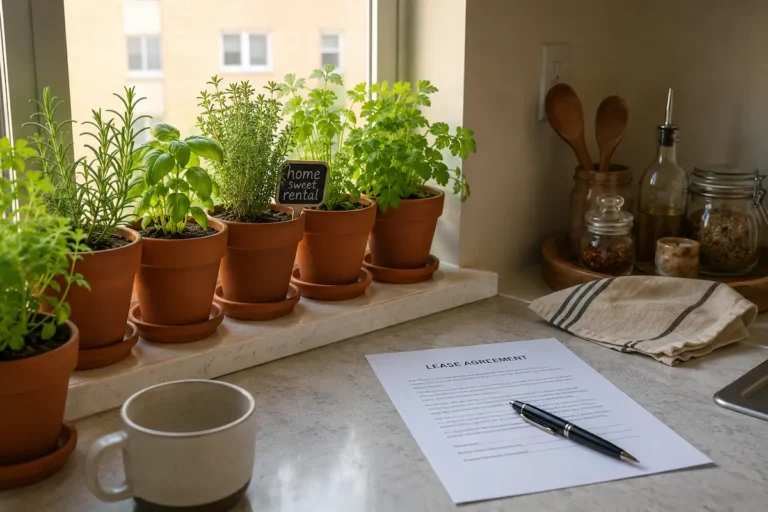
The most accessible starting point is a windowsill herb garden. A few terracotta pots on a sunny windowsill growing basil, mint, chives, and parsley can supply most of the fresh herbs a household uses in cooking — saving between fifty and two hundred dollars a year depending on how much you cook.
Beyond herbs, many vegetables grow well in containers indoors or on a balcony. Lettuce, chives, microgreens, garlic, tomatoes, and strawberries all produce meaningful harvests from pots.
We have a complete guide to setting up your first windowsill herb garden and a detailed guide to 10 vegetables you can grow on a balcony if you want to start here.
2. Fermentation
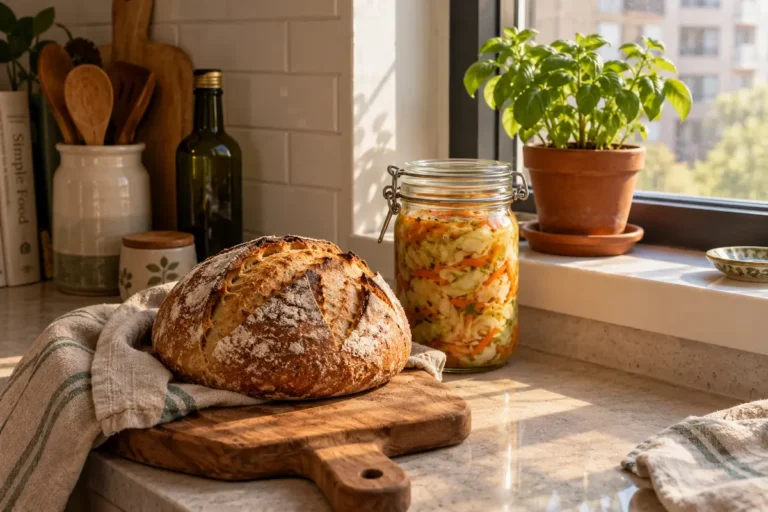
Fermentation is the preservation of food using beneficial bacteria and wild yeasts. It is one of the oldest food traditions in human history and one of the most practical skills an apartment homesteader can develop.
Fermented foods are:
Starting projects include sauerkraut, water kefir, milk kefir, and apple cider vinegar from scraps. Our complete guide to making apple cider vinegar from apple scraps shows exactly how to turn kitchen waste into a living vinegar for almost zero cost. If you'd rather start with vegetables, our fermented pickles recipe uses the same salt-brine method as sauerkraut, just with cucumbers.
3. Sourdough and Baking from Scratch
Making your own bread from scratch is one of the most satisfying skills in apartment homesteading. A sourdough starter — a living culture of wild yeast and bacteria maintained in a jar in your kitchen — produces enough leavening power to bake bread indefinitely for the cost of flour and water.
The benefits of baking your own sourdough go beyond cost. Properly fermented sourdough is more digestible than commercial bread, has a longer shelf life, and tastes dramatically better than anything you can buy at a supermarket.
And you do not need a conventional oven to bake it. Our complete guide to sourdough bread without an oven shows how to produce a genuine sourdough loaf on a stovetop — which makes this skill accessible to apartment dwellers worldwide regardless of their kitchen setup. Once your starter is established, it opens the door to a whole range of bakes — sourdough waffles for using up discard, chewy boiled sourdough bagels, and tangy sourdough cinnamon rolls for a weekend treat.
4. Composting and Zero Waste
Every apartment homesteader generates food waste. The apartment homesteading approach is to intercept that waste and convert it into something useful rather than sending it to landfill.
Apartment composting options include:
Beyond composting, zero waste apartment homesteading includes switching from disposable products to reusable alternatives. Our guide to making reusable paper towels shows how a 30-minute DIY project eliminates one of the most wasteful items in any kitchen.
5. Natural Home and DIY Products
Apartment homesteading extends into the products you use to clean your home, care for your body, and maintain your living space. Making your own natural cleaning products, beeswax wraps, and household items reduces plastic consumption, saves money, and eliminates a surprising number of synthetic chemicals from your daily environment.
This is an area where apartment homesteading intersects with zero waste living most directly. Every product you make yourself is a product that does not need to be manufactured, packaged, shipped, and disposed of.
6. Skill Building and Intentional Living
The sixth area of apartment homesteading is perhaps the hardest to quantify but the most important in the long run. It is the accumulation of practical skills and the shift toward more intentional, conscious daily habits.
An apartment homesteader who has been practising for a year can grow food, bake bread, ferment vegetables, compost waste, and maintain a more sustainable household than most people with gardens. These skills compound over time — each new project builds on the last and the overall system becomes more productive, more efficient, and more rewarding..
The Real Benefits of Apartment Homesteading
Financial Benefits
The financial case for apartment homesteading is straightforward and measurable.
Growing ten herbs on your windowsill saves between five hundred and eight hundred dollars a year compared to buying the same herbs from a supermarket — based on current prices at Walmart and Kroger. Our article on how to cut your grocery bill growing herbs covers the exact numbers for each herb.
Making your own reusable paper towels saves fifty to seventy-five dollars a year on paper towels alone. Making apple cider vinegar from scraps eliminates a product that costs several dollars a bottle. Baking sourdough bread from scratch costs a fraction of what artisan bread costs at a bakery.
None of these savings is enormous on its own. Together they add up to several hundred dollars a year — growing every year as your skills develop and your system expands.
For a fuller project-by-project cost, time, and payoff breakdown, see our guide to whether apartment homesteading is worth it.
Environmental Benefits
The environmental impact of apartment homesteading is cumulative and meaningful.
Personal Benefits
The personal benefits of apartment homesteading are harder to measure but consistently reported by people who practice it.
A daily routine that includes tending plants, feeding a sourdough starter, and checking on a ferment provides a grounding, satisfying rhythm that many people find genuinely restorative in a life dominated by screens and schedules.
The skills themselves — growing food, baking bread, fermenting — produce a quiet confidence that comes from being able to make things rather than only consuming them. That feeling compounds over time and becomes one of the most consistently reported benefits of the apartment homesteading lifestyle.
How to Build Your Apartment Homestead
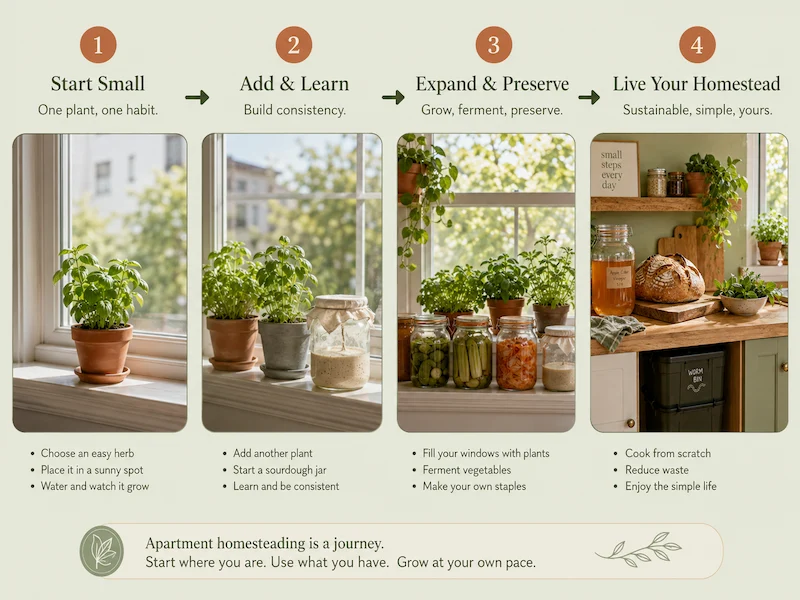
The most important principle in building an apartment homestead is sequential progress. Start one thing. Get comfortable with it. Add the next when the first feels routine.
Here is the sequence that works best for most beginners:
Apartment Homesteading vs Traditional Homesteading
Common Apartment Homesteading Mistakes
Trying to do everything at once. The most common reason people give up on apartment homesteading is starting too many projects simultaneously. Three new projects in the same week is a recipe for overwhelm. One project at a time is the only approach that builds lasting habits.
Buying too much equipment upfront. Apartment homesteading does not require expensive gear. A worm bin, a cast iron skillet, and a glass jar cover almost everything you need to get started. Invest in better equipment only after you know what you actually need.
Expecting perfection immediately. Your first sourdough loaf will probably be dense — our guide to why sourdough goes dense covers the most common causes and how to fix them. Your first batch of sauerkraut might be too salty. These are not failures — they are the normal learning process of developing a new skill. Every experienced apartment homesteader has a long list of early mistakes behind them.
Treating it as all or nothing. One herb pot on a windowsill is apartment homesteading. One jar of kombucha fermenting on your counter is apartment homesteading. You do not need to do everything to be doing this. Start with whatever one thing feels most accessible and build from there.
Where to Start — By Interest
Not sure which area to begin with? Here is where to go based on what appeals to you most: