Apartment Homesteading Community: How to Find or Build One
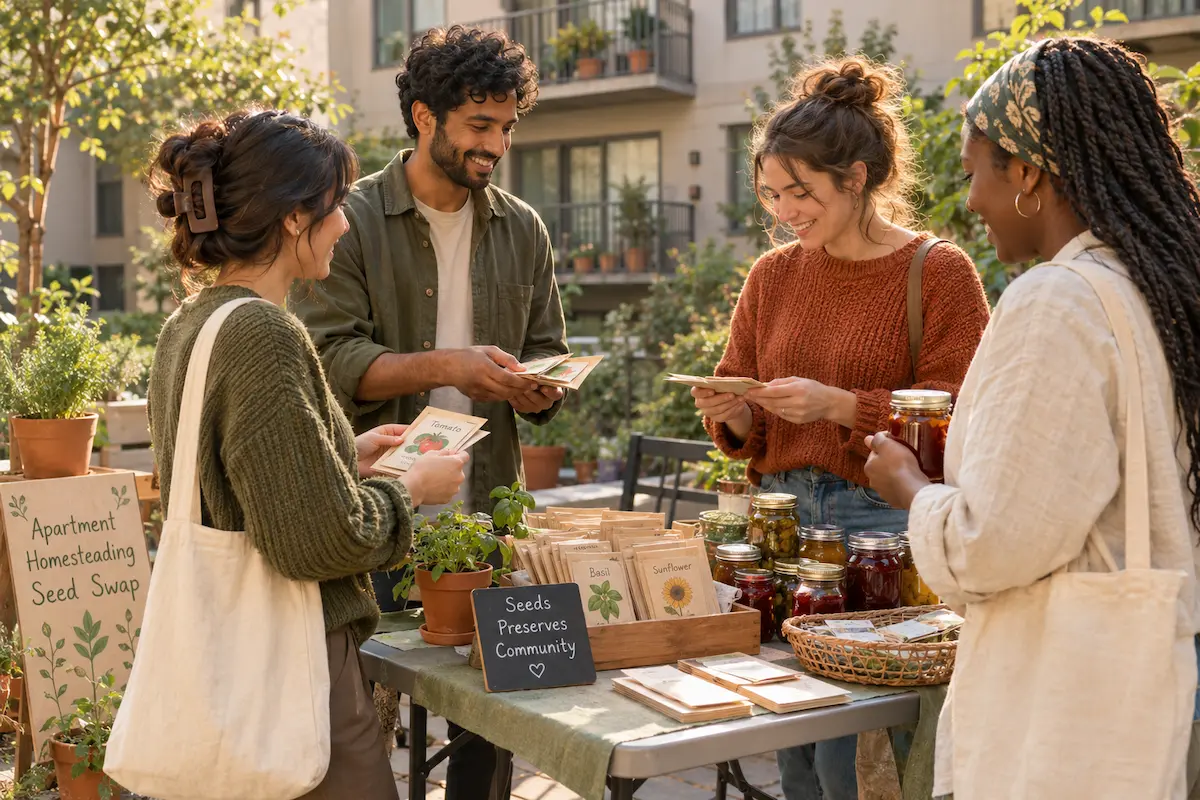
Most homesteading advice assumes you have acres, a barn, and a tractor. If you live in an apartment, that advice can leave you feeling like the whole movement was written for someone else. The truth is that the skills of homesteading, growing food, preserving it, baking, fermenting, and wasting less, fit into a small space just fine. What is harder to fit into a studio is the thing traditional homesteaders have always leaned on: other people, which is exactly why an apartment homesteading community matters so much.
A good apartment homesteading community gives you shared knowledge, shared tools, extra hands when you are canning forty jars at once, and a place to ask why your sourdough starter has gone flat. This guide covers where to find one near you, how to join one online, and how to start one from scratch in your own building, even if you only know two neighbors by their first names. If you are new to the whole idea, the full guide to apartment homesteading is a good place to start.
What an Apartment Homesteading Community Actually Is
An apartment homesteading community is simply a group of people in small spaces who are trying to live more self-reliantly together. It does not have to be formal, and it does not need a name, a logo, or a monthly meeting. It can be three neighbors who trade basil cuttings, a group chat where people share preserving tips, or a seed swap that happens twice a year at the local library.
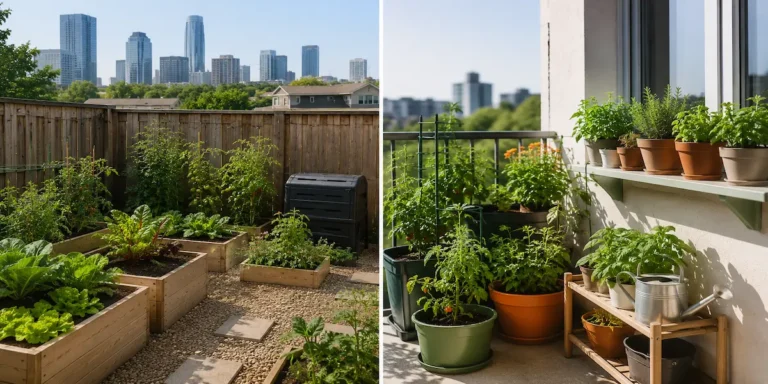
The kind of community you need depends a lot on your setup, whether that is a balcony, a shared garden plot, or only a sunny windowsill.
Why an Apartment Homesteading Community Matters When You Have Less Space
In a small space, you hit limits quickly. You cannot own every tool, grow every crop, or store a year of preserves. An apartment homesteading community turns those limits into advantages:
- Shared tools and equipment. A pressure canner, a dehydrator, or a large stockpot is expensive and bulky. One household can own it and lend it out. If you lend a dial-gauge pressure canner, have the gauge tested first; many extension offices do this.
- More variety from less space. If you grow tomatoes and your neighbor grows herbs and a third person grows peppers, everyone eats better than any single balcony could manage.
- Faster learning. Watching someone else shape a sourdough loaf or check pickle brine teaches more in ten minutes than an hour of reading.
- Motivation. It is much easier to keep a fermentation habit or a composting routine when someone is asking how yours is going.
- Help during a glut. When a friend’s zucchini plant produces twelve squash in a week, you can trade for something useful instead of letting them spoil.
Where to Find an Apartment Homesteading Community Offline
Start local when looking for an apartment homesteading community. Face-to-face connections tend to last longer and lead to the kind of practical help you cannot get through a screen. These are the places to look first.
Community gardens
Community gardens are the most natural fit. Many offer small rented plots, and even if there is a waiting list, you can usually volunteer, attend workdays, or join the mailing list. Gardeners at these sites are often generous with advice, cuttings, and extra seedlings. Ask whether the garden holds a harvest swap or a spring plant sale, since those events are a quick way to meet people.
Seed libraries and seed swaps
Some public libraries run seed libraries where you borrow seeds in spring and return saved seeds in fall, though how they work varies by library. Local gardening clubs and community centers often host swaps, too. These are low-pressure events where no one expects you to be an expert, and they connect you directly with people growing the same crops in your climate.
Extension offices and gardening programs
In the United States, your local cooperative extension office often runs classes on food preservation, composting, and growing food, and many areas have Master Gardener volunteers who answer gardening questions, often at no cost. Other countries have similar agricultural or horticultural societies. These programs introduce you to people who are already interested in the same skills.
Farmers markets
Farmers markets are not only for buying produce. Vendors are often happy to talk about growing methods, and the bulletin boards and sign-up sheets are full of local classes and groups. Visit regularly, learn a few names, and ask where people find other home growers and preservers.
Buy Nothing groups, tool libraries, and repair cafes
Neighborhood gift-economy groups such as Buy Nothing are great for finding jars, canning rings, seed trays, and sourdough starter. Skip secondhand flat canning lids, which are meant to be used once. Tool libraries and repair cafes, where they exist, attract people who like making and mending, and many of them are curious about homesteading skills. These groups overlap with the apartment homesteading community in many cities more than you might expect.
Classes, workshops, and food co-ops
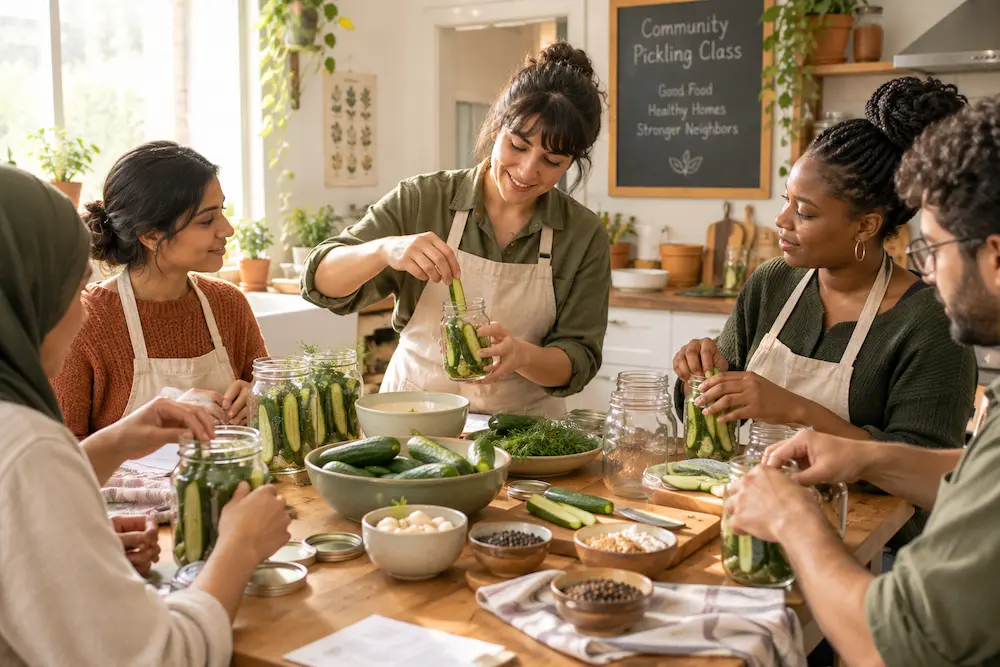
Cooking schools, community colleges, craft studios, and food co-ops frequently run short classes on bread baking, fermentation, and preserving. Attend one, stay a few minutes afterward, and trade contact details with the people who seem as keen as you are. A single class can easily produce two or three new friends who share your interests.
How to Find an Apartment Homesteading Community Online
If you live somewhere remote or simply cannot find anything nearby, online communities fill the gap. They are especially helpful for troubleshooting, since someone is usually awake and willing to look at a photo of your struggling plant or your cloudy brine.
- Forums and subreddits: look for communities focused on small-space gardening, sourdough, fermentation, and zero waste. Read the rules and the pinned posts first.
- Facebook and Discord groups: search for your city plus words like “urban gardening” or “homesteading.” Local groups can lead to in-person meetups.
- Newsletters and blogs with active comments: a site where readers share their own results often becomes a small community of its own.
- Pinterest boards and group boards: useful for ideas, though they are better for inspiration than conversation.
One caution about online groups: advice varies in quality, and food safety matters. When it comes to canning times, acidity levels, and fermentation, always double-check tips against tested sources such as your extension service before trusting a stranger’s method.
How to Start Your Own Apartment Homesteading Community
If you cannot find a group, start one. It is less intimidating than it sounds, and you do not need many people. Three or four interested neighbors is a real community.
Step 1: Start with one small, specific invitation
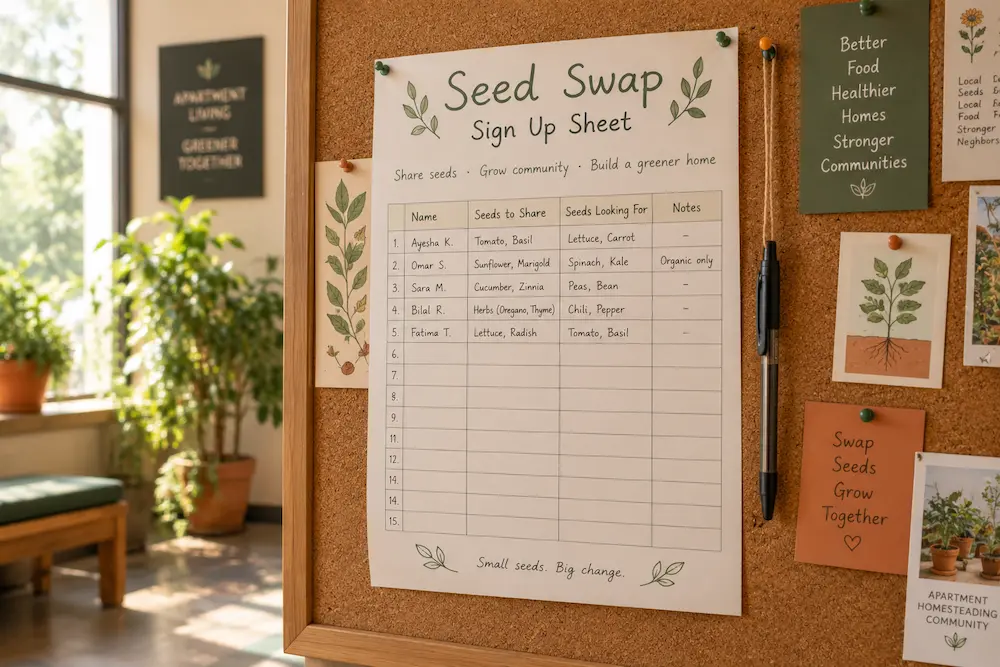
“Want to join a homesteading group?” is vague and a bit much. “I have extra sourdough starter if anyone wants some” or “I am doing a seed swap in the lobby on Saturday” is easy to say yes to. Post a note on the building bulletin board or in the building’s group chat, and keep the ask small and specific.
Step 2: Pick a repeating, low-effort activity
An apartment homesteading community sticks when there is a regular rhythm. A monthly swap, a seasonal canning day, or a quarterly skills night all work. Choose something that costs nothing and requires no hosting skills. A shared table in a common room or a neighbor’s kitchen is plenty.
Step 3: Share what you already do
You do not need to be an expert. If you have grown microgreens on a windowsill or started bokashi composting in a closet, that is already a skill someone else wants to learn. Offer a ten-minute demonstration or simply invite people over to watch.
Step 4: Make it easy to join and easy to leave
Keep it informal. A simple group chat or shared note works better than an app nobody wants to download. Let people drop in and out without guilt. An apartment homesteading community fades when members feel obligated, and it grows when showing up feels light and pleasant.
Step 5: Check your lease and building rules
Before you set up anything in a shared space, such as a lobby swap table, a courtyard planter, or a communal compost bin, ask your landlord or building manager and get the okay in writing. The guide to homesteading for renters has a full script for that conversation and covers what leases usually restrict.
Activities That Keep an Apartment Homesteading Community Going
| Activity | How Often | What It Takes |
|---|---|---|
| Seed and cutting swap | Twice a year, spring and fall | A table, some envelopes, and a marker |
| Sourdough starter share | Any time | A few clean jars |
| Skills night | Monthly or quarterly | One person teaching a ten-minute skill |
| Group canning or pickling day | Once or twice in harvest season | A big kitchen, shared produce, and clean jars |
| Tool and equipment lending list | Ongoing | A shared note listing who owns what |
| Bulk buying | Every few months | A group order for flour, jars, or bulk staples |
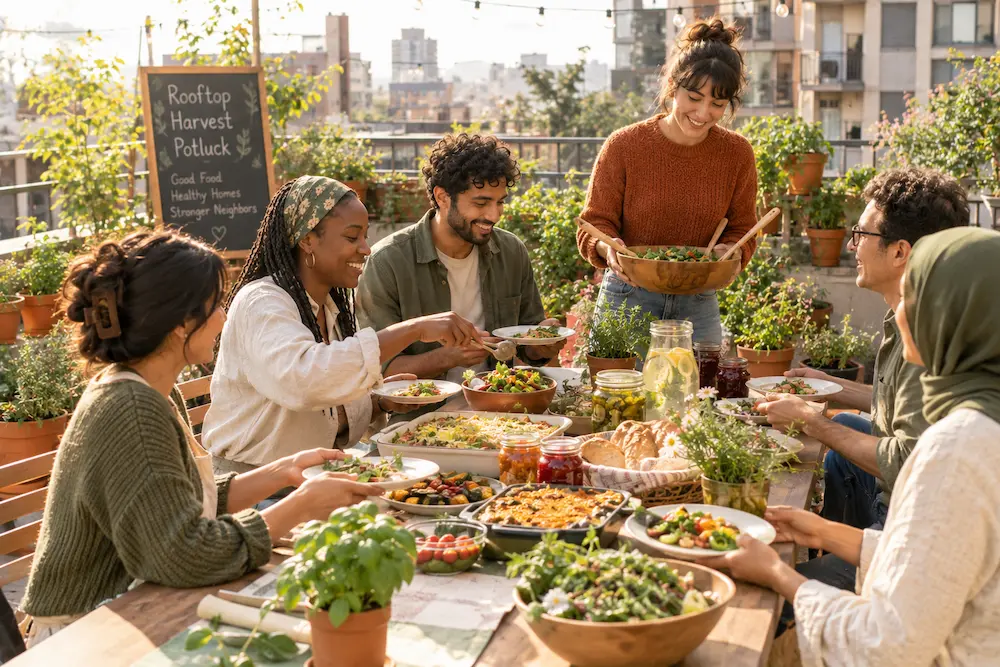
| Harvest potluck | Once a season | Everyone brings a dish made with something they grew or preserved |
You do not need to do all of these. One or two repeating activities are enough. Starting small is what keeps an apartment homesteading community alive past the first few months.
Common Problems in an Apartment Homesteading Community
- Nobody replies: try again with a more specific offer, and invite one person individually. One real conversation beats ten posts.
- Interest fades after a few meetings: shrink the commitment. Move from monthly meetings to seasonal events, or swap the meeting for a simple group chat.
- Skill levels vary widely: let beginners and experienced members share different roles. Experts demonstrate, beginners host, and everyone brings something.
- Space is tight: hold events in a larger shared kitchen, a library meeting room, a park pavilion, or rotate between households.
- Food safety disagreements: agree on tested recipes from a trusted source, such as your extension service, for anything canned, fermented, or fed to others.
- One person ends up doing everything: rotate small jobs like hosting, bringing snacks, or keeping the contact list.
A 30-Day Plan to Join or Build Your Community
- Week 1: Search for community gardens, seed libraries, and classes near you. Visit one farmers market and talk to two vendors.
- Week 2: Join one online group and one local group. Introduce yourself briefly and share one thing you are working on.
- Week 3: Attend one in-person event, even a small one. Introduce yourself to two people and exchange contact details with one.
- Week 4: Make one small invitation of your own, such as a starter share, a seed swap table, or a casual skills evening.
By the end of the month, you may know a handful of people who share your interests. That is the beginning of an apartment homesteading community, and it often grows on its own from there.
Frequently Asked Questions
What is an apartment homesteading community?
It is a group of people living in apartments or other small spaces who share skills, tools, seeds, and support for growing, preserving, and making things at home. It can be informal, such as a few neighbors who swap seedlings, or organized, such as a club with regular events.
How do I find apartment homesteaders near me?
Try community gardens, seed libraries, farmers markets, cooperative extension classes, and local gift-economy or tool-sharing groups. Online, search for city-specific gardening or homesteading groups and attend one in-person event to meet people.
Can I start an apartment homesteading community if I am a beginner?
Yes. You do not need to be an expert, only willing to share what you are learning. A simple invitation such as a seed swap or a starter share is enough to begin.
Are online homesteading groups worth joining?
They can be very useful for troubleshooting and ideas, and they are a good fallback when nothing is nearby. Treat the advice as a starting point rather than the final word.
Do I need my landlord’s permission for shared activities?
For anything in shared spaces, such as lobby tables, courtyard planters, or communal compost, it is wise to ask your landlord or building manager first. Activities inside your own home usually do not require permission, but check your lease for any restrictions.
How many people do I need to start?
Three or four interested people is enough. If nobody nearby is interested yet, join an online group for support and let a local group grow gradually.
Where to Go from Here
You do not need land to belong to an apartment homesteading community, only a few people willing to swap seeds, share tools, and compare notes. If you want something to bring to your first swap or skills night, and a way to decide how far to take all this, these are good next reads: