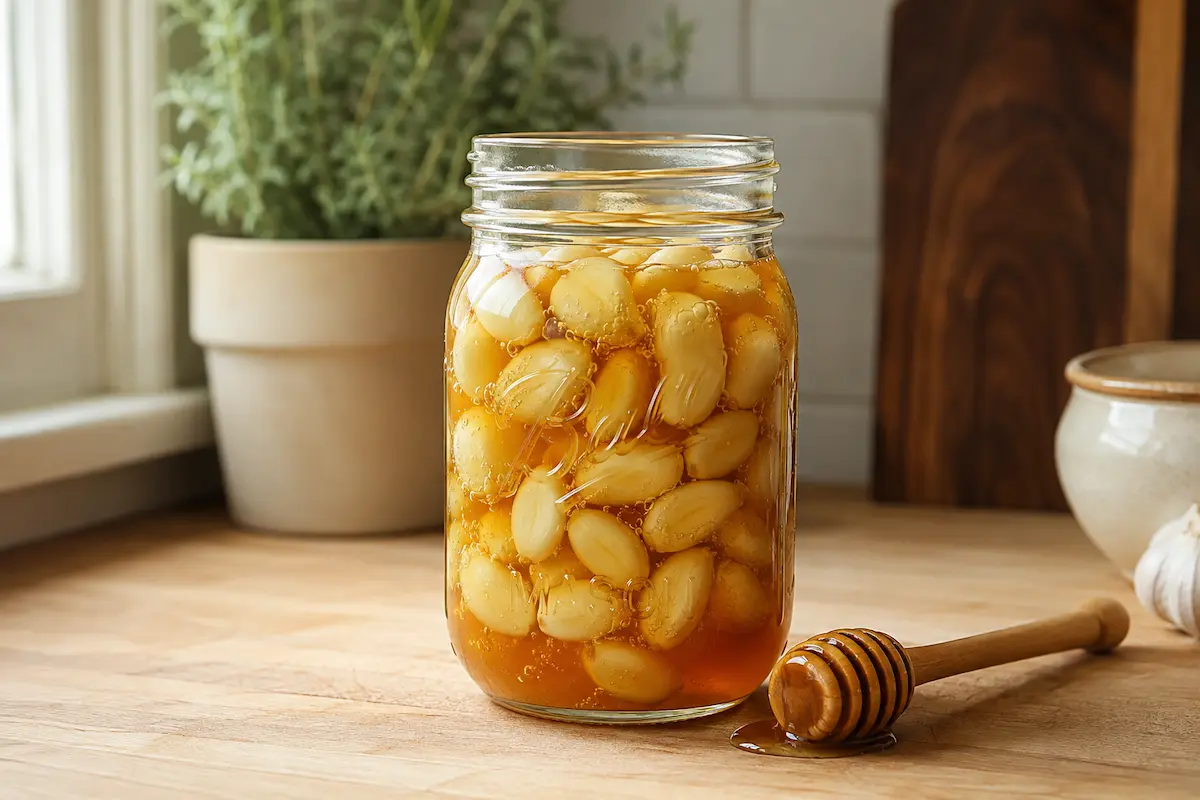
Fermented Garlic Honey: Safety Risks and What to Know
Garlic fermented in honey is a popular traditional preparation, but popularity does not establish food safety. Food-safety extension specialists have raised concerns about botulism and about the lack of a validated home recipe for this combination.
Because the process has not been validated, this article does not give quantities or a room-temperature timeline for it. Instead, it explains the risk, why the usual warning signs cannot settle the question, and what to do instead.
Why Garlic in Honey Is a Concern
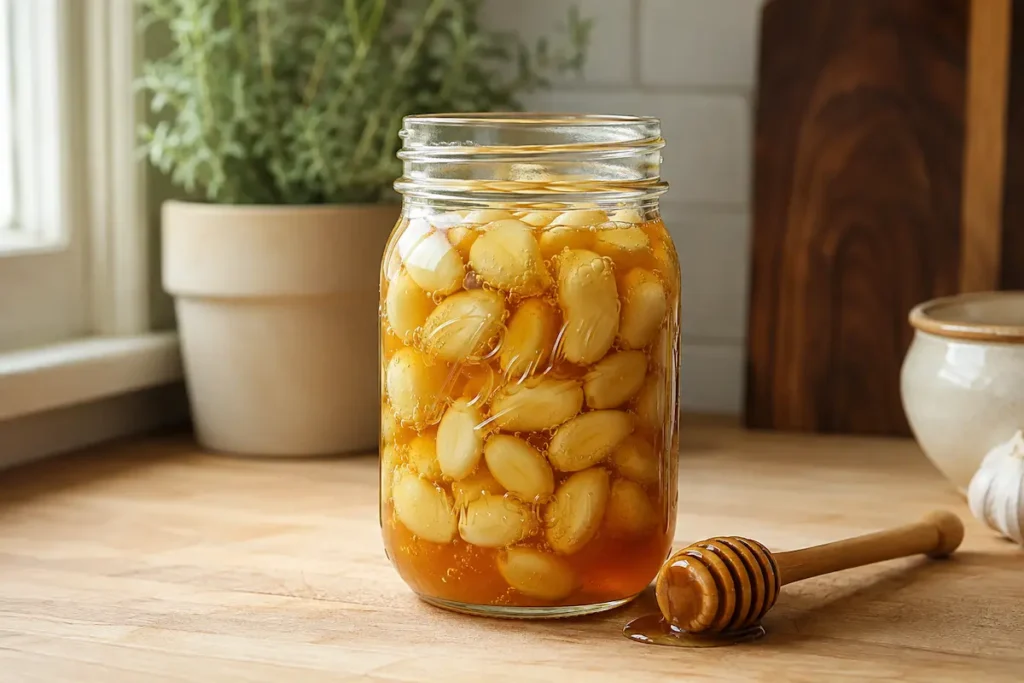
Honey is very low in moisture, which keeps most microbes from growing. Peeled garlic is the opposite: it is moist and low in acid, and it can carry Clostridium botulinum spores from the soil it grew in. When garlic is submerged in honey, water moves from the cloves into the honey, and the acidity and moisture of the result can vary a lot from jar to jar.
Botulism spores can grow in low-oxygen, low-acid, moist conditions and produce a toxin that may be present without any obvious sign. Oregon State University Extension identifies garlic in honey as a high-risk infusion and recommends against cold infusing high-moisture, low-acid ingredients such as garlic in honey.
Why Bubbles, Smell, and pH Tests Do Not Settle It
- Bubbling shows microbial activity. It does not show that the activity is the harmless kind.
- Smell and appearance cannot rule out botulinum toxin, which can be present without obvious spoilage. Never taste a questionable batch to check it.
- A pH reading does not validate the process. Home test strips are not reliable enough for this, and safety depends on the whole method, not a single number.
- Refrigeration slows microbial activity, but it cannot make an unvalidated room-temperature stage safe after the fact. No validated storage time exists for a homemade garlic-in-honey ferment.
Safer Ways to Enjoy Garlic and Honey
- Keep them separate. Use honey as you normally would, and add fresh garlic to dishes when you cook.
- Buy a commercially made garlic-and-honey product, which is produced under controlled processing.
- For homemade preserved garlic, use a tested acidified method such as our vinegar-based pickled garlic recipe rather than garlic in honey or oil.
Honey and Babies
Never give honey in any form to a child under 12 months old. Infant digestive systems cannot yet deal with botulism spores the way older children and adults can, which is why infants are at risk of infant botulism.
Common Questions About Fermented Garlic Honey
Is fermented garlic honey safe?
Food-safety specialists have raised concerns about botulism and the lack of a validated home recipe for fermenting garlic in honey. Do not rely on a homemade fermentation timeline, refrigeration, or visual signs to establish safety.
Can I tell whether a batch is safe by its bubbles or smell?
No. Bubbles can indicate microbial activity, but they do not show that a food is safe. Botulinum toxin may be present without obvious spoilage signs. Never taste a questionable batch to check it.
Does testing the pH make it safe?
No. A pH reading alone does not validate this process. Home pH strips are not reliable enough for this use, and safe preservation depends on the whole method, not a single measurement.
Can I refrigerate it after a few weeks to make it safe?
No. Refrigeration slows many microbial processes, but it cannot retroactively establish that an unvalidated room-temperature stage was safe. No validated storage timeline exists for this process.
Can babies have honey?
No. Never give honey in any form to a child under 12 months old because of the risk of infant botulism.
Sources
- Oregon State University Extension, Infusing Honey Safely (EM 9885)
- USDA Food Safety and Inspection Service guidance on botulism and honey