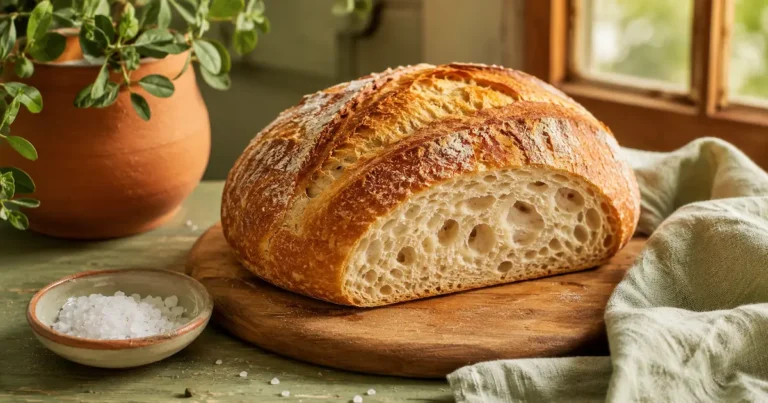
Sourdough Focaccia Recipe — Classic, Discard, and Same-Day Methods
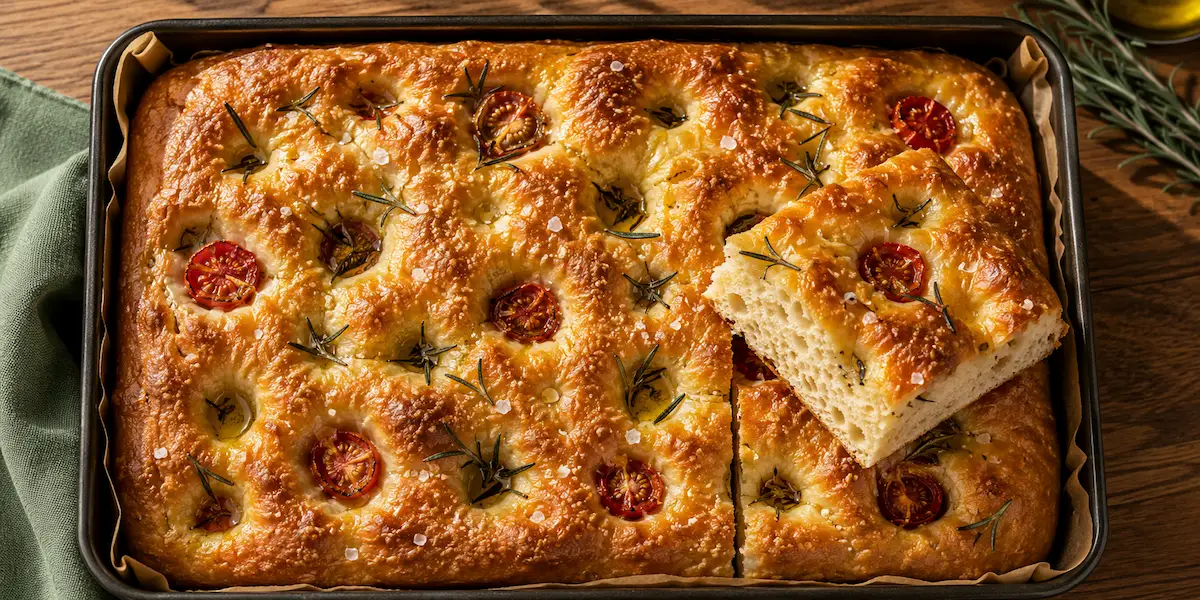
Focaccia and a sandwich loaf come from the same starter but couldn't behave more differently. Where sandwich bread wants a tight, enriched dough shaped into a pan, focaccia wants the opposite: high hydration, minimal shaping, and a generous hand with olive oil. The wetter the dough, the more open and airy the crumb — which is exactly what gives good focaccia its signature big, irregular holes and crisp, oil-fried bottom crust.
This covers three ways to get there: the classic method with an overnight bulk ferment, a version built specifically around sourdough discard rather than active starter, and a same-day option for when an overnight wait isn't realistic. If you haven't got a starter going yet, the sourdough starter guide covers building one from scratch first — and if you've already made the classic Dutch-oven sourdough bread, you'll recognize a lot of the fermentation logic here, just pointed toward a wetter, oilier result.
What makes focaccia's dough different
Focaccia typically runs 75–80% hydration, noticeably wetter than a rustic loaf's 70% or a sandwich loaf's 60%. That extra water is what creates the big, uneven air pockets people associate with good focaccia — a stiffer dough simply can't stretch and trap gas the same way. Olive oil goes into the dough itself, not just on top, which adds flavor and helps the crumb stay tender despite all that open structure. And because the dough is too slack to shape by hand, it gets stretched directly in the pan instead of formed into a loaf — which is also why dimpling before baking matters so much; it's the only real "shaping" step focaccia gets.
Classic overnight method — ingredients
You'll need a 9x13-inch rectangular pan, generously oiled — a metal pan gives a crisper bottom crust than glass or ceramic.
Mixing and the overnight bulk ferment
Combine the flour, water, and starter in a large bowl and mix until no dry flour remains — no kneading needed at this hydration, just enough mixing to bring it together. Let it rest 30 minutes, then sprinkle the salt over the top and work it in along with the 30g of dough-mixed olive oil, using a pinch-and-fold motion rather than kneading.
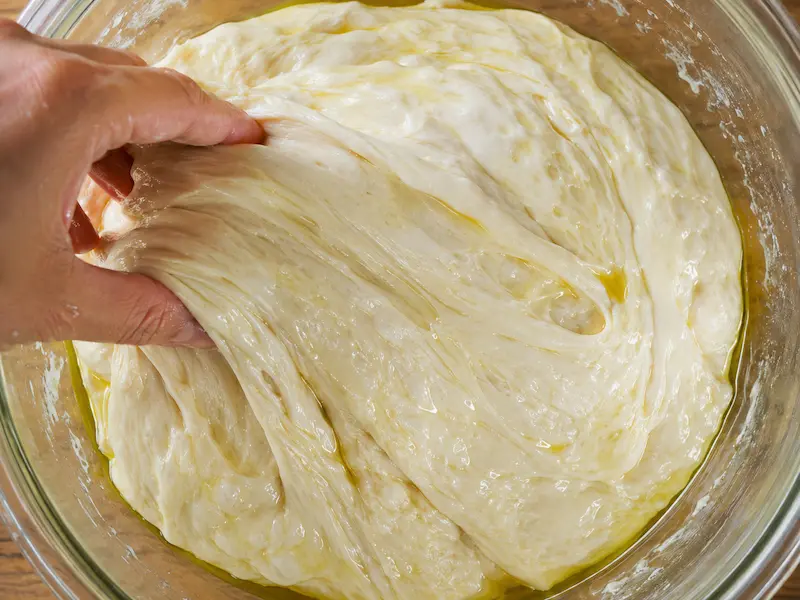
Do four rounds of stretch-and-fold, 30 minutes apart, to build strength in a dough too slack to knead conventionally. After the last fold, cover and refrigerate overnight, 12 to 16 hours. The cold, slow ferment is what develops focaccia's flavor without the dough overproofing at room temperature for that long — this step isn't optional the way an overnight rise is for sandwich bread; skipping it and trying to bulk ferment this wet a dough at room temperature for 12+ hours risks it collapsing before it ever reaches the pan.
Panning, dimpling, and the second rise
Pour a generous layer of olive oil into your pan and turn the cold dough directly into it — don't try to shape it on a counter first, the dough is too wet and shaping it in the pan is easier anyway. Let it sit 10 minutes to relax and warm slightly, then use oiled hands to gently stretch it toward the corners. If it resists and springs back, give it another 15–20 minutes before stretching further — forcing it too early just tears the dough instead of extending it.
Cover loosely and let it rise at room temperature for 2 to 4 hours, until visibly puffy and nearly doubled. Just before baking, oil your fingertips generously and press deep dimples all over the surface, all the way down to the pan in most spots. This is the step that actually defines focaccia visually and functionally — the dimples trap pools of olive oil and create the characteristic craggy surface, and skipping or under-dimpling it is one of the most common reasons a homemade focaccia looks flat and uneven instead of properly craggy.
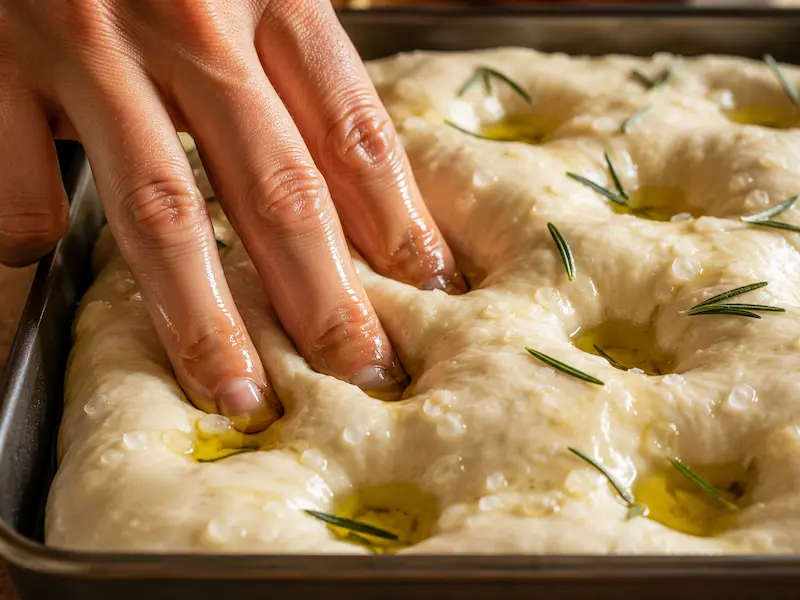
Scatter flaky sea salt, herbs, and any other toppings over the surface now, letting them settle into the dimples and oil pools rather than sitting dry on top.
Baking
Preheat the oven to 450°F (230°C) — hotter than either the sandwich loaf or the rustic boule, since focaccia relies on a fast, aggressive bake to crisp the bottom and set the open crumb before it can deflate. Bake 20 to 25 minutes, until deeply golden brown across the whole surface, not just the high points. Rotate the pan halfway through if your oven bakes unevenly.
Let it cool in the pan for 10 minutes, then transfer to a wire rack — leaving it in the pan longer than that lets the bottom crust steam and soften against the hot metal, undoing the crisp fry-like texture the oiled pan was building.
Using sourdough discard instead of active starter
If you'd rather use discard than feed and wait for an active starter, focaccia is one of the more forgiving sourdough recipes to build around it — the long cold overnight ferment gives even sluggish discard time to contribute real fermentation activity, unlike a same-day bake where discard alone often can't rise fast enough.
Substitute the 100g of active starter above with 100g of discard, straight from the fridge with no feeding required, and add ¼ teaspoon of instant or active dry yeast to the flour along with everything else. The yeast handles the actual leavening reliably; the discard contributes flavor and the characteristic sourdough tang without needing to be alive and vigorous the way active starter does. Everything else in the classic method — hydration, folds, overnight cold ferment, dimpling, bake temperature — stays exactly the same.
This version won't have quite as much of the deep, complex sourness a fully wild-fermented focaccia develops, but it's a genuinely useful way to put discard to work rather than pouring it down the drain, and it removes the guesswork of whether your starter is active enough to leaven a dough on its own. For more ways to use up discard between bakes, the sourdough discard recipes collection covers other options.
Same-day sourdough focaccia (no overnight rise)
For days when an overnight cold ferment isn't realistic, this version trades some depth of flavor for speed. Use the same ingredient amounts as the classic method, but add ¼ teaspoon of instant yeast alongside the active starter, and skip the refrigerator step entirely.
Mix and fold the dough the same way, then let it bulk ferment at room temperature for 3 to 4 hours instead of overnight, watching for it to become visibly puffy and nearly doubled rather than going by the clock. From there, pan it, let it rest and relax for 10 minutes, stretch it to the corners, and give it a shorter second rise of just 45 minutes to an hour before dimpling and baking exactly as described above.
The yeast is doing most of the leavening work in this version, with the starter contributing flavor rather than being the primary riser — which is why it works reliably in a fraction of the time. It won't develop quite the same tang as the overnight version, but it's a legitimate same-day option rather than a compromise that falls flat.
Where this goes wrong
For fermentation issues that apply beyond this recipe, the dense sourdough troubleshooting guide covers causes common to any sourdough bake.
Storing and reheating
Focaccia is best the day it's baked, but keeps at room temperature, loosely wrapped, for 2 to 3 days — the olive oil keeps it from drying out as fast as a lean loaf would. To bring back the crisp bottom, reheat slices in a dry skillet or a 375°F oven for a few minutes rather than the microwave, which turns the crust soft and chewy instead of crisp.