Tepache Recipe: How to Make Fermented Pineapple Drink at Home
Tepache Recipe: How to Make Fermented Pineapple Drink at Home
Most pineapple recipes start after you’ve cut away the rind and core. This tepache recipe starts with exactly the parts you’d normally throw in the trash.
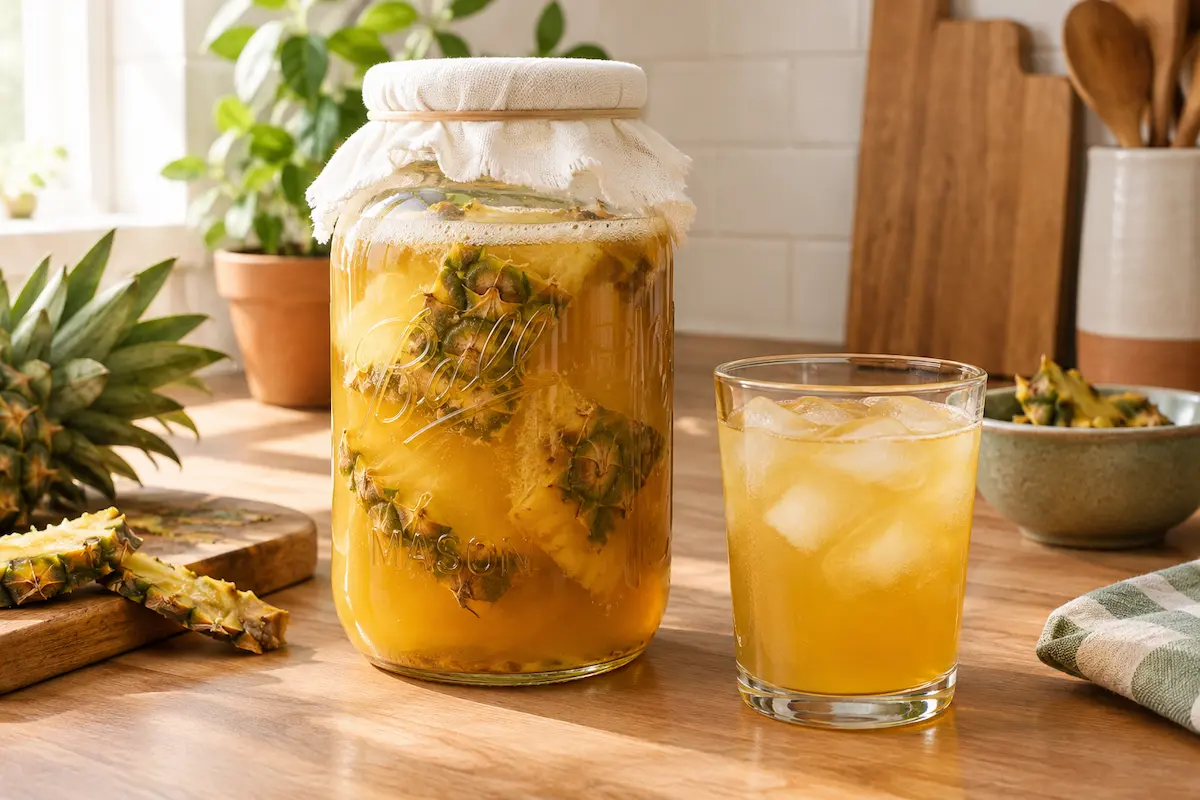
Tepache is a lightly fermented Mexican drink made from pineapple peel, core, water, and a little sugar — left to ferment on the counter for two to three days until it turns tangy, faintly fizzy, and genuinely refreshing. Like sourdough, it relies on naturally occurring microorganisms rather than a packaged starter culture, and it needs nothing more than a jar and a cloth to cover it.
Recipe at a Glance
- Prep time: 10 minutes
- Fermentation time: 2–3 days
- Total time: about 2–3 days
- Yield: about 6–8 cups, depending on how much liquid the pineapple retains
- Difficulty: Easy — no special equipment or experience required
What Is Tepache?
Tepache is a traditional Mexican fermented beverage, usually made by fermenting pineapple peel and core in sugar water for a short period — a few days rather than the weeks or months typical of ferments like sauerkraut or kombucha. Microorganisms already present on the pineapple and in the environment do the work, consuming the sugar and producing a mild tang, a light natural carbonation, and a small amount of alcohol as byproducts.
It’s often compared to kombucha or water kefir, but the process is simpler and much faster — there’s no SCOBY or grain culture to maintain, just fruit, sugar, and water left to their own devices for a couple of days. The flavor lands somewhere between sweet pineapple juice and a light, tangy soda, with warm spice notes if you add cinnamon and cloves. Recipes vary by region and household, and there’s no single “correct” version — this one uses the common piloncillo-and-spice approach as a reliable starting point.
What You Need
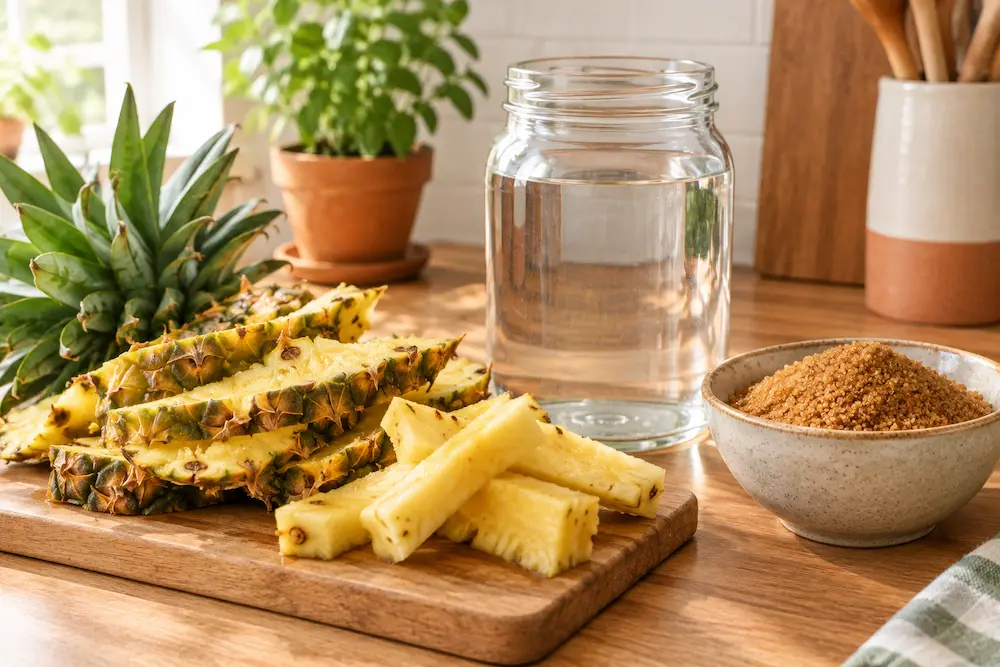
- Rind and core of 1 ripe pineapple (skin on)
- 8 cups water (clean, potable tap or filtered water)
- 3/4 cup piloncillo (or dark brown sugar as a substitute)
- 1 cinnamon stick (optional, for flavor)
- 2–3 whole cloves (optional, for flavor)
- A clean 2-quart (about 2-liter) glass jar or larger, with room to spare
- A clean cloth or coffee filter and a rubber band, to cover the jar
Piloncillo is unrefined Mexican cane sugar, traditionally used in tepache for its deep, slightly smoky molasses flavor. Dark brown sugar is the closest easy substitute and produces very similar results. White sugar can technically be used in a pinch, but it lacks the molasses notes that give tepache its characteristic depth. Cinnamon and cloves are purely for flavor and can be left out entirely for a cleaner pineapple taste — neither affects the fermentation itself.
Choosing the Right Pineapple
Since microorganisms naturally present on the pineapple contribute to fermentation, the fruit you choose matters more here than in most recipes.
Look for:
- Ripe, fragrant pineapple with a sweet smell at the base
- Firm flesh with no soft or mushy spots
- Peel that looks healthy, without cuts, bruising, or sliminess
Avoid:
- Any visible mold, especially on the crown or cut ends
- Fruit that’s already leaking liquid or smells fermented before you’ve started
- Badly bruised or damaged pineapple
You don’t need an organic pineapple specifically — conventional pineapple ferments perfectly well. Rinse it under running water to remove surface dirt before you begin.
How to Make Tepache
- Prepare the pineapple. Wash and dry the pineapple, then cut away the leafy crown and bottom. Remove the edible flesh for another use, and cut the rind and core into manageable pieces.
- Combine the ingredients. Place the pineapple rind and core in your jar. Add the piloncillo or brown sugar, cinnamon stick, and cloves if using. If using a solid block of piloncillo, chop or grate it into smaller pieces first so it dissolves more easily.
- Add water. Pour in the water, leaving at least 2 inches of headspace at the top of the jar. This matters because the pineapple pieces will float, fermentation produces gas, and the mixture can foam up — extra space prevents overflow.
- Stir to dissolve the sugar. Give it a good stir so the sugar doesn’t just settle at the bottom.
- Cover loosely. Use a clean cloth or coffee filter secured with a rubber band — not a solid lid. An airtight lid traps the carbon dioxide produced during fermentation and can build dangerous pressure; a breathable cover lets gas escape while keeping dust and insects out. Some cooks use a jar lid set on loosely instead of cloth — either approach works as long as it isn’t sealed airtight.
- Ferment at room temperature. Leave the jar out of direct sunlight for 24 to 72 hours.
- Taste daily after the first 24 hours, if the batch looks and smells normal. Use the fermentation stages below to judge how the flavor is developing. If you see mold or other signs of spoilage, don’t taste it — see Normal Fermentation vs. Spoilage below.
- Strain the solids. Once it tastes right, pour the liquid through a clean fine-mesh strainer to remove the pineapple pieces and spices.
- Bottle and refrigerate. Transfer the strained liquid to a clean bottle or jar and refrigerate right away — this is what slows fermentation and keeps the flavor from turning too sour. It will keep developing gradually even in the fridge.
Want More Fizz?
Tepache naturally develops some carbonation during fermentation. If you want stronger carbonation, additional sealed fermentation is possible, but it requires pressure-rated bottles and careful monitoring, since carbon dioxide can build pressure quickly. For a first batch, refrigerating right after straining is the simpler option.
How Tepache Fermentation Works
The basic process is simple: pineapple and sugar dissolve into the water, and microorganisms naturally present on the fruit and in the fermentation environment begin transforming some of the available sugars. This produces carbon dioxide (the source of tepache’s light fizz), a small amount of alcohol, and organic acids that give the drink its tangy edge. The longer it ferments, the more sugar gets consumed and the more pronounced the tang becomes — which is why tasting daily matters more than following the clock exactly.
The finished tepache should still taste recognizably like pineapple, but less sweet, with a mild acidic tang. Depending on fermentation time and temperature, it may carry a light yeasty note along with gentle natural carbonation.
Fermentation Stages: What to Expect
- First 24 hours: Mostly sweet pineapple water with little visible activity. This is normal — fermentation is just getting started.
- 24–48 hours: Small bubbles begin appearing, the smell turns from purely sweet to slightly tangy and yeasty, and the flavor starts developing complexity.
- 48–72 hours (often ready): Noticeably tangy with the pineapple flavor still present, often with a light natural fizz. This is the sweet spot for most people’s taste, though it varies by batch and preference.
- Beyond 72 hours: The flavor may become increasingly acidic and less pineapple-forward, especially in a warm kitchen. Rather than watching the clock, use the taste and appearance cues here and refrigerate the batch once it’s where you want it.
How Temperature Affects Fermentation
Fermentation speed depends heavily on the temperature of your kitchen. A warmer kitchen will generally ferment faster, while a cooler kitchen may take longer. The times given in this recipe are a guideline, not a guarantee — use the flavor, aroma, and visible fermentation activity as your primary cues, not the clock alone.
Troubleshooting Tepache
Why isn’t my tepache bubbling? Your kitchen may be too cool, which slows fermentation significantly — give it more time, or move the jar somewhere slightly warmer. Also confirm the jar isn’t sealed airtight, which can suppress visible bubbling even as fermentation happens.
Why is my tepache cloudy? Cloudiness is completely normal and expected — it comes from yeast and fine pineapple particles suspended in the liquid. Straining before bottling reduces this.
Why is there foam on top? A layer of light foam is a normal sign of active fermentation and carbon dioxide production. It’s not a problem unless it’s accompanied by mold or an off smell.
Why does my tepache smell yeasty or sour? A yeasty, tangy, slightly sour smell is exactly what fermenting tepache should smell like. This is different from a rotten or putrid smell, which is not normal.
My tepache became too sour — what happened? It likely fermented longer than needed, especially if your kitchen is warm. Strain and refrigerate sooner in future batches, and start tasting at the 24-hour mark.
Is the sediment at the bottom of the jar normal? Yes — sediment from pineapple particles and yeast settling is expected and is removed during straining.
Why is there pineapple floating above the liquid? Pineapple pieces are lighter than the liquid and will often float — that’s normal. Make sure the floating pieces stay wet rather than drying out, and keep an eye on them for any visible mold or other signs of spoilage.
What if I see a white film on top? A thin, smooth film can sometimes appear during fermentation, but appearance alone isn’t always a reliable way to tell a harmless yeast film from something you shouldn’t drink. If you’re not sure what you’re looking at, the safer choice is to discard the batch rather than taste it.
Normal Fermentation vs. Spoilage
Normal to see:
- Small bubbles or visible fizz
- Cloudy liquid
- Sediment at the bottom
- A slightly changing color as fermentation progresses
- A tangy, fruity, slightly yeasty smell
Signs to throw it out:
- Fuzzy mold in any color (black, green, blue, or pink)
- A rotten, putrid, or otherwise clearly unpleasant smell — distinct from a normal tangy or sour smell
- Visibly spoiled or slimy pineapple pieces before you even start
If you see fuzzy mold, unusual colored growth, or other clear signs of spoilage, discard the batch rather than tasting it. A rotten or putrid smell is also a reason to discard it.
How to Store Tepache
Once strained, refrigerate tepache in a clean, covered container. Cold temperatures slow fermentation considerably but don’t stop it completely, so the flavor will continue to develop — becoming more tangy — over the following days even in the fridge. If you bottled it for extra carbonation, open the container carefully over a sink the first time, since pressure can build unexpectedly. Tepache is best treated as a fresh, short-lived drink rather than a shelf-stable one.
Ways to Serve Tepache
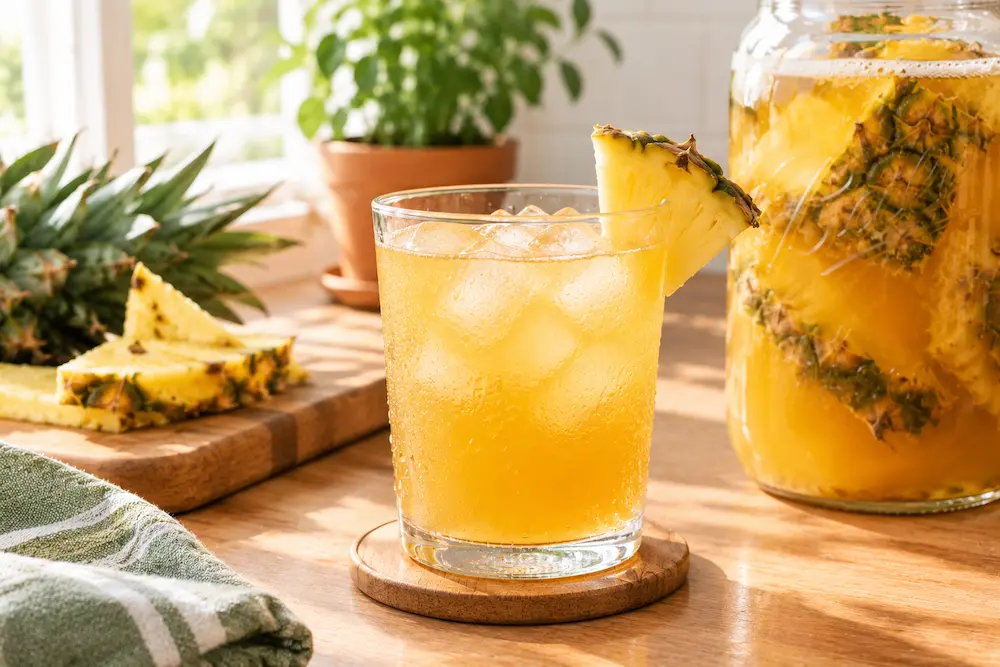
- Classic: served cold over ice, exactly as it is
- With lime: a squeeze of fresh lime brightens the flavor
- With chili: a pinch of chili powder or Tajín on top for a sweet-spicy contrast
- Sparkling version: diluted with sparkling water for a lighter, fizzier drink
- As a cocktail mixer: works well combined with rum or tequila for those who drink alcohol
- Mocktail: tepache, lime, and sparkling water for a bright, refreshing drink
Tepache Flavor Variations
These are modern variations rather than traditional recipes, but they’re worth trying once you’re comfortable with the base method:
- Ginger tepache — add a few slices of fresh ginger alongside the pineapple
- Citrus tepache — add a strip of orange or lime peel for brighter, more citrus-forward flavor
- Extra-spiced tepache — increase the cinnamon and cloves, or add a star anise pod
- Chili-lime tepache — ferment as usual, then finish each glass with lime juice and a pinch of chili powder when serving
What to Do With the Pineapple Solids
After straining, the pineapple solids are best composted rather than reused for another batch. This closes the loop nicely on the zero-waste angle: eat the pineapple flesh, ferment the rind and core into tepache, then send the spent solids to your compost bin rather than the trash. If you’re set up for apartment composting, this is a simple, small addition to your regular routine.
Why Tepache Fits an Apartment Kitchen
Tepache needs no special equipment, ferments at normal room temperature in a few days rather than weeks, and takes up minimal counter space. It’s one of the more forgiving ways to try fermentation for the first time — no starter to maintain indefinitely, no long wait, just a jar and a bit of patience.
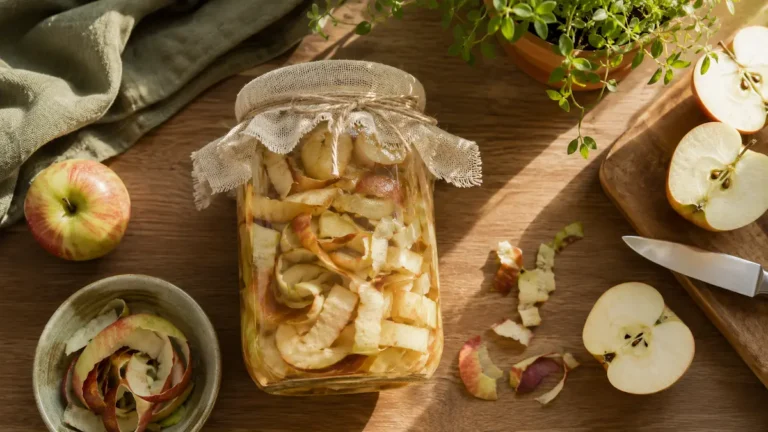
It also fits naturally alongside other scrap-based projects — the same instinct behind turning apple peels into apple cider vinegar from scraps applies here, just with pineapple and a shorter timeline. If you enjoy tepache, fermented pickles are a natural next step into salt-brine fermentation.
Frequently Asked Questions
What is tepache?
Tepache is a lightly fermented Mexican drink traditionally made from pineapple rind and core, water, and sugar, fermented for just a few days until tangy and lightly fizzy.
Is tepache alcoholic?
Tepache can contain alcohol, since fermentation converts some of the available sugar into ethanol. The amount varies depending on the ingredients, fermentation time, temperature, and microorganisms involved. Because homemade tepache isn’t normally tested for alcohol content, it shouldn’t be assumed to be alcohol-free — anyone who needs to avoid alcohol completely should skip naturally fermented tepache.
Can you use just the pineapple rind, or do you need the whole fruit?
Just the rind and core work perfectly well and are traditionally what’s used — this is what makes tepache a good zero-waste project, since you can eat the pineapple flesh separately.
Can you make tepache without piloncillo?
Yes — dark brown sugar is a reliable substitute and produces very similar results. White sugar works in a pinch but produces a less rich flavor.
Can tepache ferment too long?
Yes. As fermentation continues, tepache can become increasingly acidic and less pineapple-forward, especially in a warm kitchen. If it becomes more sour than you enjoy, strain and refrigerate it sooner next time.
How do I know if my tepache has gone bad?
Fuzzy mold in any color or a rotten, putrid smell are signs to discard a batch. Cloudiness, sediment, bubbles, and a tangy smell are all normal and not signs of spoilage.
Does tepache need to be refrigerated?
Yes, once it’s fermented to your liking. Refrigeration slows further fermentation but doesn’t stop it completely, so flavor continues to develop even in the fridge.
How long does homemade tepache last?
For best quality, aim to drink it within about a week, and keep it refrigerated the whole time.
Can you make tepache with other fruit?
Pineapple is the traditional choice and gives tepache its characteristic flavor. Other fruit rinds can be fermented similarly, but results and food safety can vary by fruit, so pineapple is the most reliable place to start.
Why isn’t my tepache fizzy?
If your kitchen is on the cooler side, fermentation slows down and may need closer to 72 hours. Make sure the jar isn’t sealed with an airtight lid, since that can limit the natural pressure buildup that gives tepache its fizz.