How to Compost in an Apartment Without Smell (Beginner-Friendly Guide)
Yes, You Can Compost in a Tiny Apartment — Here’s How
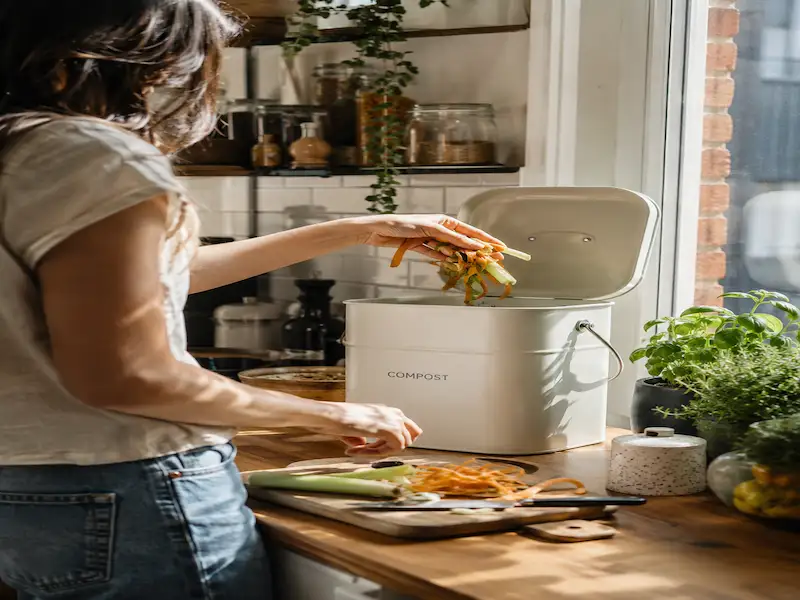
When I first looked into apartment composting, I assumed my kitchen would smell like a dumpster within a week. Spoiler: it didn't.
The truth is, composting in an apartment is much easier — and cleaner — than most people think, if you use the right method. Whether you're trying to reduce food waste, grow healthier herbs, or simply live more sustainably, learning how to compost in an apartment without smell is one of the easiest beginner-friendly homesteading habits you can start. And no, you don't need a backyard.
In this guide, you'll learn:
- The best apartment composting methods
- How to avoid smells and fruit flies
- What you need to get started
- The biggest beginner mistakes to avoid
- Which composting system works best for renters
Let's get into it.
Can You Really Compost in an Apartment?
Yes — even in a tiny studio apartment.
Modern composting methods are designed specifically for small spaces, meaning you can compost successfully in:
- Apartments
- Condos
- Dorm rooms
- Tiny kitchens
- Small balconies
Instead of giant outdoor piles, apartment composting uses compact, low-odor systems that fit easily into renter life. Better yet, the compost can feed your plants — if you're growing herbs indoors, compost pairs perfectly with an indoor edible garden. See our windowsill herb garden guide.
If you're growing herbs indoors, compost pairs perfectly with an indoor edible garden — see our windowsill herb garden guide.
What You’ll Need to Get Started
This is the easiest way to start composting without overwhelm.
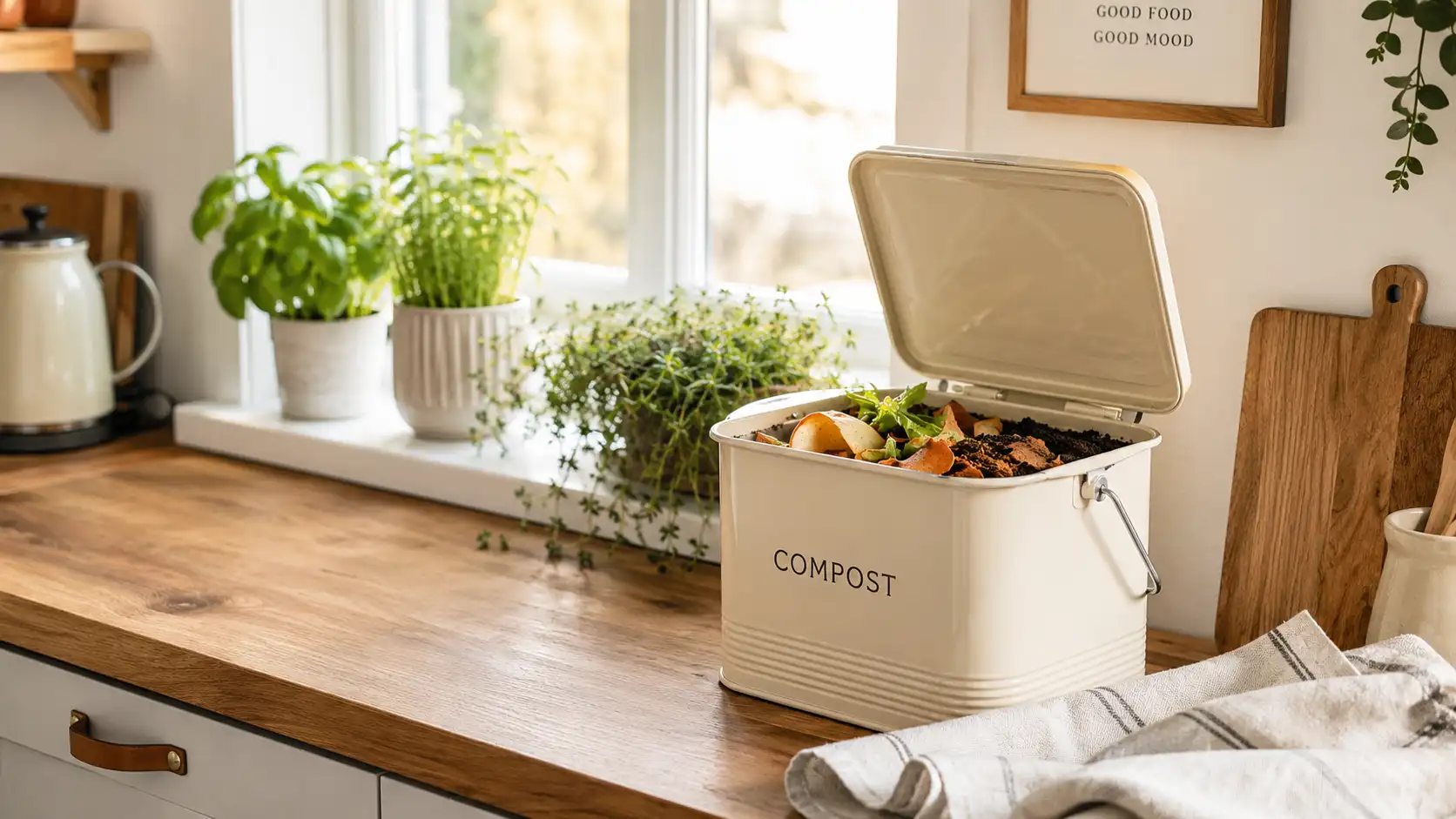
1. Countertop Compost Bin
Choose one with a charcoal filter lid to reduce odors.
Best for: beginners and small kitchens.
2. Compostable Liners
These make cleanup easier and reduce mess.
3. Bokashi Starter Kit (Optional)
If you want to compost meat and dairy, Bokashi composting is worth considering.
4. Red Wiggler Worms (Optional)
Only needed for vermicomposting. Don't worry — they stay inside the bin.
5. Small Kitchen Scrap Container
A tiny container helps collect scraps during the week.
4. Red Wiggler Worms (Optional)
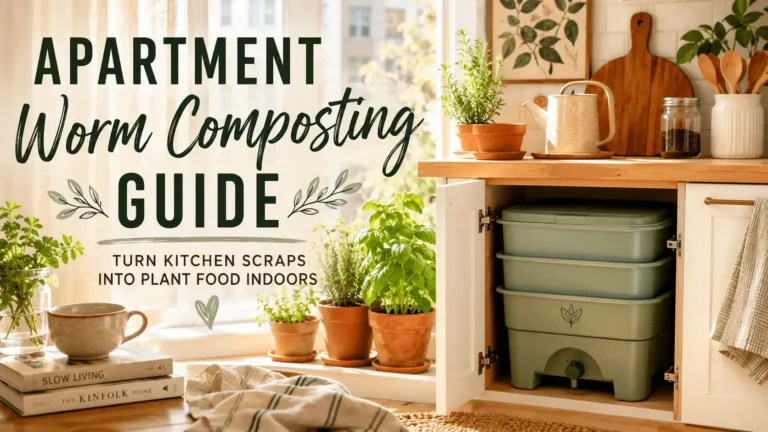
Only needed for vermicomposting. Don't worry — they stay inside the bin. For the full setup — which worms to buy, bin types, feeding — see our complete apartment worm composting guide.
Best Apartment Composting Methods
Not sure which method to choose?
Here’s a quick comparison.
| Method | Smell Level | Cost | Space Required | Best For |
|---|---|---|---|---|
| Countertop Bin | Low | $20–40 | Countertop or small shelf | Absolute beginners |
| Bokashi | Very Low | $40–70 | Under sink or in a cabinet | Composting meat & dairy |
| Vermicomposting | Earthy | $50–80 | Under sink or in a closet | Indoor gardeners |
For most beginners, a countertop compost bin is the easiest place to start.But let’s break them down.
1. Countertop Composting (Best for Beginners)
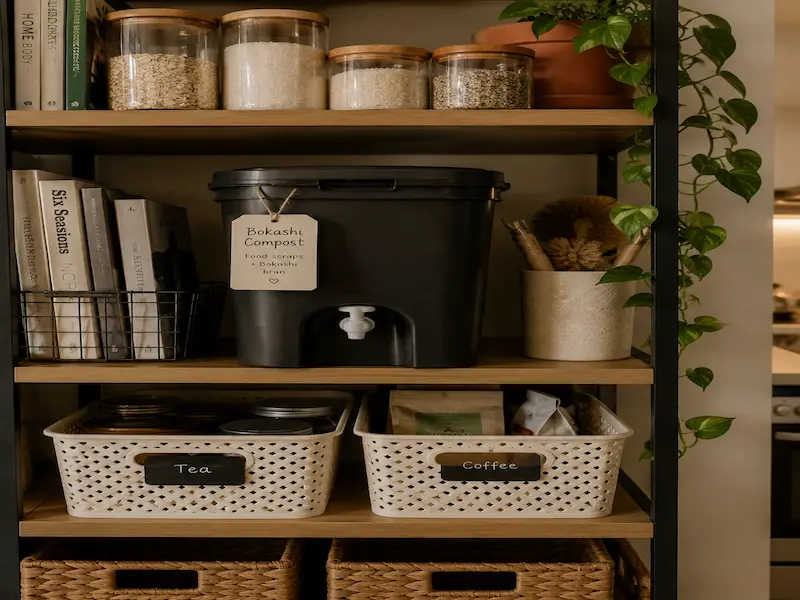
This is the method most people picture when they think of composting, just scaled down for apartment life. A small countertop bin holds food scraps until they're full enough to move to a larger outdoor system, a community compost drop-off, or a balcony tumbler — whichever you have access to.
The key to keeping a countertop bin smell-free is balance: alternating wet scraps (fruit and vegetable trimmings) with dry materials (shredded cardboard, brown paper, dry leaves) keeps the mix from turning slimy and odorous. A charcoal filter lid handles the rest, trapping what little odor does build up before it reaches the rest of your kitchen.
This method works well for renters who don't want to commit to Bokashi's fermentation process or a live worm bin, and it's the easiest starting point if you're not sure which system you'll stick with long-term.
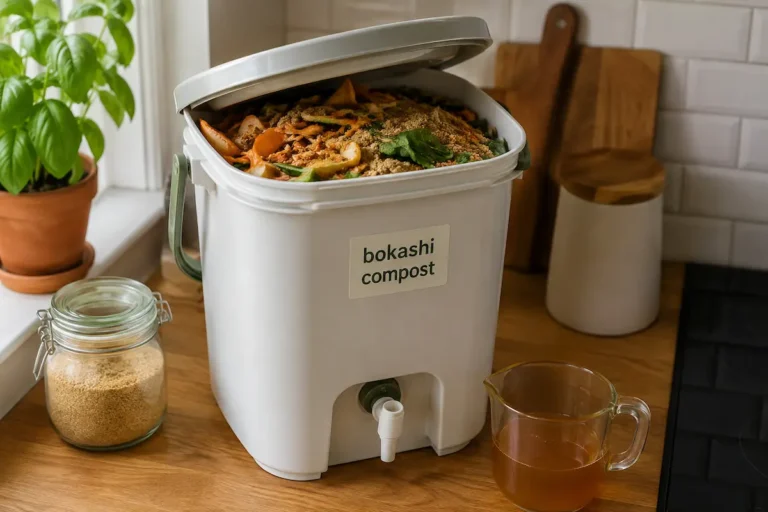
2. Bokashi Composting (Best for Apartments Without Smell)
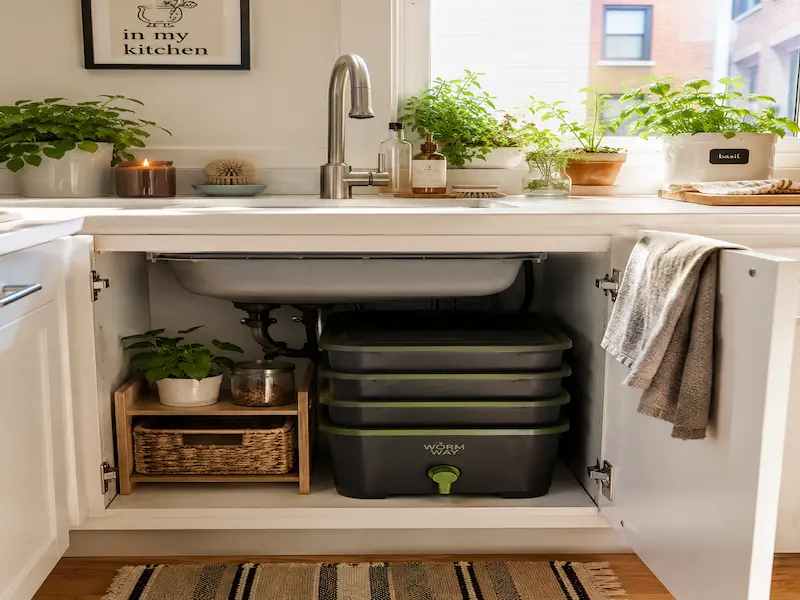
If avoiding smell is your #1 priority, Bokashi might be your best option.
Instead of traditional decomposition, Bokashi uses fermentation. You add food scraps to a sealed bucket and sprinkle Bokashi bran between layers. Because it's airtight, odor stays minimal — and yes, you can compost things traditional systems can't, including meat, dairy, cooked leftovers, and small bones.
The first time I heard about fermenting food waste indoors, I thought there's no way this won't smell awful. But surprisingly, the scent is usually mild — slightly sour, almost pickle-like. Not garbage-like.
Pros
|
Cons
|
3. Vermicomposting (Worm Composting)
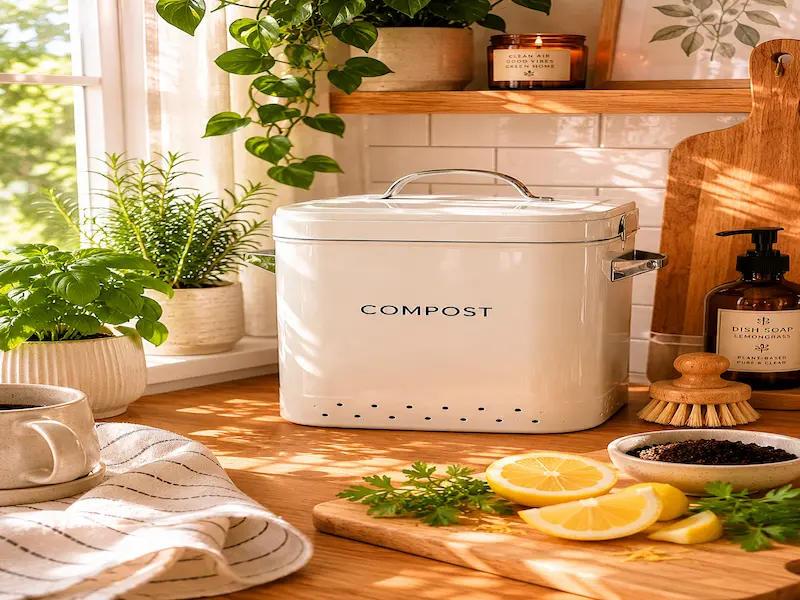
Vermicomposting uses a bin of red wiggler worms to break down kitchen scraps into rich, ready-to-use compost — and it's one of the most apartment-friendly composting methods since a worm bin can live under a sink or in a closet without any smell or mess when set up correctly. If you grow herbs or balcony vegetables, this method is worth considering — see 10 vegetables you can grow on a balcony. For the full setup — which worms to buy, bin types, feeding schedule — see our complete apartment worm composting guide.
How to Compost in an Apartment Without Smell
This is the part everyone worries about. Here's how to avoid smells completely.
1. Use a Charcoal Filter Bin
This is non-negotiable for beginners. Filters trap odors before they spread.
2. Empty Scraps Regularly
Try every 2–5 days. Don't let scraps pile up too long.
3. Freeze Smelly Food Scraps
A simple freezer bag works wonders. No smell, no bugs.
4. Add Dry Materials
Balance wet scraps with:
- Shredded cardboard
- Brown paper
- Dry leaves
Too much moisture causes stink.
5. Avoid Meat & Dairy (Unless Using Bokashi)
This alone prevents most apartment compost problems.
Common Apartment Composting Mistakes
Using a Bin That's Too Large
Start small. You can always upgrade later.
Overfilling the Bin
Too much food means too much smell.
Forgetting Dry Materials
Wet compost turns gross fast.
Ignoring Airflow
Unless you're using Bokashi, airflow matters.
Waiting Too Long to Empty It
This is what attracts fruit flies.
Troubleshooting Common Apartment Composting Problems
Even with the right setup, apartment composting can run into a few common snags. Here's how to fix the ones that come up most when you compost in an apartment.
Fruit Flies
Fruit flies are almost always a sign that scraps have been sitting exposed too long. Bury fresh scraps under a layer of dry material, empty the bin every 2–5 days, and freeze anything especially ripe or sweet before adding it. If flies are already established, empty the bin completely, wipe it out, and start fresh — an occupied bin will keep hatching new ones daily.
Mold
A little white mold is normal and harmless — it's part of the breakdown process. Fuzzy green or black mold, or mold that smells sour rather than earthy, usually means too much moisture. Add extra dry material (shredded cardboard or paper), stir the bin to add airflow, and cut back on wet scraps for a few days.
Slow Breakdown
If scraps aren't breaking down, the mix is often too dry, too wet, or chopped too large. Cut scraps smaller, keep the moisture level similar to a wrung-out sponge, and make sure there's enough surface area for microbes (or worms, in a vermicomposting bin) to work. Bokashi is the exception — it ferments rather than decomposes, so scraps will still look recognizable when you empty the bucket, and that's expected.
Why Apartment Composting Is Worth It
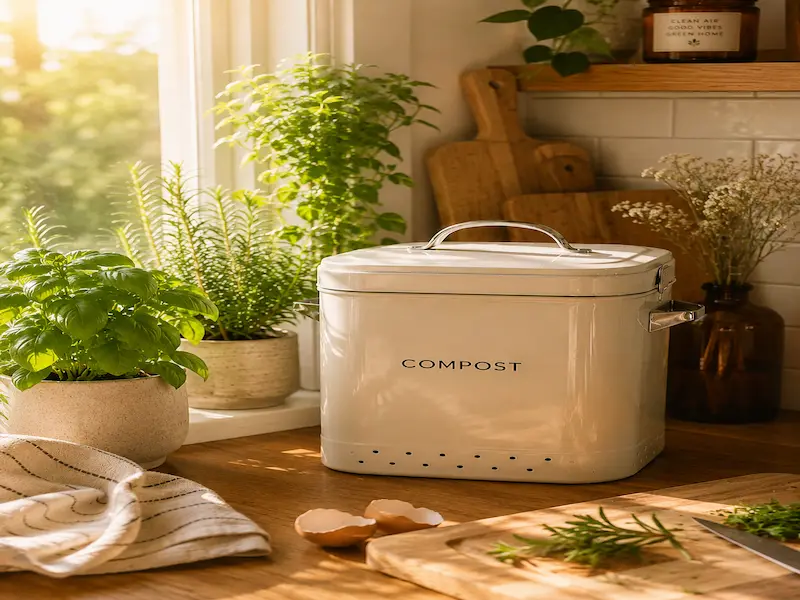
Apartment composting isn't just about reducing waste.
It helps you:
- Cut down trash
- Feed your plants naturally
- Save money on fertilizer
- Build sustainable habits
If you're growing herbs indoors, compost becomes even more useful. Learn how to set up your windowsill herb garden and put that compost to work straight away.
And if sustainability matters to you, pair this with simple low-waste habits. Start with these easy zero waste swaps for renters — small changes that add up fast. If you're also swapping out household products one at a time, our natural laundry detergent recipe follows the same small-batch approach.
Frequently Asked Questions
Does apartment composting smell?
Not if it's done correctly. A sealed container with a charcoal filter lid, combined with emptying scraps every few days, makes a huge difference — smell is almost always a sign of overfilling or too much wet material, not composting itself.
Will compost attract bugs?
Only if scraps sit too long or food is left exposed. Keeping the bin sealed and burying fresh scraps under dry material (or freezing particularly smelly scraps before adding them) keeps fruit flies from finding their way in.
What's the easiest composting method for beginners?
A countertop compost bin is the easiest starting point — no fermentation process to learn like Bokashi, and no live worms to manage like vermicomposting.
Can I compost without a balcony?
Absolutely. Indoor kitchens work perfectly for countertop bins, Bokashi buckets, and worm bins alike — none of these methods require outdoor space, which is exactly what makes them apartment-friendly in the first place.
How much does apartment composting cost per month?
Very little. A one-time bin (countertop, Bokashi, or worm) runs $20–80, and after that ongoing costs are minimal. Countertop and worm bins need no regular purchases beyond the occasional compostable liner. Bokashi is the main recurring cost, since you'll need bran refills — typically $8–15 per month with regular use, less if you compost lightly.
What do I do with finished compost if I don't have a garden?
You have more options than you'd think. Use it to feed potted herbs or houseplants, top-dress a windowsill herb garden or balcony containers, or offer it to a neighbor, community garden, or local drop-off program — many cities have compost-sharing programs specifically for apartment composters without outdoor space.
Can I compost in a Bokashi bucket if I live in a studio?
Yes. Bokashi is one of the most studio-friendly composting methods because the bucket is sealed and airtight, so there's no smell or mess to manage even in a small footprint. It fits easily under a sink, in a closet, or inside a kitchen cabinet, making it a solid choice when floor space is tight.
Final Thoughts
Apartment composting sounds intimidating until you realize how simple it actually is. You don't need land, you don't need fancy equipment, and you definitely don't need to tolerate bad smells — not if you set things up right from the start.
Start small. A countertop bin, a charcoal filter, and a habit of emptying scraps every few days is genuinely all it takes. From there, a tiny compost setup today can lead to healthier plants, less waste, and a more sustainable home tomorrow.
If you're growing anything alongside your compost, our windowsill herb garden guide and balcony vegetable guide cover what to do with the finished compost once it's ready — and if you want to go a step further, the worm composting guide covers the faster, higher-output method covered above.